What a Competent Tree Crew Looks Like From the Driveway
Quick answer: What a Competent Tree Crew Looks Like From the Driveway — The tree that thrives here is the one chosen for this coast: fog, salt, wind and shallow soil are the local constraints, and mature size is the constraint most often ignored. Planting is a matter of putting the right species in a site that can hold it, then keeping the root flare visible and the first summers watered.
Field note. What we see is that the coast is forgiving to the right species and unforgiving to the wrong one: the same tree that looks comfortable four streets in will burn on the windward side of a Cambria lot.
On the other hand, natives are not automatically the answer at every address — a species that belongs in the watershed can still be the wrong size for the garden it is standing in.
I have worked alongside crews I would trust with a tree over my own roof and crews I would not let near a hedge, and the difference is legible in about ten minutes without either of them touching a saw. It is not the truck’s paint, though the truck is a clue. It is what happens between the moment they step out and the moment they start talking about money.
Here is what I watch for, in the order I notice it.
They look up before they look down
An experienced estimator walks a circle around the tree and spends most of that walk looking at the crown and the unions, not at the lawn. They are reading the lean, the balance of the canopy, whether a co-dominant seam exists, and where the tree would go if it went. A person who quotes your tree without walking it is quoting the size, and size is the least interesting variable.
They ask what is under the tree
Not as a courtesy. As a working question. Whether there is a septic line, an irrigation main, a buried cable, a sprinkler zone or a slab within the drop zone changes the plan, and a crew that does not ask is a crew that will find out with a machine. The same question applies to the ground itself: how wet, how steep, whether a truck can reach the chips.
The rope work is visible before the climbing
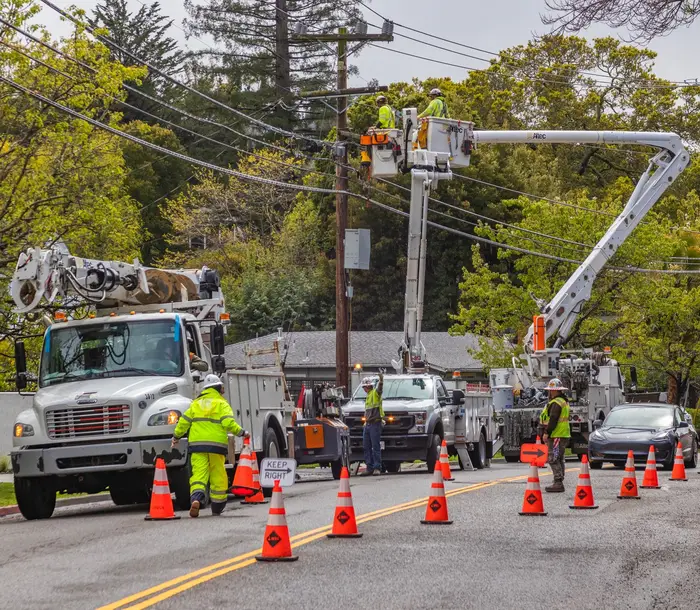
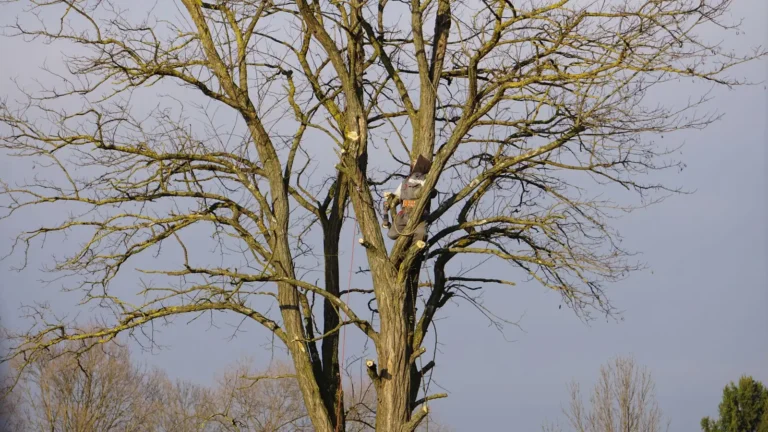
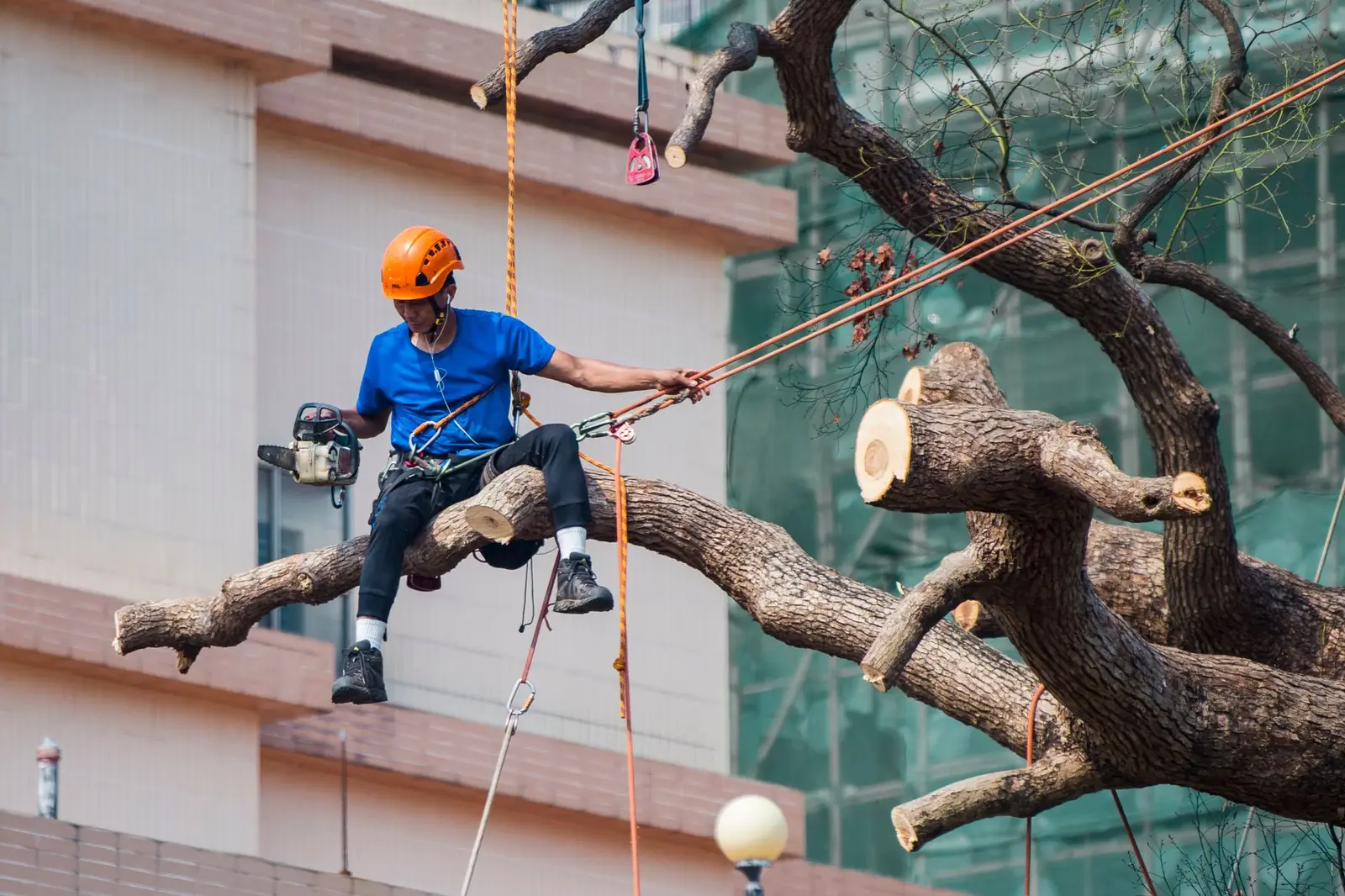
When the crew arrives, watch the setup. A competent crew sets a throw line and a lowering line with intention, checks the tie-in point, and puts a ground person in a position where they can see the climber and the drop zone at once.
Personal protective equipment is worn correctly rather than carried: helmet, eye protection, hearing protection, and chainsaw chaps on anyone running a saw on the ground. Nobody argues about any of this, because it is not a discussion.
They tell you what they will not do
This is the single most useful signal available. Experienced crews decline work. They decline a tree they consider unsafe to climb without a lift, they decline to chip material that will wreck a machine, they decline a removal they can see will damage a driveway they cannot protect. A company that says yes to everything has either not thought about it or does not intend to be accountable for the answer.
The paperwork question that actually filters
Ask for a certificate of insurance naming the general liability limit, and ask whether workers’ compensation covers the crew that will be on your property. Then check the dates. A certificate that expired last year is a common and expensive thing to discover after someone is hurt in your yard.
Ask, too, whether the person quoting is the person supervising. On a small company they may be the same person, which is fine. On a large one, a salesperson can promise a technique the crew has no intention of performing, and the only defence is to get the method written into the quote in plain words.
One question to ask in the driveway
Ask them to describe how they would take this specific tree down, and listen for the word because. Anyone can recite a sequence. Only someone who has actually done it can tell you why this limb before that one, why the rigging point is where it is, and what they would change if the wind picked up after lunch. The answer does not need to be long.
It needs to be specific to your tree, and it needs to sound like a person remembering rather than a person performing.