



Feeding a Tree in Salt Air
Root-Zone Aeration & Fertilization in Morro Bay
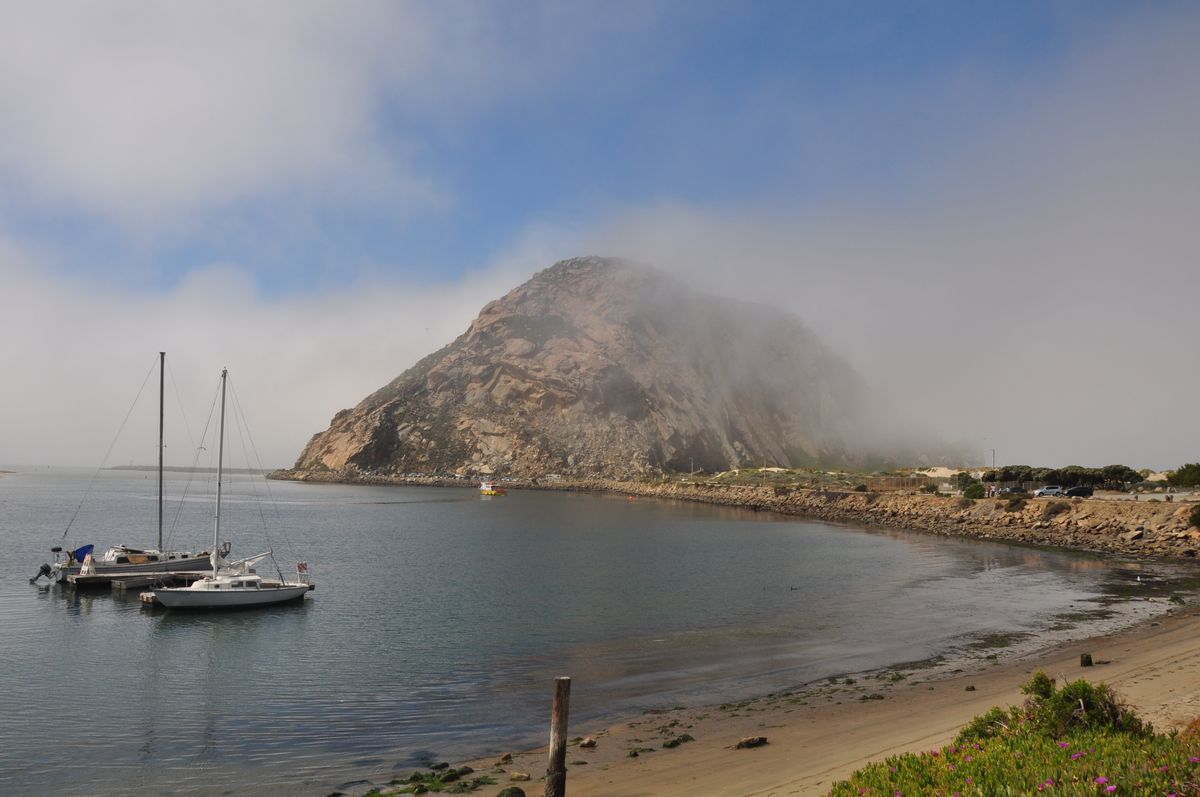
Morro Bay — this is the coast these pages are about.
Quick answer: Root-Zone Aeration & Fertilization in Morro Bay — A stump is the part of the problem that is still in the ground: it holds the roots that lift pavement, keeps a species alive if it re-sprouts, and occupies the spot where the next planting goes. Grinding removes it below the surface so the ground can be worked again, and the roots that matter are the ones under the driveway rather than the ones beside the trunk.
- Typical timing: Any month the ground is workable; rain-softened soil grinds fastest and leaves the cleanest spoil.
- What it involves: Assessing re-sprout risk by species, grinding below grade, raking the spoil back, and handling surface roots separately from the stump.
- The standard: ISA guidance on root cutting and the ANSI A300 pruning standard where roots and crown are worked together.
- Where we work: Cambria, San Simeon, Harmony, Cayucos, Morro Bay, Los Osos and the Cambria pine belt.
- Our own record: 503 pages and 291 stories published on this site. Counted from our own archive, not a stock table.
Field note. On this coast the stump is rarely the end of the job: Monterey pine and eucalyptus both keep enough energy in the roots to push new growth, so we are looking at the species before we quote the grind rather than after.
On the other hand, a stump left in a garden bed is sometimes the better answer — it decays, feeds the soil and costs nothing — so grinding is a choice, not a rule.
Aeration and fertilization on a Morro Bay lot is not the same job as feeding a tree inland, and the difference is not the dose. Sand on the flat lets water and nutrient leave almost as fast as they arrive; the graded streets above town drain hard and hold little; and a north-westerly carrying salt spray strips a crown faster than any soil deficiency can.
Feeding a tree here means reading the soil and the exposure together, or the money goes into fast soft growth that the next gale shreds.
Why a soil test is worth the trouble
Two properties on the same street can need opposite things, and the only cheap way to know is a sample. What a lab result actually tells us: pH, which on ocean-influenced coastal soil tends to sit higher than people expect and can lock up iron and manganese; salinity, which is genuinely elevated where salt spray reaches the root zone; organic matter, usually very low in sand and old fill; and the major nutrients.
Anything beyond that — the trace-element claims and the microbial inoculant marketing — is where a test stops being useful and a conversation starts.
Aeration comes before feeding
Roots need oxygen first. On compacted ground, fertilizer applied with a spreader sits in the top inch and does little but feed the weeds, because the roots that would take it up are struggling to breathe. Air spading a root zone opens it, and the organic material mixed in at the same time is doing more for the tree than any granule.
Where the soil is already open — most of the sand side of town — aeration is not the answer at all and the work is water and mulch instead.
Choosing the formulation, honestly
Slow-release and organic sources keep the nitrogen where the roots can reach it across a season. A quick, soluble nitrogen applied in spring on a sandy flat is mostly gone before the tree has woken up, and what it does deliver is a flush of soft growth at exactly the moment the wind is stripping the coast.
On native oaks the answer is usually none at all: a coast live oak adapted to poor soil does not want to be pushed, and pushing it is how you invite a crown that cannot hold itself up. Mycorrhizal products deserve a plain answer — the native fungi are already present in undisturbed ground, and on a site where they are not, compost does the job more reliably than a bottle.
The wind is part of the prescription
Any program that increases growth has to increase what the wood can carry. A tree on the hill streets that puts on soft extension growth into an onshore wind is being set up to fail, and the repair afterwards is crown thinning or crown reduction rather than another bag of fertilizer. The order that works on this coast: open the soil, correct what the test says is genuinely missing, mulch, water deeply and rarely, and leave the rest alone.
Pair it with the other soil work
Aeration belongs with root-zone remediation when the structure has been lost; the amendment side belongs with compost and soil amendment; and the top-dressing belongs with the chip delivery that follows every job. Call (805) 927-4414 or use the contact page and we will sample the ground before we recommend anything for it.
Field note — Sofia Underwood would rather sell a soil test and no fertilizer than a fertilizer and no test; one of those two is honest on this coast.
Questions, quotes, or just exploring — we’re here to help.