The Trees That Hold a Bluff Together
Quick answer: Coastal Bluff Erosion: Trees That Hold It Together — Trees on this coast live with fog, salt, wind and thin soil, and the work that keeps them healthy is decided by those conditions rather than by a calendar written inland. Structure, clearance and the root zone are what a tree here needs looked at, and small work done early is what keeps a tree out of the emergency list.
Field note. What we see on this coast is that the trees people worry about are usually not the ones in trouble: the pine with a clean crown and a lean that predates the house is often sounder than the tidy tree that has been quietly drowning in its own root zone.
On the other hand, there is no schedule that suits every tree — the same species on two sides of one street can need opposite care, which is why we look before we recommend.
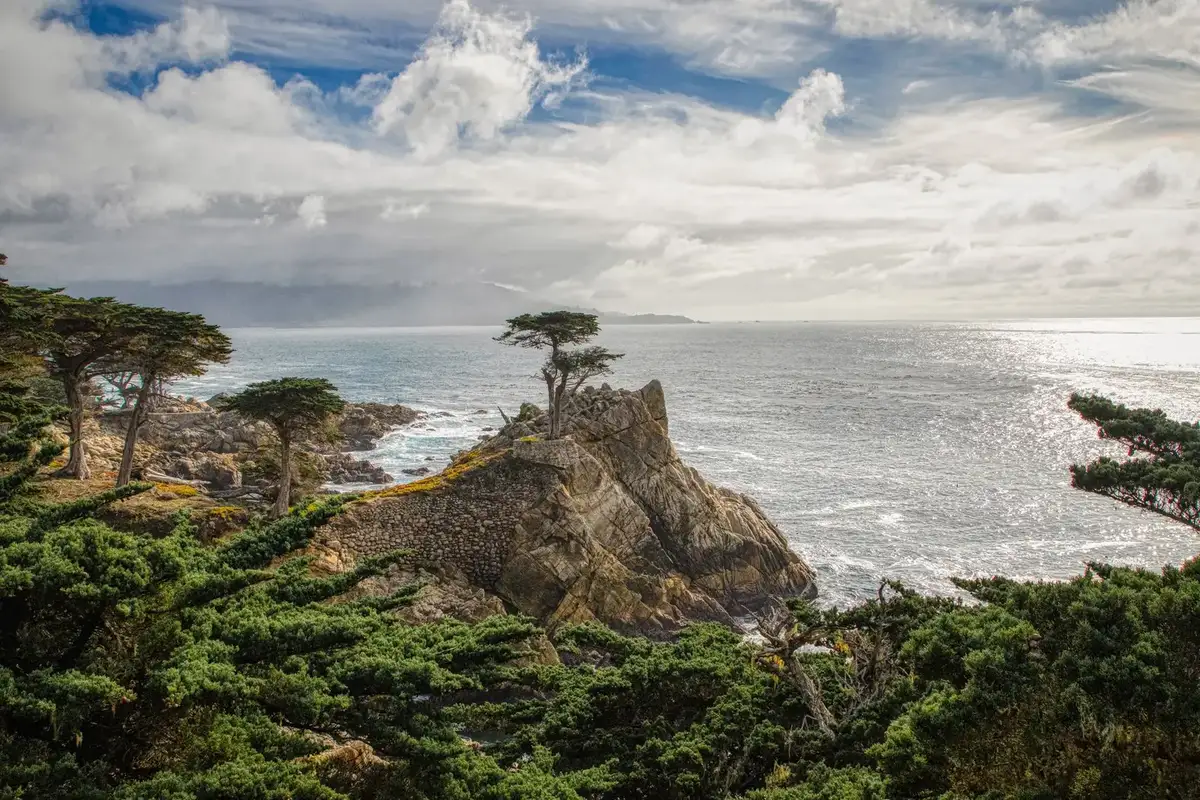
There is a version of coastal landscaping in which the bluff is treated as a stage – a surface you decorate and redecorate – and a tree is treated as something set down on top of it. On a real Cambria bluff the vegetation is not on the slope. It is part of it. The roots are doing structural work, and when they go the slope does not simply look barer. It begins to move.
I have watched the aftermath of a well-meaning clearance: a face that stood through fifty winters sheds its front in two. Nothing was done in bad faith. Something was done without asking what was holding what.
How roots hold a slope
A slope fails when water enters faster than it drains and the soil loses its grip on itself. Roots address that in two ways. Fine roots bind the surface layer like a mat; larger roots anchor it back into something solid below. Grasses and low shrubs tend to do the first, deep-rooted natives the second.
Take away one layer and the other has to carry all the load – which is exactly when people discover how much the missing layer was doing.
What actually destabilises a bluff
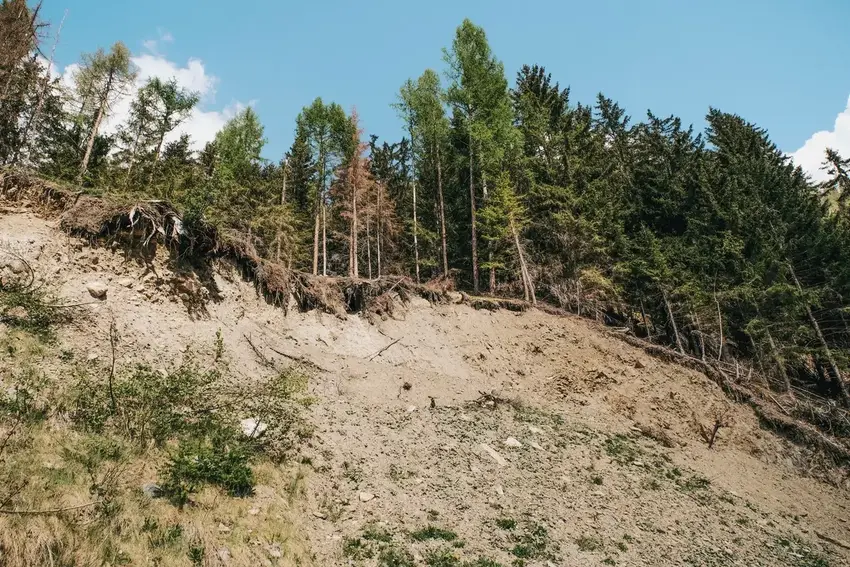
- Removing the whole cover at oncegraded earth with no roots moves the moment it saturates.
- Concentrating the watera downspout, a hard path, a patio that sheds onto the face. Drainage decides whether a slope fails far more than vegetation does.
- Cutting into the toethe base of a slope is what resists the whole mass sliding. Digging there quietly removes the anchor.
- Compaction and weightvehicles and structures on the crest load a face that is already near its limit.
Where trees belong, and where they do not
People get this wrong in both directions. A deep-rooted native in the right place on a slope is an asset – it holds structure and slows runoff. A heavy, top-loaded tree leaning out over the face, near a house, with a split fork, is a liability – and that is a risk question, not an erosion question.
Confusing the two is how you either remove a tree that was doing good work or keep one that is about to fall.
Doing less, deliberately
The most useful slope work I have seen on this coast is unglamorous: drainage, soil retention and revegetation planned around the plants already in place, and removals limited to the genuinely dangerous. It takes longer to look finished. It also does not need rebuilding after the first real storm.
The safety lesson
A slope failure does not announce itself the way a tree does. Cracks in the soil, a bench that was not there before, fence posts leaning the same way, water seeping from the face – all of those mean stay back, and do not work beneath the slope. Never stand below a face while anything is working above it, including you.
And never assume that because nothing moved last winter, nothing will this winter; saturation is cumulative, and the wet year is the test.
The long view
If you are planning any work on a bluff property, decide early which trees are structure and which are hazard. Remove the hazard with a plan that does not take the slope’s cover with it, and fix the water before you plant anything. Show us the lot and we will tell you honestly which parts of the slope are stable, which are not, and which trees are holding the difference.