



Walking the Zones Above the Structures
Defensible Space Inspection
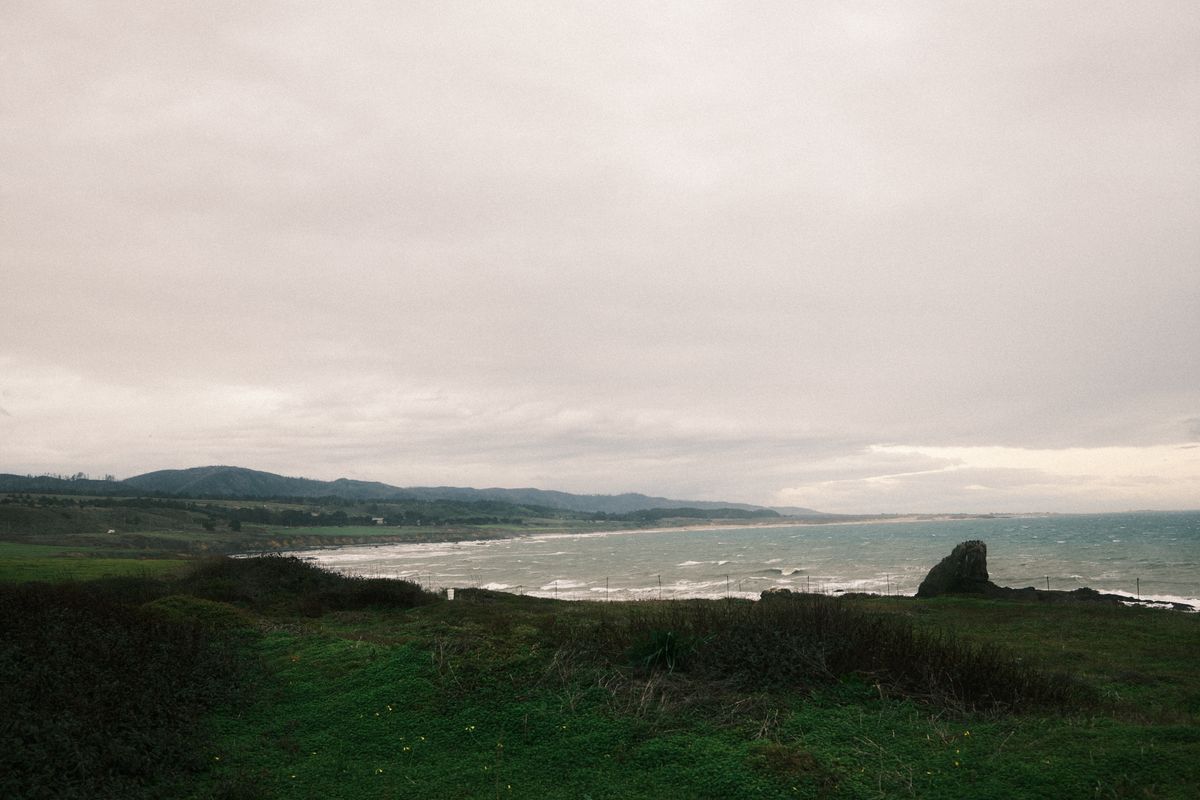
San Simeon — this is the coast these pages are about.
Quick answer: Defensible Space Inspection — Defensible space is the work that decides what a fire has to burn between the wildland and the house: dead material out, ladder fuels separated, and the tree you keep limbed up rather than removed. It is measured in zones from the structure, and the first few feet are the ones that matter most.
- Typical timing: Best done in the cool months so the debris is gone before the dry season; clearance rules apply year-round.
- What it involves: Removing dead and dying material, separating shrubs from low limbs, limbing trees near structures, and keeping the roof and gutters clear.
- The standard: Cal Fire's defensible-space guidance for the first 100 feet, applied to the trees a property actually has.
- Where we work: The wooded parts of Cambria, San Simeon, Harmony and the surrounding ranch country.
- Our own record: 503 pages and 291 stories published on this site. Counted from our own archive, not a stock table.
Field note. What we see on this coast that surprises people is how much of the fuel load is low: the limb at four feet and the brush beneath it carries fire into a canopy that would otherwise survive, so the work is often lifting rather than felling.
On the other hand, over-clearing has its own cost — bare ground erodes, and the wind that comes with the fog belt is harder on a thinned stand than the fire risk it removes.
San Simeon has a handful of buildings and a great deal of grass, brush and cypress around them, which is the configuration Cal Fire's defensible-space rules were written for.
A defensible space inspection is a walk around your own ground against that written list, and on a parcel here it almost always turns up four or five things the owner has been stepping past for years — a chip bed against the siding, a woodpile under the deck, an ornamental conifer at the corner of the house.
We walk parcels in San Simeon, Cambria, Harmony and the stretches between them, most often because a carrier sent a letter and sometimes because a fire came close enough to make the question urgent. This page is what we look at, in the order we look at it.
Zone 0 — The First Five Feet
Zone 0 is the ember-resistant band, and it is the one that changed the conversation. Nothing that burns belongs against the structure: no bark mulch bedded along the wall, no firewood or lumber stacked under the eave, no wooden gate or fence running into the siding, and no juniper, cypress or ornamental conifer planted directly under a window.
A wind-driven fire throws embers well ahead of its front, and embers landing in a dry bed against a wall are what take a building while the flames are still on the ridge above it.
Zone 1 — Five to Thirty Feet
Zone 1 is the lean, clean and green band: dead vegetation out, shrubs separated rather than massed, the woodpile moved well away, dry grass mown, and no tree canopy overhanging the roof. The purpose is not tidiness. It is to break the chain, so that no continuous run of fuel leads from the ground to the crown to the building without a gap in it.
Zone 2 — Thirty to One Hundred Feet, and Often Further
On a wooded parcel this is where defensible space is won or lost: trees thinned and crowns separated, dead material on the ground removed, ladder fuels broken so a ground fire cannot climb into the canopy, and slash dealt with rather than left in windrows to cure. On ground that has not been touched in twenty years this is most of the work, and it is the part that changes what a fire actually does when it arrives.
On a steep site the effective distance is longer than the map suggests, because fire moves uphill faster than across.
What We Find Here, Almost Every Time
- Chips and bark mulch bedded against the wall — the commonest Zone 0 failure and the cheapest to fix.
- Firewood under the deck — seasoning wood is a fuel stack wherever it sits.
- A planted conifer at the building corner — a ladder from the ground straight into the roof line.
- Cypress and pine crowns grown into one another — separate trees that have closed the gap and now share a fire path.
- A decade of duff — needles and fine dead material that hold a surface fire and let it smoulder for hours.
- A driveway no engine can use — too narrow, too low a limb, nowhere to turn around.
Defensible Space Is Not Bare Earth
The temptation is to answer the risk by scraping everything back to mineral soil, and on a bluff face that turns a fire problem into an erosion problem: clearing the slope above a structure removes the roots holding it and hands the bank to the first winter storm.
The answer is separation, not denudation — keep low, green or irrigated cover, keep the healthy trees that are properly spaced, and let mulch do what bare dirt cannot. We scope that side of the job with our erosion control work rather than as an afterthought.
What You Get, and What Happens Next
An inspection ends with findings written zone by zone, with photographs, and with a clear split between what is a requirement and what is a recommendation. It is an assessment, not the work: the cutting is fire clearance, the brush is ladder fuel and brush removal, and if the real problem is a tree rather than a fuel bed, that is a removal in its own right.
If a carrier or a department asked you for one of these, tell us who asked and what they asked for. Call (805) 927-4414 or use our contact page to arrange a visit, and start at our services for the wider picture.
Questions, quotes, or just exploring — we’re here to help.