


Reopening a Sightline to the Morros
View Clearing in San Luis Obispo
San Luis Obispo — this is the coast these pages are about.
Quick answer: View Clearing in San Luis Obispo — Trees on this coast live with fog, salt, wind and thin soil, and the work that keeps them healthy is decided by those conditions rather than by a calendar written inland. Structure, clearance and the root zone are what a tree here needs looked at, and small work done early is what keeps a tree out of the emergency list.
- What it involves: Structural pruning, clearance from structures and wires, deadwood removal, root-zone care and hazard assessment.
- Typical timing: Structural work in the dormant months; deadwood, clearance and hazard work whenever the tree needs it.
- The standard: The ISA standards for pruning and tree risk assessment, applied by ISA-certified arborists.
- Where we work: Cambria, San Simeon, Harmony, Cayucos, Morro Bay, Los Osos and the Cambria pine belt.
- Our own record: 503 pages and 291 stories published on this site. Counted from our own archive, not a stock table.
Field note. What we see on this coast is that the trees people worry about are usually not the ones in trouble: the pine with a clean crown and a lean that predates the house is often sounder than the tidy tree that has been quietly drowning in its own root zone.
On the other hand, there is no schedule that suits every tree — the same species on two sides of one street can need opposite care, which is why we look before we recommend.
Half the reason people pay for a house on Terrace Hill, the Anholm blocks or the ridge above Foothill is the view, and the view is made of the same trees that then grow up in front of it.
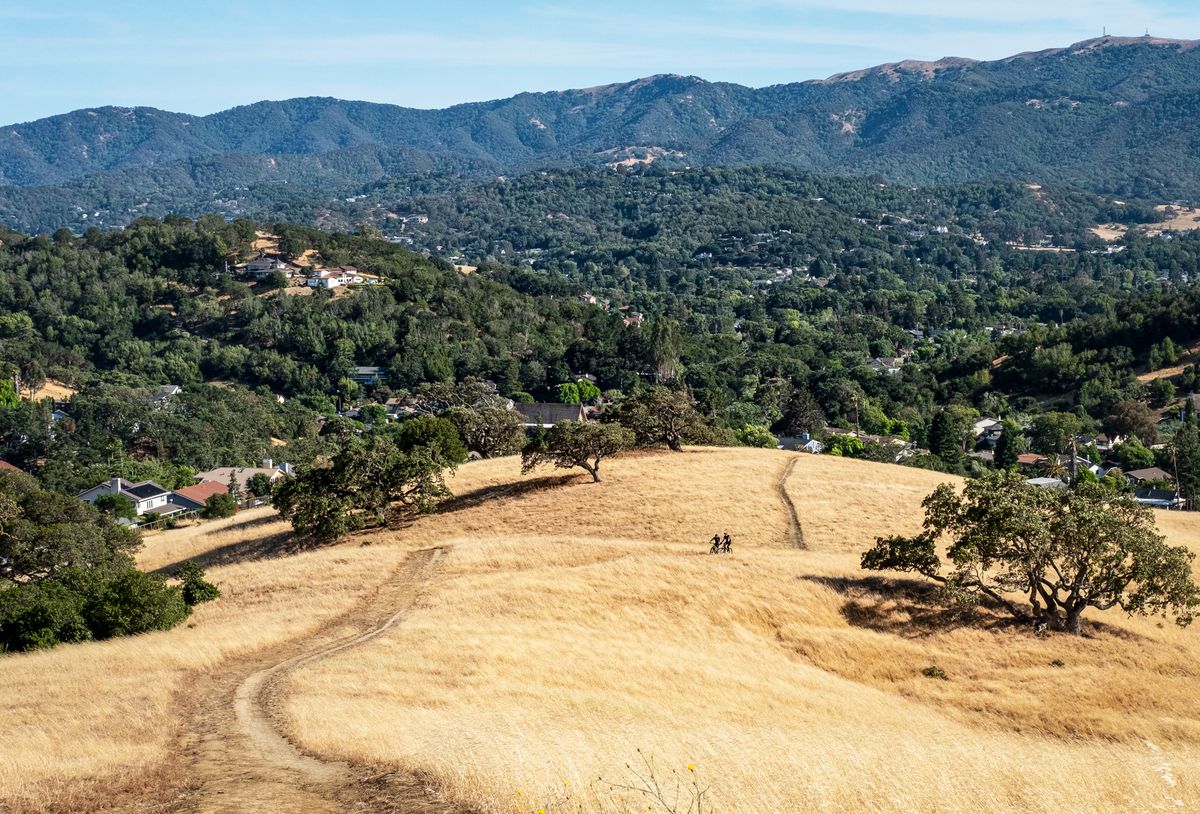
San Luis Obispo's own hills are the subject — the Morros standing off to the west, Islay Hill and the ridgeline to the south — and a canopy that was open when the house sold can close a sightline in five years. View clearing san luis obispo is the careful version of getting it back.
Windows, not clearcuts
The wrong approach is to cut everything below a horizontal line, which leaves a hedge of butchered stubs that grows back bushier than it started. The right approach is selective: identify the specific limbs and the specific small trees that are blocking the view corridor, reduce or remove those, and leave the structure and the canopy that gives the property its character.
Two or three well-chosen cuts often reopen more of a vista than a whole morning with a saw, because a sightline is a narrow thing.
Reduction, not topping
Where a large tree is the obstruction, the answer is crown reduction — cutting back to live laterals and taking the height down over successive seasons — rather than cutting the tree off at the height of the view.
Topping a mature tree in a neighbourhood like this is the fastest way to create the problem you were trying to solve: a stump that sprouts aggressively, a crown that returns dense and low, and a tree that is now a liability as well as an obstruction. See crown reduction for how the cuts are made.
Whose tree is it
A view dispute in this city is usually a boundary question wearing a tree costume. A tree wholly on a neighbour's land is the neighbour's to decide about, whatever it does to your outlook; a tree on the boundary itself is shared; a tree on city land or a street tree is the city's.
Cutting a neighbour's tree without permission is not a pruning job, it is a trespass with a bill attached, and the honest answer when the tree belongs to somebody else is a conversation — sometimes with an arborist's report in hand to make the case that the work is reasonable.
Protected trees still apply
View work does not exempt a tree from the city's ordinance. Heritage oaks and protected categories need approval whether the reason is safety or scenery, and a plan that ignores that gets stopped. Where a permit is needed, the strongest application is one that proposes the minimum work that restores the view, with the arborist's reasoning attached. See permits & tree ordinances.
It grows back
Be honest about the timescale: a cleared sightline in this climate closes again in a few years, and a view maintenance plan on a three- to five-year cycle is the realistic arrangement rather than a one-off job. Coastal fog does not slow the growth here the way it does on the bluff; inland heat accelerates it.
Have the sightline looked at
Stand where the view is best and photograph what is in the way. Call (805) 927-4414 or use the contact page, and see our services.
Questions, quotes, or just exploring — we’re here to help.