


Smaller Without Topping
Crown Reduction in Morro Bay, CA
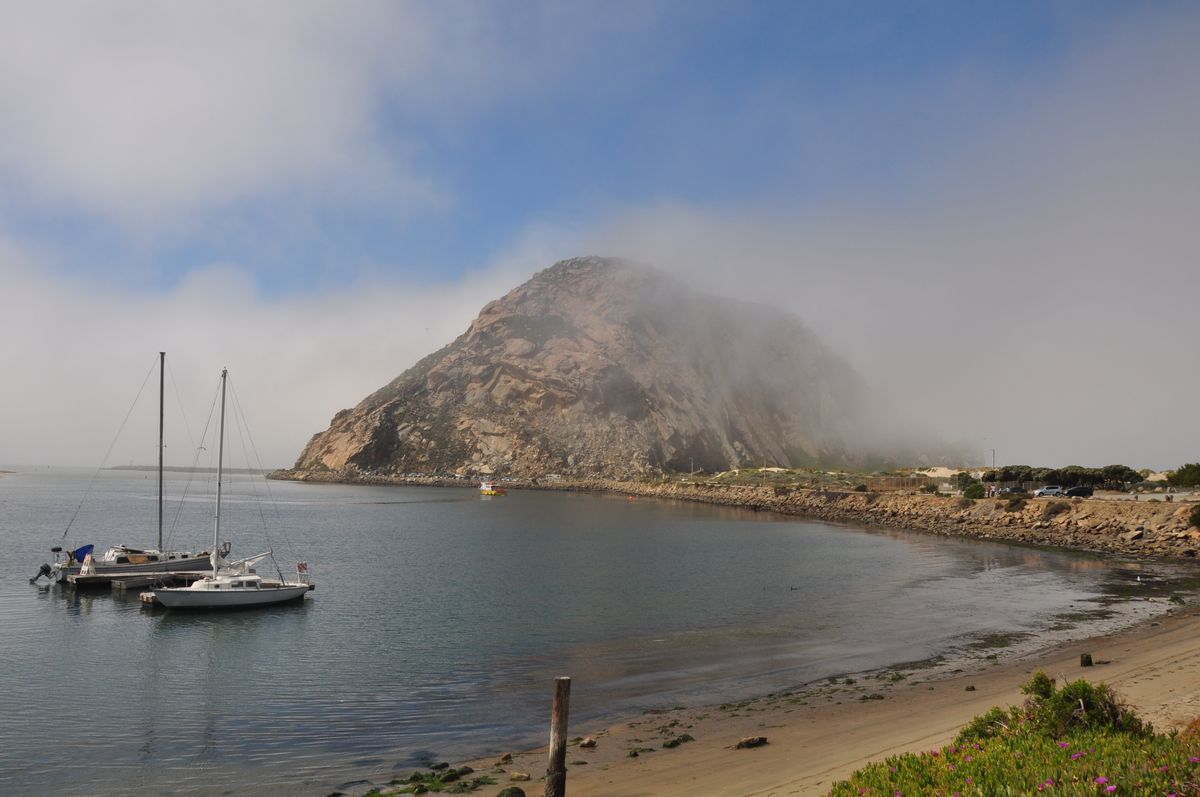
Morro Bay — this is the coast these pages are about.
Quick answer: Crown Reduction in Morro Bay, CA — Trees on this coast live with fog, salt, wind and thin soil, and the work that keeps them healthy is decided by those conditions rather than by a calendar written inland. Structure, clearance and the root zone are what a tree here needs looked at, and small work done early is what keeps a tree out of the emergency list.
- What it involves: Structural pruning, clearance from structures and wires, deadwood removal, root-zone care and hazard assessment.
- Typical timing: Structural work in the dormant months; deadwood, clearance and hazard work whenever the tree needs it.
- The standard: The ISA standards for pruning and tree risk assessment, applied by ISA-certified arborists.
- Where we work: Cambria, San Simeon, Harmony, Cayucos, Morro Bay, Los Osos and the Cambria pine belt.
- Our own record: 503 pages and 291 stories published on this site. Counted from our own archive, not a stock table.
Field note. What we see on this coast is that the trees people worry about are usually not the ones in trouble: the pine with a clean crown and a lean that predates the house is often sounder than the tidy tree that has been quietly drowning in its own root zone.
On the other hand, there is no schedule that suits every tree — the same species on two sides of one street can need opposite care, which is why we look before we recommend.
Sooner or later a tree on a Morro Bay lot outgrows the space between two buildings, and the owner wants it smaller rather than gone. Crown reduction is the honest way to do that.
It takes height and spread off a tree by cutting limbs back to a living lateral branch of adequate size, so the tree keeps a natural outline and continues to grow from a real structure rather than from a wound. What it is not — and this distinction is the entire subject — is topping.
Reduction cuts versus stubs
A reduction cut is made back to a side branch big enough to take over the role of the piece removed, generally at least a third of the diameter of the cut. The tree responds by continuing growth through that branch. A topping cut is made wherever a saw can reach, in the middle of a limb, leaving a stub with no live bud to carry the growth on.
The tree's response to a stub is a ring of rapid, weakly attached shoots that grow faster than the original limb and are anchored to decayed wood. Everything that makes topping bad follows from that one difference.
How much can come off at once
Not much. A healthy tree can generally lose around a quarter of its live crown in a single pass without being set back, and the total removed across the whole tree is what counts rather than any single cut. A tree that needs to come down by a third or more to fit its space is usually in the wrong space, and a staged reduction across several years is a better answer than one heavy cut.
Where the tree is already stressed — a cypress with canker bleeding, a pine that has been losing needles — the allowance is lower again, and on some trees the honest recommendation is that it should be removed rather than repeatedly cut back.
The growth response nobody can avoid
Reducing a tree does not stop it growing. It slows the top, thickens what is left, and often produces a denser crown than before within a few seasons, which is why reduction is a maintenance cycle rather than a single event.
On a coastal lot that denser regrowth also means more sail, so a reduction that is going to be repeated every few years is worth planning as a cycle rather than booked as a rescue. Where the real problem is density rather than height, thinning is the more appropriate tool and does less damage.
Where it is the right call in town
The pattern that brings us out is a mature tree that was fine when the lots around it were shorter and the neighbours had no second storey. A cypress leaning over a rebuilt deck, a eucalyptus whose limbs now brush the roofline on Pacific Street, a pine that has grown into the service drop — in each case a modest reduction moves the canopy away from the structure without removing the tree, and buys the property a decade.
Where the limb over a roof is the only real issue, the smaller and better answer is often crown raising instead.
(805) 927-4414Getting a proper assessment
Reduction is a judgement about species, vigour and structure, so it begins with a look rather than a number. Call (805) 927-4414 or use the contact page and describe what the tree is doing that it was not doing before, and see our services for the wider pruning programme on this coast.
Questions, quotes, or just exploring — we’re here to help.