


Keeping the Road and the Lane Passable
Roadway & Right-of-Way Clearance in Harmony, CA
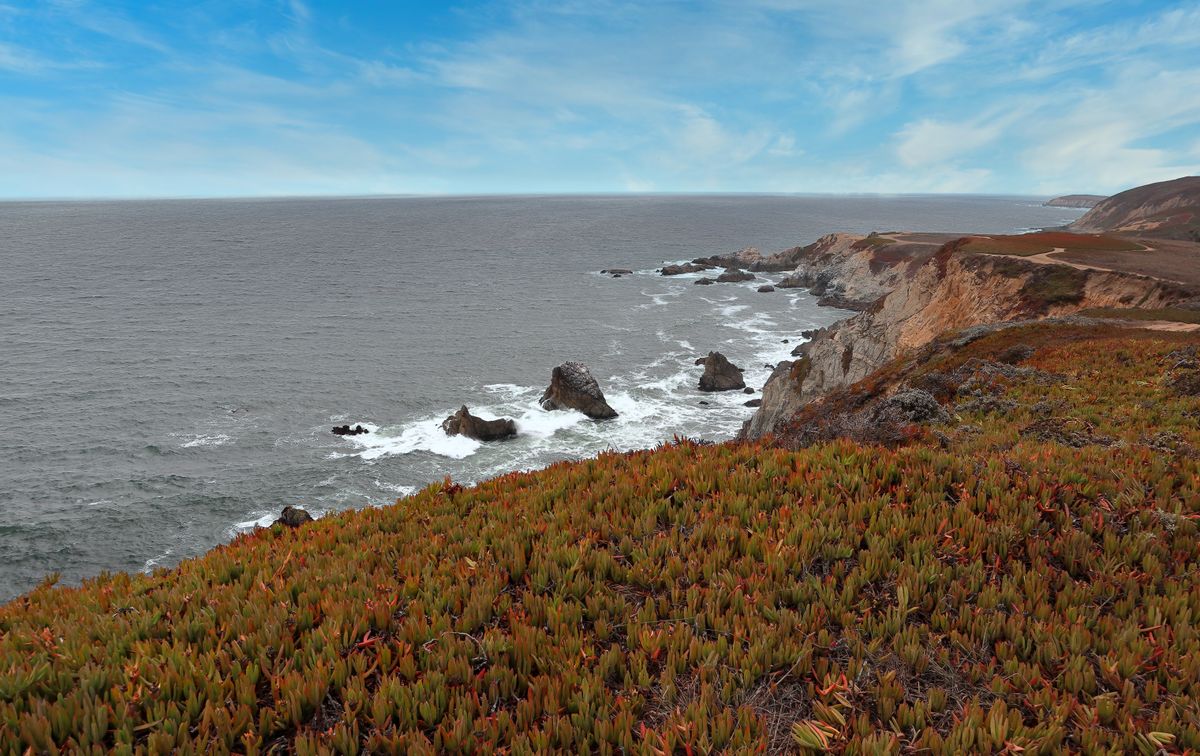
Harmony — this is the coast these pages are about.
Quick answer: Roadway & Right-of-Way Clearance in Harmony, CA — Defensible space is the work that decides what a fire has to burn between the wildland and the house: dead material out, ladder fuels separated, and the tree you keep limbed up rather than removed. It is measured in zones from the structure, and the first few feet are the ones that matter most.
- Typical timing: Best done in the cool months so the debris is gone before the dry season; clearance rules apply year-round.
- What it involves: Removing dead and dying material, separating shrubs from low limbs, limbing trees near structures, and keeping the roof and gutters clear.
- The standard: Cal Fire's defensible-space guidance for the first 100 feet, applied to the trees a property actually has.
- Where we work: The wooded parts of Cambria, San Simeon, Harmony and the surrounding ranch country.
- Our own record: 503 pages and 291 stories published on this site. Counted from our own archive, not a stock table.
Field note. What we see on this coast that surprises people is how much of the fuel load is low: the limb at four feet and the brush beneath it carries fire into a canopy that would otherwise survive, so the work is often lifting rather than felling.
On the other hand, over-clearing has its own cost — bare ground erodes, and the wind that comes with the fog belt is harder on a thinned stand than the fire risk it removes.
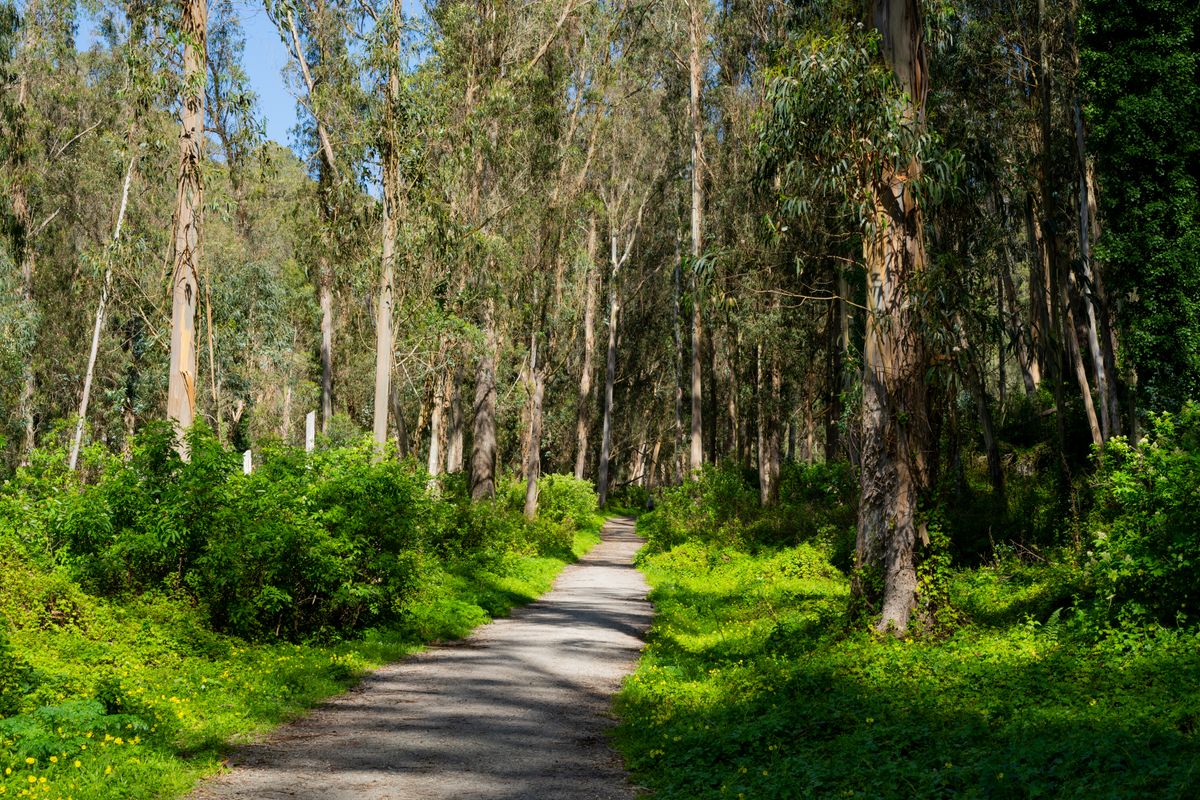
Harmony has one road through it and one lane off it, and both are lined with trees that have been growing into the clearance for a century. The work here is not glamorous, but it decides whether a fire engine can reach a building, whether a truck can get past the winery gate, and whether anyone can see a car coming round the bend at dusk.
On a stretch with an afternoon wind and a set of eucalyptus over the verge, it also decides who is liable when a limb lands on the road.
Who owns the strip you are looking at
Clearance along a road runs into three different owners, and the first job is to work out which one applies. The state highway frontage is Caltrans' — work needing a lane or shoulder closure goes through their permit and their timing, which is a planning lead time rather than a phone call on the morning. A county road is the county's, with its own standard for vertical clearance and sightlines.
And the lane serving several parcels is private, which means the owners share the responsibility and need one of them to hold the schedule.
Clearance measured against what has to pass
The useful standard is not a number in a book but the tallest thing that legitimately uses the road: an engine with its aerial, a hay truck, a delivery lorry, a horse float. So the vertical clearance is set above that, and it is set as a margin that survives a growing season rather than a measurement that is true on the day.
Overhead, sightlines matter as much — an approach to a gate, a bend, a farm entrance and a sign all have their own requirement, and a limb that blocks a sign blocks a warning.
Sightlines, signs and the blind entrance
Farm entrances are the recurring problem. A driveway that emerges from between two windrows onto the highway has almost no sightline in summer and none in the season the grass is tall, and the fix is usually a combination of clearance on the trees and management on the grass. Where the verge has grown into the sign line, the sign cannot do its job, and that is a clearance problem regardless of how tidy the verge looks.
Working on a narrow, live road
A road with traffic on it is its own discipline. The lane is kept open where it can be and controlled where it cannot, the crew works in hi-visibility clothing with signage, the wood is not left on the shoulder overnight, and the work is timed away from the school run, the harvest and the visitors.
On the highway the timing is not ours to choose at all, which is why the useful conversation about a big tree over the road happens a season before it needs to.
Brush, limbs and the disposal
Cut material comes off the verge and goes somewhere: chipped and left as a mat on the adjacent ground, hauled, or where the parcel and the season allow, stacked for a burn day — which on ground this dry is a narrow window and never an afterthought. The fire-clearance half of the same roadside work belongs with fire clearance and the defensible space inspection.
If a lane or a road frontage has closed in, call (805) 927-4414 and we will look at the clearance and the ownership together. See our services, the Harmony page, or the contact page.
Field note — Adrian Delacroix measures clearance against the biggest vehicle that might use the road, not the one that uses it most days.
Questions, quotes, or just exploring — we’re here to help.