


The Wind Gets Through, or It Goes Through the Tree
Crown Thinning in Cayucos, CA
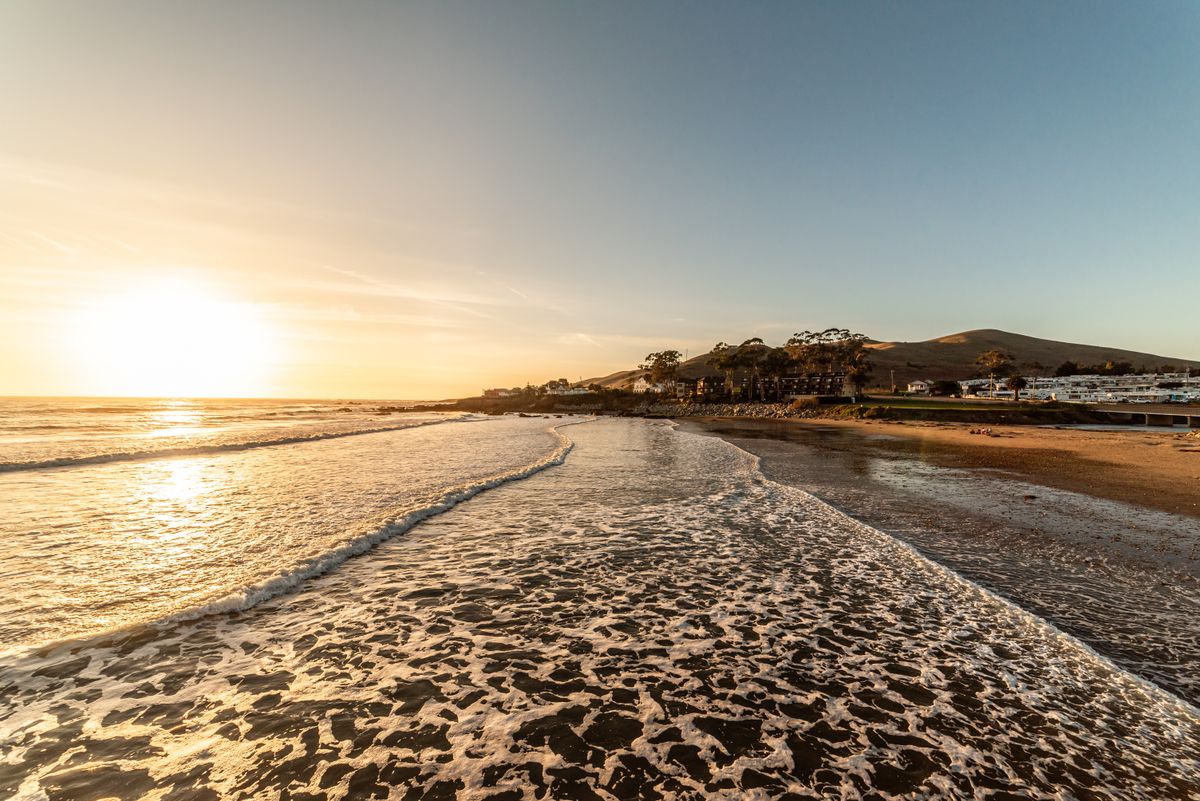
Cayucos — this is the coast these pages are about.
Quick answer: Crown Thinning in Cayucos, CA — Pruning is a plan before it is a cut: deadwood and broken limbs first, then clearance from roofs, wires and paths, then the structure the tree will carry for the next decade. The right cut heals and the wrong one invites decay, which is why the order matters more than the number of cuts.
- Typical timing: Structural work in the dormant months, light clearance and deadwood any time the tree is not under stress.
- What it involves: Removing dead and crossing limbs, thinning to let light through, lifting low limbs for clearance, and never topping a tree.
- The standard: The ANSI A300 pruning standard as applied by ISA-certified arborists — including the three-cut method on every limb worth saving.
- Where we work: Cambria, San Simeon, Cayucos, Morro Bay, Los Osos and the towns between.
- Our own record: 503 pages and 291 stories published on this site. Counted from our own archive, not a stock table.
Field note. What we see on this coast is a pruning calendar that does not match the inland one: salt air, fog and wind mean a cut that would be minor in the valley can be the one that opens a crown to decay here, so we look at the species and the exposure before the season.
On the other hand, not every tree wants to be pruned: leaving a healthy canopy alone is a decision that pays, and a tree with plenty of space is often better served by doing nothing.
Crown thinning in Cayucos is mostly a wind argument. The northwesterly that funnels up the coast in the afternoons hits the beach blocks and the hillside streets with nothing between it and the ocean, and a tree with a dense, closed crown takes that load as a sail. Thinning opens the canopy so the air moves through instead of against it, and the tree that survives a winter here is usually the one that was allowed to be porous.
It is also the most misunderstood pruning job we do. The version most people have seen — the inside stripped out until the tree looks like a telephone pole with a tuft on top — is not thinning. It is a permanent injury.
Thinning, Reduction, and Lions-Tailing Are Three Different Jobs
- Thinning removes selected inner live branches so that light and wind move through the crown. Height, spread and outline are unchanged. The tree reads as lighter, not smaller.
- Reduction shortens limbs and takes height or spread off. That is a different cut with a different purpose, and if what you want is a smaller tree, thinning is the wrong job — see crown reduction.
- Lions-tailing strips every inner branch off a limb and leaves a tuft at the end. It is not thinning, it is a shortcut, and it is the reason coastal pine and eucalyptus pruning has a bad reputation.
The Dosage Limit Is Not a Suggestion
Accepted practice under ANSI A300 (Part 1) sets a ceiling rather than a target: no more than roughly a quarter of the live crown in a single pass, and less than that on a tree already under stress. The leaves are the tree's factory and its stores. Take too many and it cannot seal the cuts, cannot lay down the wood that holds it up, and cannot feed itself through the next dry summer.
Over-thin and you get the opposite of what you asked for. The tree pushes a flush of epicormic shoots along the trunk and limbs — fast, weakly attached growth — and the crown comes back denser and heavier than it started, anchored worse than before. Sunscald on freshly exposed bark is the other mark, and neither is repairable afterwards.
Where Thinning Is the Right Call on This Coast
A mature pine or cypress on a beach lot with a house downwind. A eucalyptus windbreak that has closed into a solid wall along a parking pad. A tree over a deck that has gone dark inside and is dropping shaded-out material on a roof. In each case the tree is sound and the crown is heavy, and thinning buys wind tolerance without changing what the property looks like from the street.
And in each case we check the same three things first, because thinning cannot fix any of them: whether the branch unions are sound or include bark, whether the root plate has moved, and whether the site's drainage has changed. A leaning tree on a slipping hillside street is a risk assessment, not a thinning.
(805) 927-4414How the Work Runs
Judgement is spent before the first cut. We walk the tree and decide what the crown is for — clearance, wind, light, the health of what grows beneath it — then mark what stays and distribute the removals so weight is balanced end to end and left to right. Cuts go to the branch collar, never flush and never leaving a stub, and anything dead, broken or rubbing comes out in the same visit.
Over a roof or a fence it is rope access and rigged lowering, which is slower than the shortcut and the reason the shortcut exists.
Book a Look at the Crown
Tell us the species if you know it and what is underneath the tree. A photograph of the whole tree and one looking up into it is usually enough to say whether thinning, reduction or something else is the answer. Call (805) 927-4414 or use our contact page, and see our services for the rest of what we do here.
Questions, quotes, or just exploring — we’re here to help.