Six Signs a Tree Needs a Pruner Rather Than a Saw
Quick answer: Six Signs a Tree Needs a Pruner Rather Than a Saw — Pruning is a plan before it is a cut: deadwood and broken limbs first, then clearance from roofs, wires and paths, then the structure the tree will carry for the next decade. The right cut heals and the wrong one invites decay, which is why the order matters more than the number of cuts.
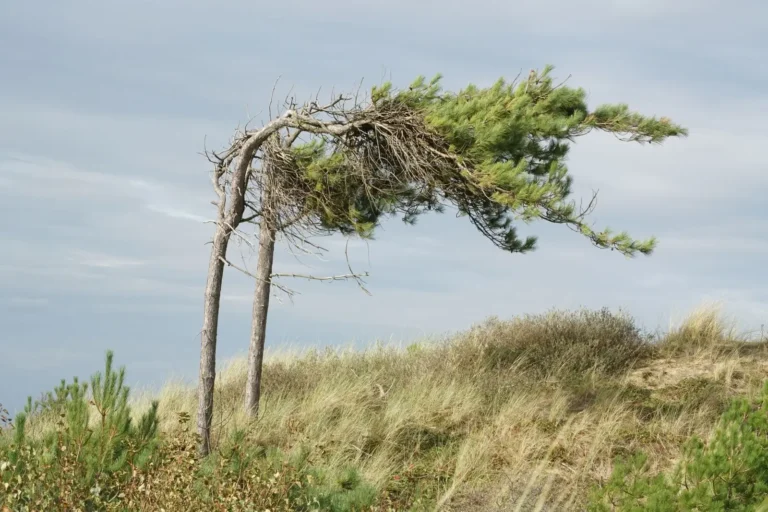
Field note. What we see on this coast is a pruning calendar that does not match the inland one: salt air, fog and wind mean a cut that would be minor in the valley can be the one that opens a crown to decay here, so we look at the species and the exposure before the season.
On the other hand, not every tree wants to be pruned: leaving a healthy canopy alone is a decision that pays, and a tree with plenty of space is often better served by doing nothing.
There is an oak on a slope above Moonstone that has been in the same family’s view for four decades. Last spring it started dropping small dead twigs onto the deck, and the neighbour said it was dying, and the husband said it was fine, and both of them were describing the same tree from thirty feet away.
Up close, the tree was in excellent health and had one structural problem — a co-dominant leader that had been quietly widening a seam for twenty years. That is a pruning job. From the deck it looked like a removal.
Most mature trees that people describe as dying are asking for one of six specific interventions. Here is how to tell which one you are looking at.
One: deadwood that has become a hazard
Dead branches are not automatically a problem, and a certain amount of deadwood is normal in a healthy canopy. What changes the category is position. Deadwood over a roof, a driveway, a play area or a path is a liability with a predictable failure mode. Deadwood over open ground is habitat, and leaving some of it is good practice on a property with room for it.
Two: a seam where the trunk splits
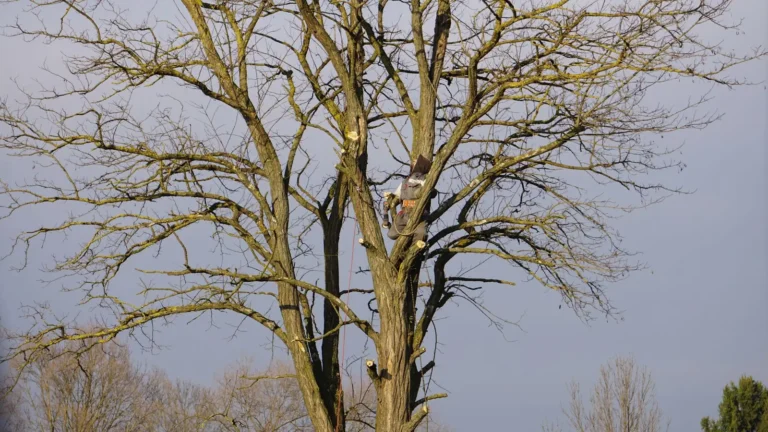
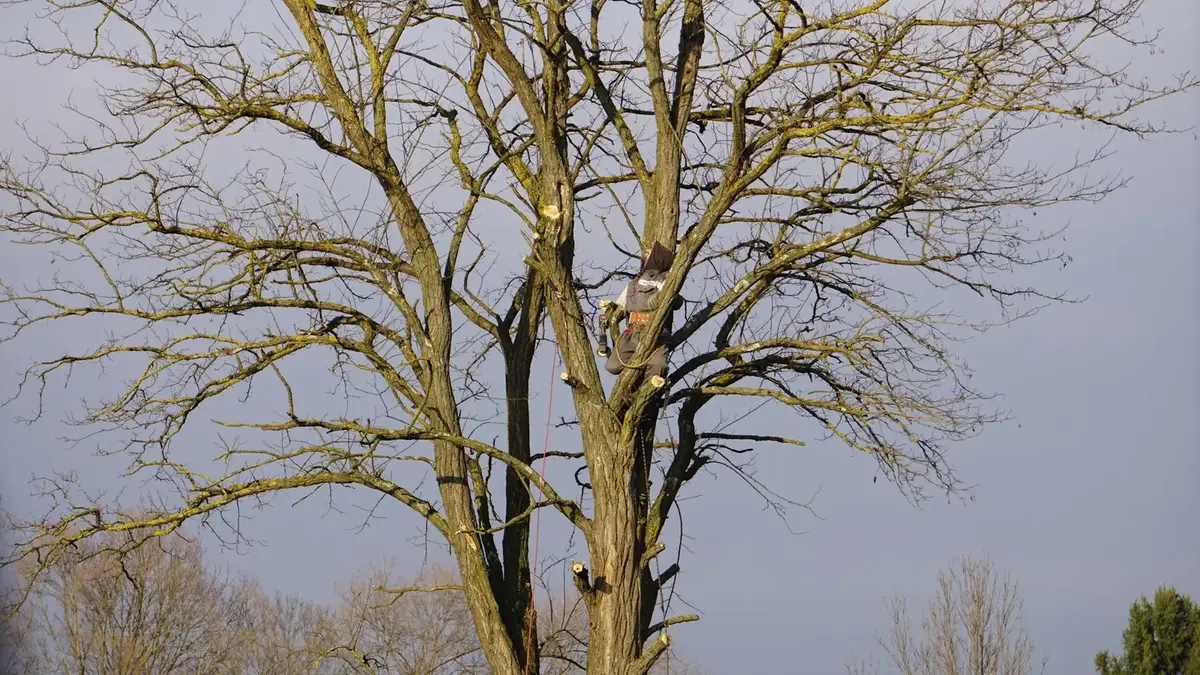
Where two leaders of nearly equal size emerge from one point, the bark often forms a seam rather than a sound collar of wood, and that seam is where trees split in wind. The remedy is not to top one side and hope.
It is to subordinate one leader over several seasons, reducing its length and letting the other take dominance gradually, so the tree builds reaction wood in the right place. A single heavy cut in one afternoon does the opposite of what the tree needs.
Three: a canopy so dense it is shading itself
A tree that leafs out fully and then loses interior foliage in July is telling you the outer shell has intercepted the light the inner branches needed. On the coast, with fog doing half the watering, this shows up as a thin, twiggy interior and a canopy that looks like a shell. Thinning for light means removing selected branches back to a lateral, not shearing the outside into a hedge shape.
Four: growth into a structure or a sight line
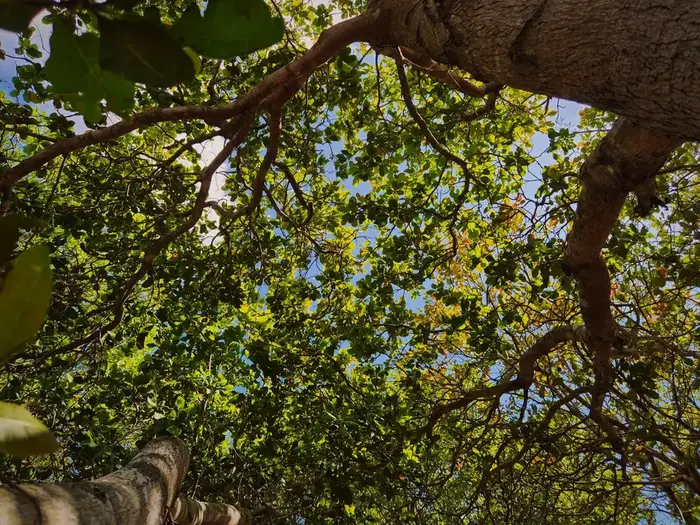
Branches growing into a roof, a chimney, a fence or a utility drop need directional pruning — cut back to a lateral that grows away from the obstruction, so the tree’s response grows in a direction you chose. The wrong version, and the one that produces the ugly stubs people remember, is a flush cut that removes the branch collar and leaves the tree unable to seal the wound.
Five: a lion's tail
When everything except the branch tips has been stripped away, the remaining foliage sits at the far end of long bare limbs, acting as a lever in wind. This is nearly always the result of bad previous pruning, and it is corrected slowly by encouraging interior growth and reducing the ends over a couple of seasons. If a crew offers to fix it in one visit, they are planning to make it worse.
Six: the tree is simply in the way
Sometimes the honest answer is that no cut will help, because the tree is in a place a tree should not be — under a power drop, against a foundation, in a space that will be a patio. Pruning that tree annually to keep it small is a subscription to a problem. Removal and replanting with something suited to the space is cheaper over ten years and looks better in year two.
The test for all six: a pruning cut is justified by a structural or health reason you can state in one sentence. If the sentence is about the view, the answer may still be yes, but it is a different conversation and it should be priced as one.