

Tree Trimming & Pruning in Cambria, CA — Free Estimates
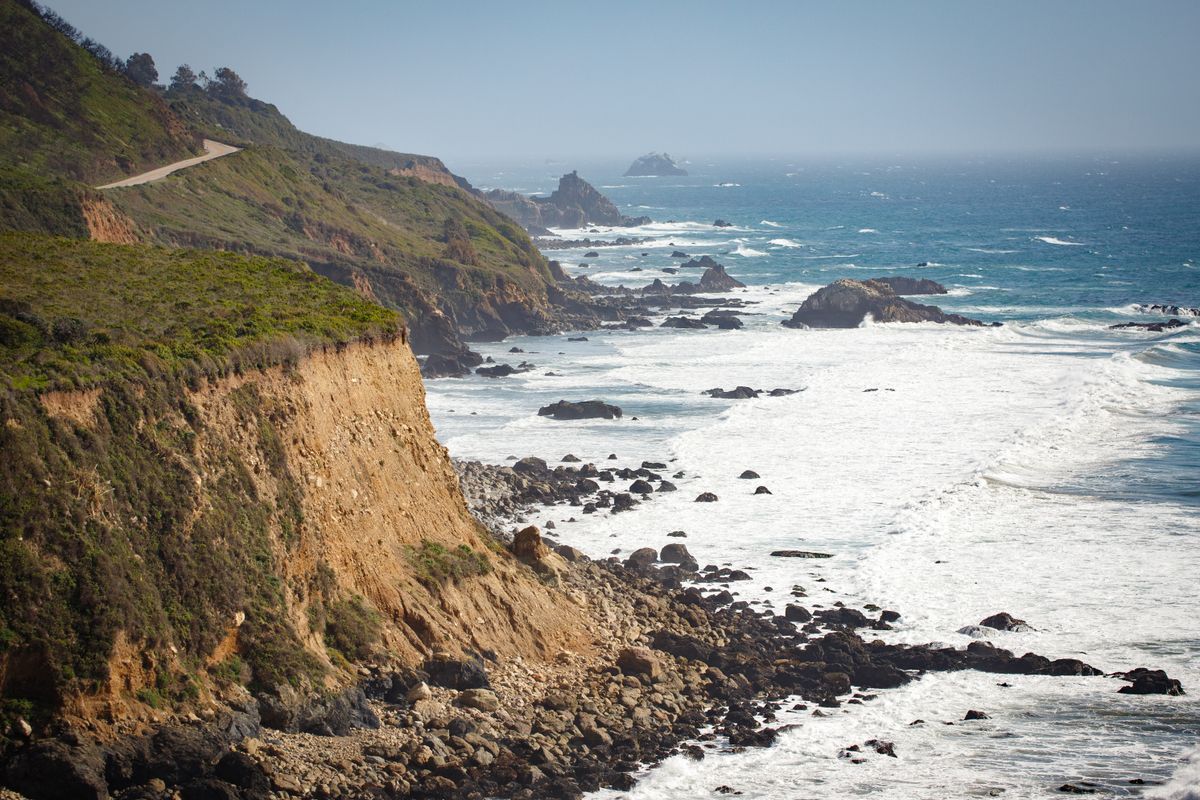
Cambria — this is the coast these pages are about.
Quick answer: Tree Trimming and Pruning Cambria — Pruning is a plan before it is a cut: deadwood and broken limbs first, then clearance from roofs, wires and paths, then the structure the tree will carry for the next decade. The right cut heals and the wrong one invites decay, which is why the order matters more than the number of cuts.
- Typical timing: Structural work in the dormant months, light clearance and deadwood any time the tree is not under stress.
- What it involves: Removing dead and crossing limbs, thinning to let light through, lifting low limbs for clearance, and never topping a tree.
- The standard: The ANSI A300 pruning standard as applied by ISA-certified arborists — including the three-cut method on every limb worth saving.
- Where we work: Cambria, San Simeon, Cayucos, Morro Bay, Los Osos and the towns between.
- Our own record: 503 pages and 291 stories published on this site. Counted from our own archive, not a stock table.
Field note. What we see on this coast is a pruning calendar that does not match the inland one: salt air, fog and wind mean a cut that would be minor in the valley can be the one that opens a crown to decay here, so we look at the species and the exposure before the season.
On the other hand, not every tree wants to be pruned: leaving a healthy canopy alone is a decision that pays, and a tree with plenty of space is often better served by doing nothing.
Tree Trimming & Pruning in Cambria
Pruning is the quietest work we do and the one most local trees need. On this coast, a tree that grew up in the fog carries more crown than its roots and timber can justify — every winter wind finds the weak limb, and every heavy branch over a roof is a question waiting for an answer. The right cut removes the question without removing the tree.
What we prune for
- Structure. Crossing limbs, co-dominant leaders with bark trapped between them, and branches with weak attachment — the defects that fail first in wind.
- Wind. Thinning the outer crown of an exposed pine or cypress lets wind pass through instead of levering the trunk; the goal is a smaller sail, not a shorter tree.
- Views. Coastal view pruning is a craft: remove the branch that blocks the horizon, keep the profile that makes the tree worth looking past.
- Health. Dead, broken and diseased wood; deadwood over parking and walkways; storm-torn stubs that invite decay into the trunk.
- Season. Coast live oaks are pruned in the dormant window that avoids beetle and fungus pressure; pines are pruned when the beetles have quieted. The calendar is part of the quote.
The cuts we will not make
We do not top trees. Topping a pine or cypress removes its ability to feed the crown it has, triggers the flush of weak regrowth that breaks in the next storm, and shortens the tree's life by decades. We do not strip a whole side of a tree for a view that will be blocked again in three years by the regrowth the pruning caused.
And we do not take hardwood for the sake of taking it: on a native pine or oak, the best pruning is the least pruning that solves a real problem.
What a pruning visit looks like
A walk-through first — we look at the tree's structure, the wind exposure, the targets below and the ground around it. Then a written scope: what gets cut and why, what is left alone, and what the tree will look like in five years. On a small job the whole visit is one day; mature pines over a roofline may take two with rigging, and a coordinated neighborhood pruning plan can be quoted as a package.
Compare with the general page for trimming and pruning, or see how a removal decision differs when the tree cannot be saved.
Pruning a native pine, specifically
A Monterey pine is not a landscape tree that happens to grow here. It is the tree the town is named for, and it responds to pruning in ways a nursery pine does not. It does not seal wounds with the vigor of an oak or a cypress, so a fresh cut in warm weather is an open door for pitch canker and bark beetles.
Its crown is naturally sparse and irregular, and trying to force it into a tidy silhouette means removing the very foliage that feeds the trunk. The pruning plan that follows is conservative by design: dead and broken wood first, then the specific limbs that carry a real defect or a real target, then nothing else.
Where a pine has grown heavy on one side after years of prevailing wind, a measured thinning on the loaded side restores balance without opening the crown to sunscald. The cut list is short, and that is the point.
(805) 927-4414Timing it with the coast
Cambria prunes best from late fall through the winter dry spells: the beetles are slow, the oaks are dormant, and the cuts have months to close before the spring push. That is also the window when the ground is soft enough to work without tearing turf, and when the Christmas-week rainstorms are still far enough out to matter.
Book the assessment early; the good weather on this coast is short and everyone in Pine Knolls and Marine Terrace wants the same week.
More Tree Services in Cambria
One crew covers all of Cambria, so the estimate is one call: (805) 927-4414. Every service below has its own page written for Cambria conditions.
About Our Cambria Tree Service
Cambria tree service
the local, licensed and insured crew behind this work, with every service in one place.
(805) 927-4414Questions, quotes, or just exploring — we’re here to help.