
What a Mature Tree Is Quietly Worth
Quick answer: What a Mature Tree Is Quietly Worth — Trees on this coast live with fog, salt, wind and thin soil, and the work that keeps them healthy is decided by those conditions rather than by a calendar written inland. Structure, clearance and the root zone are what a tree here needs looked at, and small work done early is what keeps a tree out of the emergency list.
Field note. What we see on this coast is that the trees people worry about are usually not the ones in trouble: the pine with a clean crown and a lean that predates the house is often sounder than the tidy tree that has been quietly drowning in its own root zone.
On the other hand, there is no schedule that suits every tree — the same species on two sides of one street can need opposite care, which is why we look before we recommend.
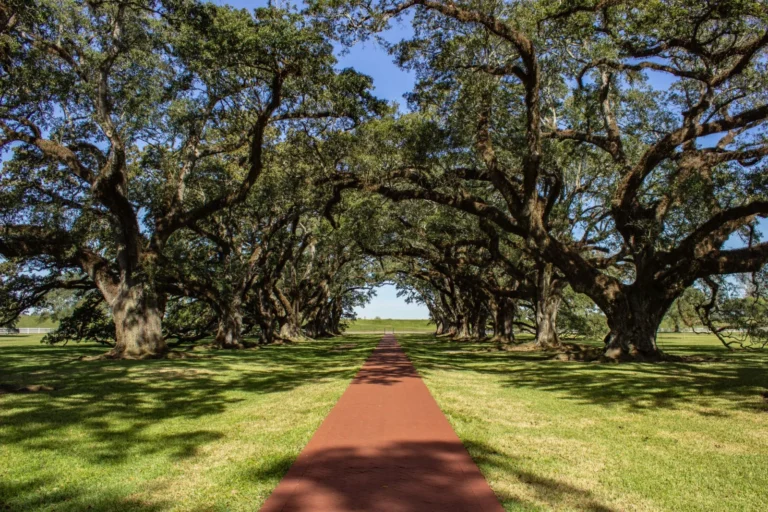
There is a category of object on a property that cannot be replaced at any price, and a mature tree is one of them. A nursery sells a fifteen-gallon oak, which is a stick with ambitions. It does not sell a ninety-year-old one, because moving it would kill it, and because the thing that makes it valuable is the ninety years.
That asymmetry is the practical case for protection, and it has nothing to do with sentiment. What you are protecting is a piece of infrastructure that has been under construction since before the house was built, and its functions are measurable.
What it does every day, for free
It intercepts rain. A mature evergreen canopy catches a meaningful fraction of a storm before it reaches the ground, and its roots and the soil structure around them absorb far more, which is why a treed slope sheds water more slowly than a bare one. On a coastal parcel with clay soil, that is drainage infrastructure you did not have to build.
It shades and cools. A tree over a west-facing wall lowers the surface temperature of that wall by a lot on an August afternoon, and the effect is not subtle in a house without air conditioning. It also holds soil: the root network binds a volume of earth that would otherwise move downhill.
And it is habitat, in a way that a shrub border is not — a mature oak is a system with a hundred species in it, most of them not visible.
The arithmetic of replacement
The usual comparison is between the cost of keeping a tree — a prune every few years, an occasional assessment — and the cost of removing it. That comparison is wrong, because it leaves out the replacement.
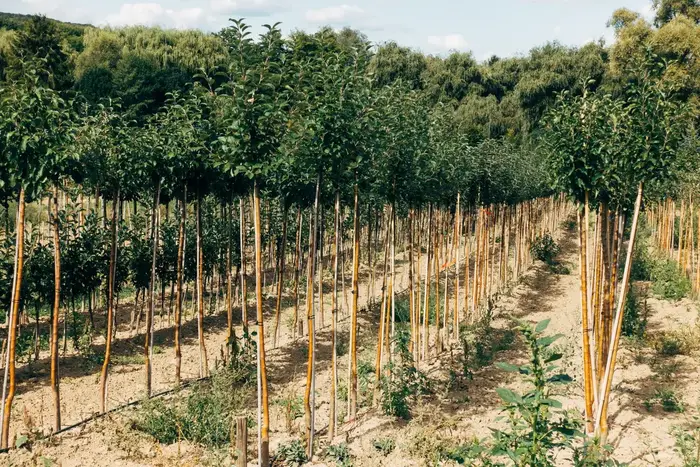
Removing a mature tree and planting a new one does not replace the tree; it starts a project that will not produce a comparable canopy for several decades, and during those decades the parcel has less shade, less stormwater capacity, more wind exposure and less soil stability.
There is also the direct cost of the removal, the stump, the repair to the garden, and — often — the cost of the thing the tree was quietly doing. A hillside that loses its trees needs drainage work. A house that loses its shade needs awnings or cooling. A garden that loses its windbreak loses the plants behind it.
When removal is still right
None of this means every tree stays. A tree that is genuinely hazardous comes down, and the arithmetic above does not argue with a crack through the stem over a bedroom. A tree in the wrong place — under a foundation, in a leach field, against a wall it is lifting — is a conflict that has to be resolved, and sometimes the tree loses.
The point is that the decision should be made with the value on the table, not only the inconvenience. The most common way a mature tree is lost on this coast is not a storm.
It is a sequence of small decisions: a root cut for a path, a grade change that buried the flare, a hard prune to get clearance, and then a removal three years later because the tree ‘started dying’. The tree did not start. It was killed slowly, by the things that happened around it.
Protection during construction
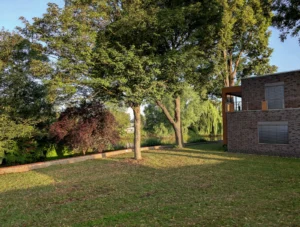
The single highest-value thing an owner can do is decide where the root zone is before the machinery arrives, and fence it. Roots extend well beyond the canopy — two to three times the radius is a reasonable planning figure — and compaction from a single pass of a loaded truck can reduce growth for years. A temporary fence at the drip line, no storage of materials inside it, and no grade change within it is cheap and it works.
If construction is planned around a tree you want to keep, construction tree protection covers the planning side; for a tree that is already showing decline, tree health diagnosis is the place to start rather than a removal quote.