
Cabling a Hundred-Year Cypress in Cayucos
Quick answer: Cabling a Hundred-Year Cypress in Cayucos — The tree that thrives here is the one chosen for this coast: fog, salt, wind and shallow soil are the local constraints, and mature size is the constraint most often ignored. Planting is a matter of putting the right species in a site that can hold it, then keeping the root flare visible and the first summers watered.
Field note. What we see is that the coast is forgiving to the right species and unforgiving to the wrong one: the same tree that looks comfortable four streets in will burn on the windward side of a Cambria lot.
On the other hand, natives are not automatically the answer at every address — a species that belongs in the watershed can still be the wrong size for the garden it is standing in.
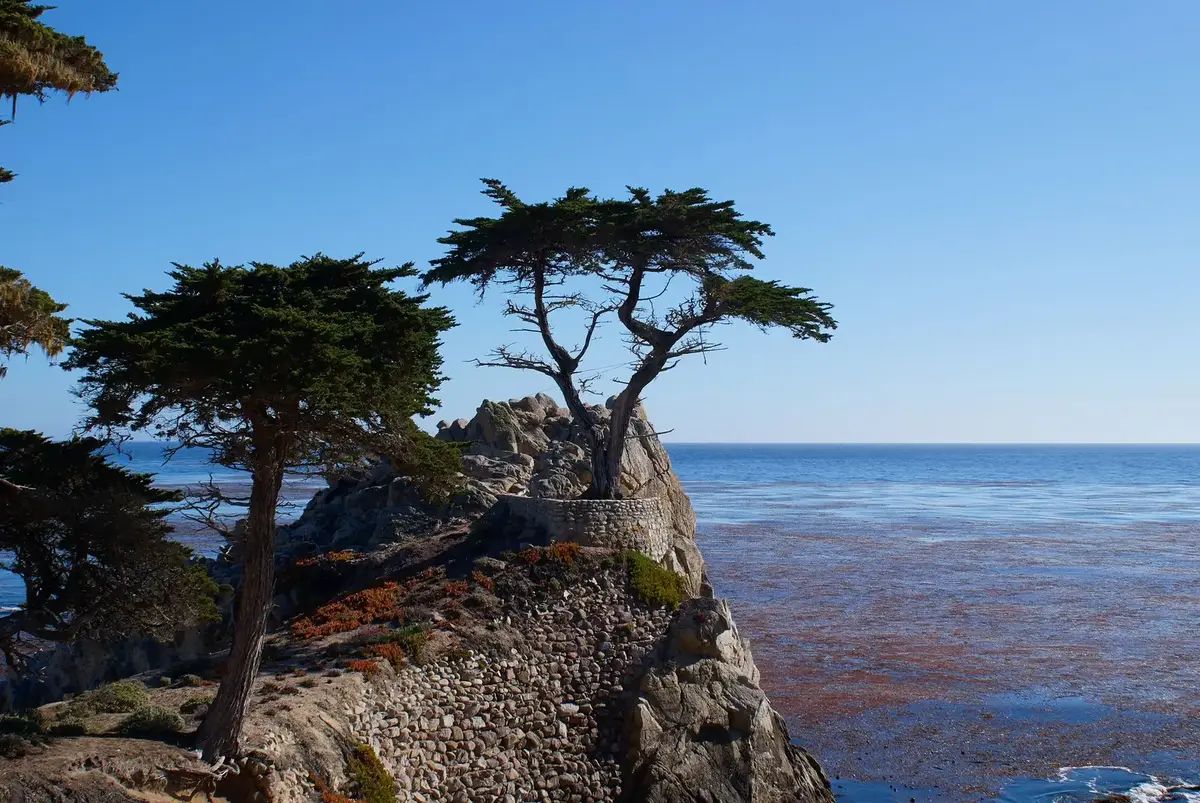
The old cypresses along this coast are mostly not one tree. They are a cluster of leaders that grew from the same base, fused where they touched, and spent a century pushing against each other in the wind. That is a perfectly good way for a cypress to live.
It becomes a problem when one of the leaders starts to move independently — when the union that held it has cracked, or when included bark has kept the two stems from ever joining properly in the first place.
Cabling is the intervention for exactly that situation. Two or more leaders are connected with a steel cable, high in the crown, so that when one is loaded by wind the other shares the load instead of being pushed apart. It is a supplement to sound wood, never a substitute for it.
What the cable does, physically
A failing union is a lever problem. When wind pushes one leader, the union acts as a fulcrum and the force at the crack is multiplied by the length of the leader above it. A cable changes the geometry: it converts a bending load at the union into a tension load in the cable, and tension is something steel is very good at.
The union still carries weight and still has to hold, but it is no longer being prised apart by every gust.
What the cable does not do is hold the leaders up. It holds them together. A cable installed between two stems that are both sound does nothing useful; a cable installed across a union that has already failed can hold the tree in a configuration that looks intact while the wood inside the crack continues to decay. That is why the assessment comes first, and why a cable is a decision about a specific defect rather than a general upgrade.
How it is installed, and where the height matters
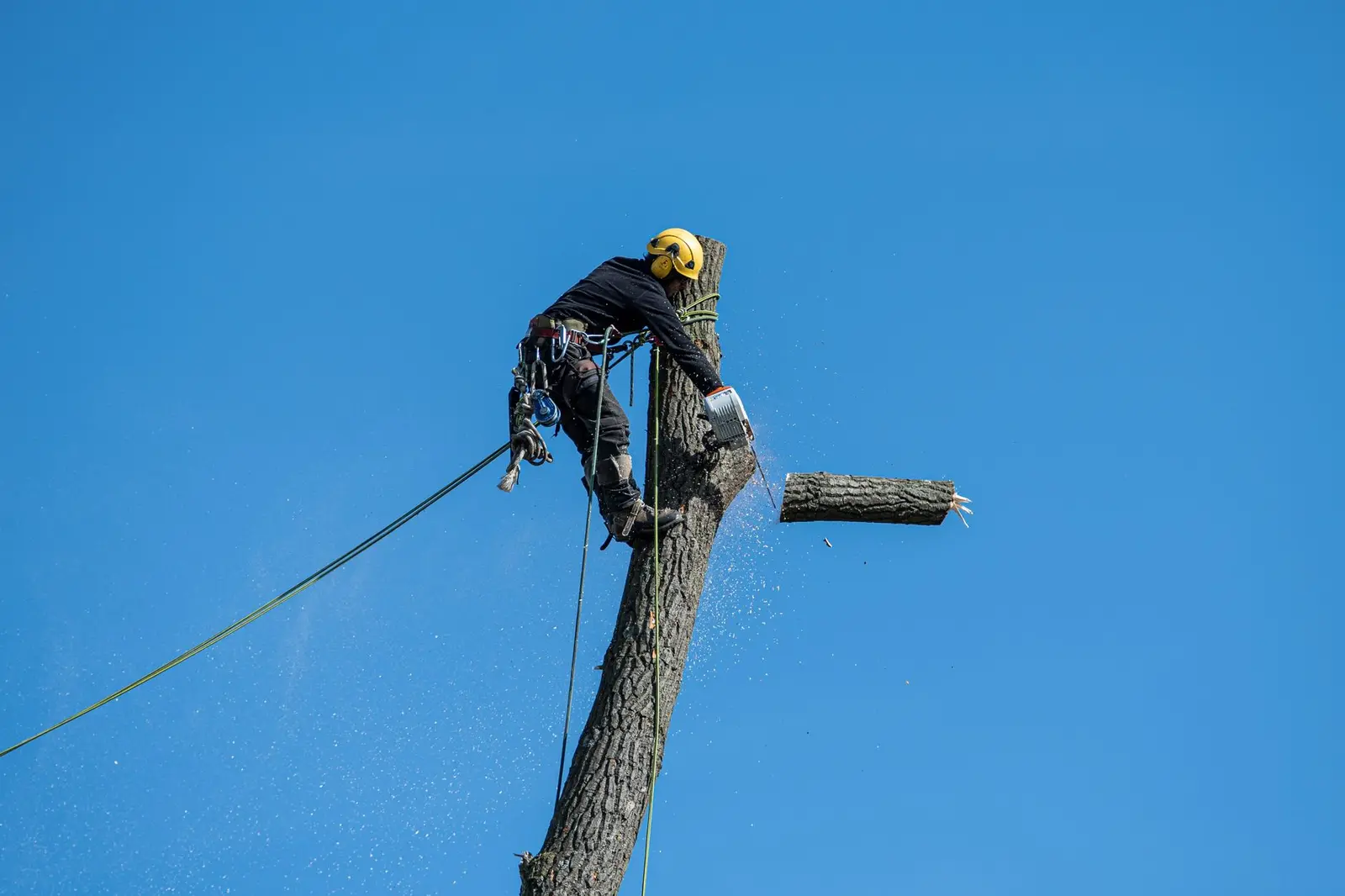
Steel cables are installed as high as the climbing and the rigging allow, because the higher the attachment, the smaller the angle change the cable has to arrest and the less leverage the leaders have. The rule of thumb is two-thirds of the height of the union between the two stems. Lower than that and the cable is doing less work than it could; much higher and the stems may not have enough wood to hold the hardware.
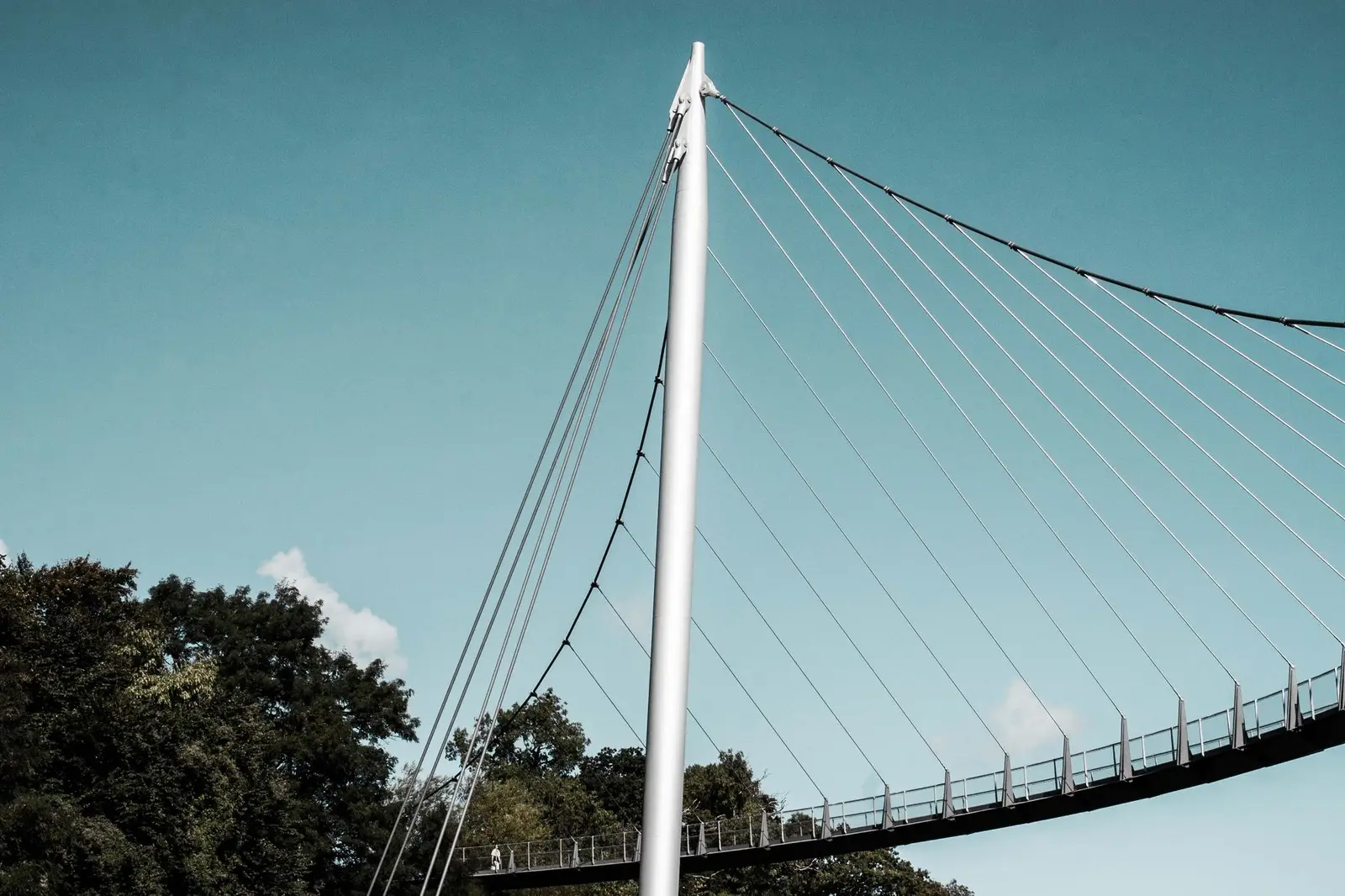
Hardware goes through the stem, not around it. A through-bolt with a lag or an eye bolt, set in sound wood, with the cable tensioned so it is taut but not loaded in still air. Rope cables still exist and have a place, particularly on smaller ornamental trees where the shock absorption of a rope is an advantage; steel is used where the load is large and the tree is expected to live for decades.
The part nobody likes: it is maintenance
A cable is not a permanent fix and it is not installed and forgotten. The tree grows around the hardware, the cable loses tension as the stems move, and the wood at the attachment point changes as the tree adds rings. A cable should be inspected every few years, re-tensioned when it slackens, and the tree re-assessed, because the defect the cable was installed for has not gone away.
That maintenance schedule is the honest cost of the option, and it is why the recommendation is not made lightly on a tree that could simply be reduced instead. Crown reduction takes load off the same leaders without hardware, and on many trees it is the better first move. Cabling is for the case where the geometry cannot be fixed by cutting — where two leaders need each other’s strength rather than less weight.
On the old cypresses here there is one more consideration: the species is prone to canker, and a wound from a bolt is a wound. The hardware has to go into sound wood the first time, because a second attempt through diseased tissue helps nobody. That is a reason to have the tree assessed by somebody who works on cypress regularly rather than somebody who mostly works on oaks.
The cabling and bracing service page describes the installation and inspection side; Monterey cypress care covers what the species does on its own.