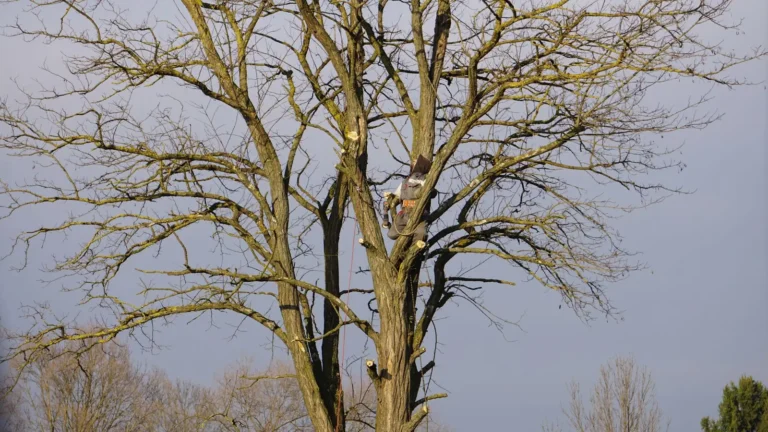
A Tree Cannot Heal a Cut. It Can Only Seal It.
Quick answer: A Tree Cannot Heal a Cut. It Can Only Seal It. — Pruning is a plan before it is a cut: deadwood and broken limbs first, then clearance from roofs, wires and paths, then the structure the tree will carry for the next decade. The right cut heals and the wrong one invites decay, which is why the order matters more than the number of cuts.
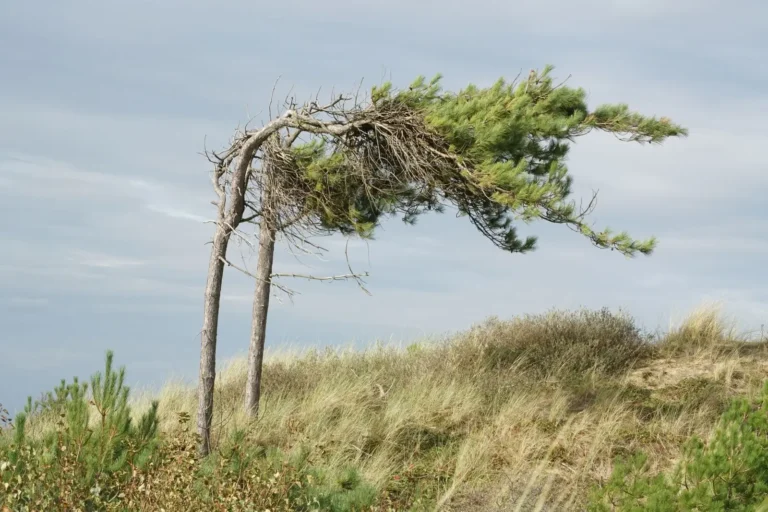
Field note. What we see on this coast is a pruning calendar that does not match the inland one: salt air, fog and wind mean a cut that would be minor in the valley can be the one that opens a crown to decay here, so we look at the species and the exposure before the season.
On the other hand, not every tree wants to be pruned: leaving a healthy canopy alone is a decision that pays, and a tree with plenty of space is often better served by doing nothing.
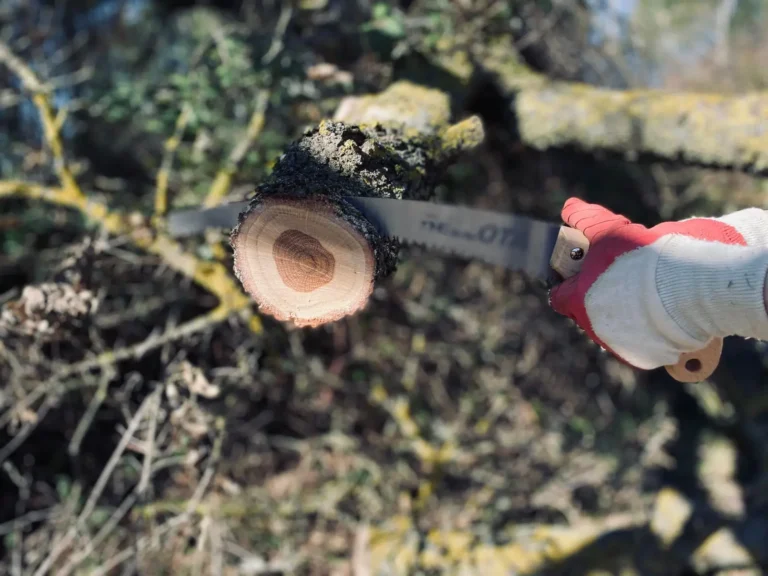
People say a tree heals, and a tree does not heal. It has no mechanism for replacing dead wood. What it can do is seal: grow new tissue that walls off the wound and keeps decay from travelling into the stem. Whether it manages that is decided largely by where the saw stopped.
That is the whole reason a cut is worth thinking about twice. The tree will live with our decision for the rest of its life, and it cannot revise it.
The four walls, and the only one that lasts
When a tree is wounded it responds in stages, and arborists describe them as walls. The first plugs the vessels above and below the cut so water and air do not move freely through the opening. The second grows inward from the wound edge, a darker layer that resists the spread inward. The third runs along the rays, side to side, keeping decay from circling the stem.
Those three are chemical and fast. The fourth is the one you can see from the ground: a new growth ring laid down after the wound, which encloses the damaged wood in a cylinder of sound tissue. The tree is not filling the hole. It is building a wall around it, and leaving the old wound inside for the rest of its life.
The collar is the instruction sheet
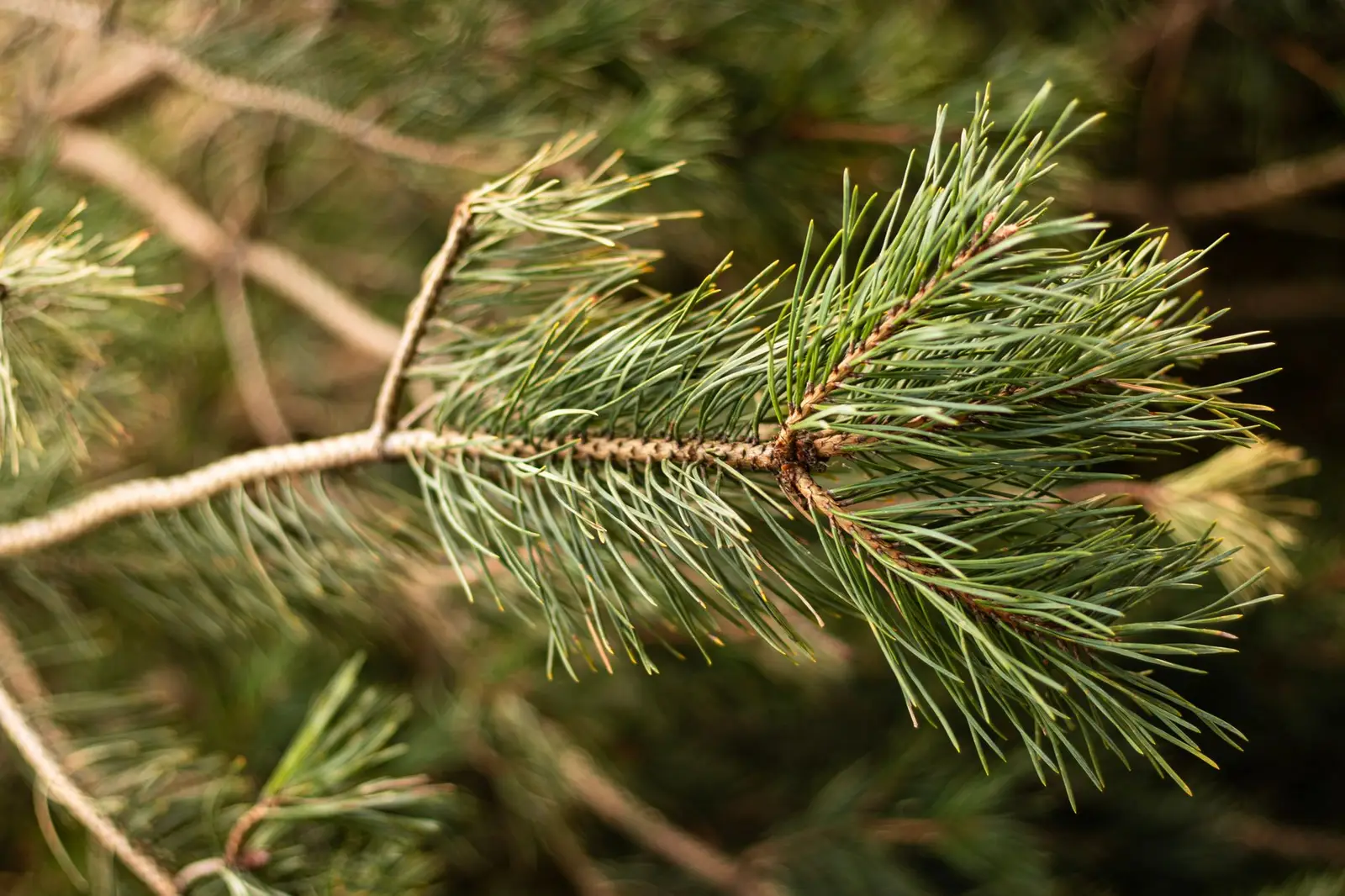
Look at the underside of a limb where it meets the trunk and you will find a swelling, and above it a ridge of raised bark that runs out onto the stem. That swelling is the branch collar, the tissue that contains the tree’s barrier zone. The cut belongs just outside it, parallel to the ridge.
Cut into the collar — a flush cut, made because it looks tidier — and you have removed the very tissue that would have sealed the wound. The tree now has a wound it cannot close at the edge, and decay walks in through the open door.
Leave a stub instead and you have the opposite mistake: the stub has no way to seal at its tip, so it dies, dries, cracks, and provides a sheltered entry for fungi that then grow back toward the limb.
Both errors are visible years later without any equipment. A properly cut branch has a ring of new wood rolling in around a small scar. A flush cut has a long oval wound with a sunken stripe beneath it. A stub cut has a hollow socket with a beard of shoots.
Size matters more than technique
A tree can seal a wound it can grow around. Once a cut removes a limb comparable to the trunk it is attached to, the maths stops working: the growth ring needed to enclose it is wider than the stem can produce in a reasonable time, and the exposed wood is large enough to stay wet long enough for decay to establish.
This is why the arboricultural advice converges on removing the smaller limb rather than the larger one — taking a heavy limb back in stages, or taking two moderate limbs where one large one was proposed. It is also why a tree that has been cut hard will look fine for two seasons and then start to show it. What a wound that never sealed turns into is described in the hollow-trunk question.
What the wound dressing actually does
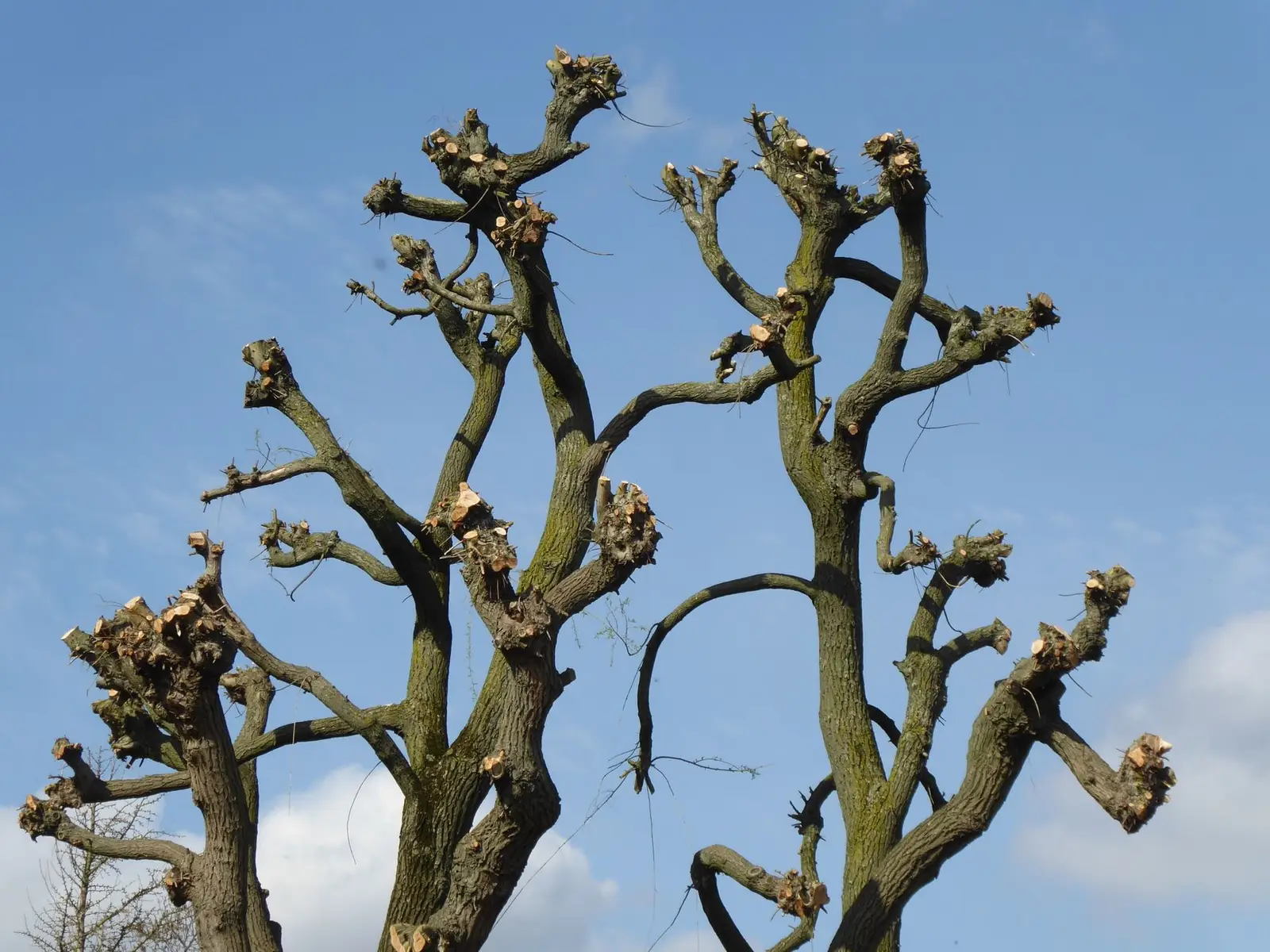
Nothing helpful. Paint, tar and sealants were standard practice for decades and were tested and dropped: they do not prevent decay, they can trap moisture against the wood, and some of them interfere with the tree’s own sealed surface. The modern answer is to leave the wound alone and let the tree do it. Do not gouge at the edges, do not cut back to sound wood, do not fill the cavity.
What does help is the timing. A wound made in wet weather is an open door while spores are in the air and running down the bark. On this coast that means the dry months for anything with a fungal history — coast live oak above all, where the pathogen that causes sudden oak death moves in wet weather and on dirty tools.
Two cuts made on two dates are not the same event, even when they look identical on the invoice. The schedule that follows from it is set out in salt, fog and the pruning calendar.
Why a cut can shorten a life as easily as extend one
Every cut costs the tree something. The branch being removed contained leaves that were paying for the tree’s running costs, and the tree has to regrow that capacity from stored reserves. Take too much and the roots, which depend on those leaves, shrink to match. The result is the paradox every arborist has seen: a tree aggressively pruned for its own good goes into a slow decline, while an untouched one of the same age keeps going.
So the case for pruning is narrower than the sales pitch. It extends a life when it removes something the tree can no longer afford to carry — a failing limb, a crossing branch, a weak union — and when the tree has the resources left to seal what remains. It does nothing at all for the tree’s vigour, and it cannot rescue one that is failing for reasons in the soil.
How much can be taken in a single year, and how often, is the subject of how often trees should be trimmed.
Which is why the first question is never how much to take off. It is whether anything needs to come off, and if the answer is one limb rather than six, that is a better outcome for the tree and a cheaper invoice. Ask a crew what they intend to remove and where each cut will land, and listen for the collar.
A crew that talks about collars is cutting to seal; a crew that talks about tidying up is cutting to look good from the street.
You can check the work in two years without knowing anything about trees. Go to the cut. If new wood has rolled in at the edges, you bought the right operation. If the wound has a sunken side or a hollow, you did not — and it is worth having what remains looked at, because the tree is now spending its reserves on walls it should not have had to build.