Topping Is Not a Smaller Tree
Quick answer: Topping Is Not a Smaller Tree — Trees on this coast live with fog, salt, wind and thin soil, and the work that keeps them healthy is decided by those conditions rather than by a calendar written inland. Structure, clearance and the root zone are what a tree here needs looked at, and small work done early is what keeps a tree out of the emergency list.
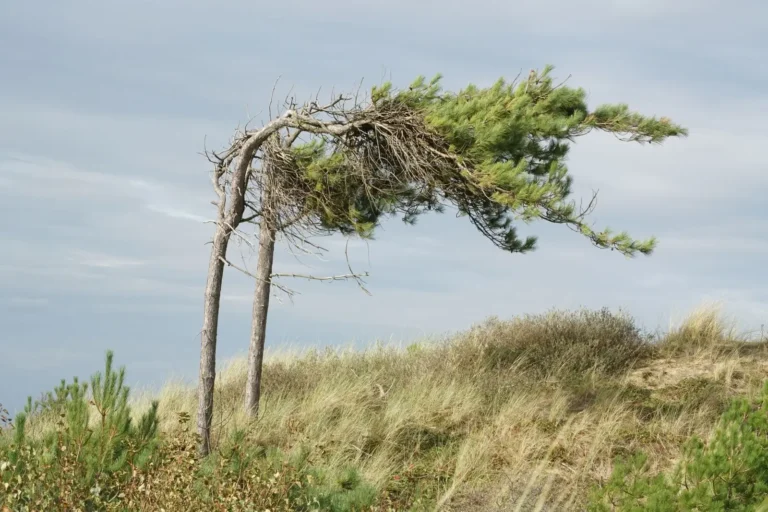
Field note. What we see on this coast is that the trees people worry about are usually not the ones in trouble: the pine with a clean crown and a lean that predates the house is often sounder than the tidy tree that has been quietly drowning in its own root zone.
On the other hand, there is no schedule that suits every tree — the same species on two sides of one street can need opposite care, which is why we look before we recommend.
Topping is the one pruning practice with no defensible horticultural case. It is not a severe form of pruning; it is a different operation, and the tree’s response is what makes it a defect rather than a style choice.
It is also the cheapest thing on a quote, which is why it keeps happening.
What topping actually does
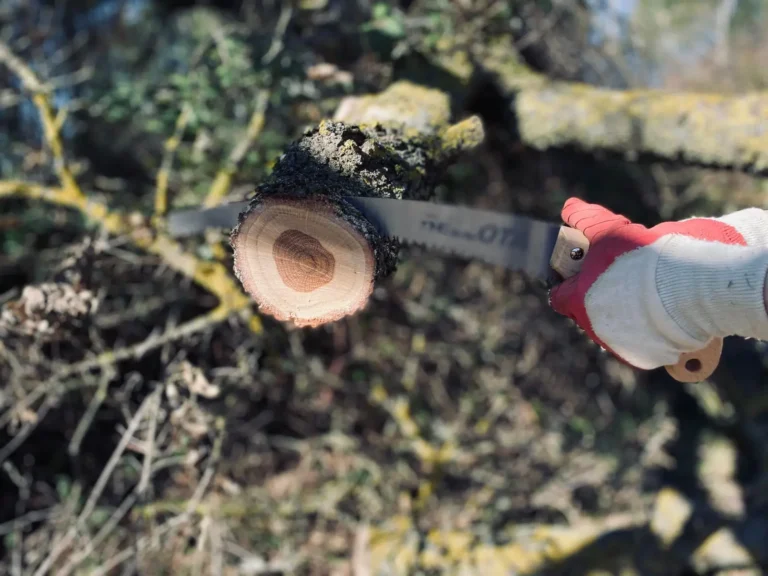
The saw cuts through a limb, leaving a stub with no terminal bud and no lateral to take over. The tree has stored energy in its roots and no way to spend it, so it produces a burst of shoots just below each cut — dozens of them, growing fast, attached to the outermost wood.
Those shoots are weakly connected because they form from adventitious buds rather than from a organised branch. In five years they are heavy, and they sit at the end of a limb that has been hollowed by decay behind the stub. The tree has been made shorter and more dangerous at the same time.
Why the decay follows
A proper cut lands at the branch collar, the swelling where the tree’s own barrier zone can seal the wound. Topping cuts through the middle of a limb, well beyond any collar, and leaves a wound the tree cannot close. Water collects in the stub, fungi establish, and the decay column runs back into the parent limb.
That is the mechanism behind the number every arborist quotes: a topped tree has a materially shorter life than the same tree reduced properly, and the difference is measured in decades.
What to do instead, by reason
If the tree is too tall for the space: reduction, cut back to laterals large enough to take over the leader’s role — at least a third of the diameter removed. It is slower, more skilled and more expensive, and the tree keeps a natural form.
If the tree blocks a view: thin the interior rather than shorten the top. Removing selected branches to their origin lets light through without changing the silhouette.
If the tree is dangerous: remove it. A topped hazardous tree is still hazardous, with a fresh set of weak limbs added.
If the tree is simply too big for the garden: that was a planting decision, and the honest fix is a different tree rather than a mutilated one.
What to say when a quote offers it
Ask what the cut will land on. A crew that intends to reduce will name the lateral; a crew that intends to top will say it will take the top off and the tree will bush out. The second answer is an accurate description of the result, and it is the moment to choose a different company.
If a tree has already been topped, the work that helps is selective thinning of the shoot cluster over several years, keeping the best-attached stem on each stub and removing the rest. It never restores the original form, but it reduces the chance that the regrowth fails as a unit.
What a properly reduced tree looks like
Nothing dramatic, which is the point. A reduced tree has the same general outline, slightly smaller, with cuts that land on live laterals and disappear into the canopy within two seasons. From the street it reads as the same tree. That is why it is hard to sell: the visible difference between good reduction and doing nothing is small, and the visible difference between topping and doing nothing is large and immediate.
The test afterwards is the regrowth. A reduced tree produces modest extension growth from the cut points. A topped tree produces a beard of vertical shoots. If the crown looks like a brush cut in year two, the work was topping whatever it was called on the invoice.
The uncomfortable part is that topping often looks tidy for one season, which is exactly long enough to sell it. The bill arrives five years later, in a wind, on a limb nobody was watching.
A last word on the word itself. Topping is sometimes sold as crown reduction, and the difference is not the name on the invoice; it is where the saw stops. Ask to see the cut before the crew starts on the second limb, and you will know within five minutes which operation you bought.
The invoice will call it whatever the company calls it; the cut is the evidence. A company that cannot explain where its saw will stop has not decided yet.