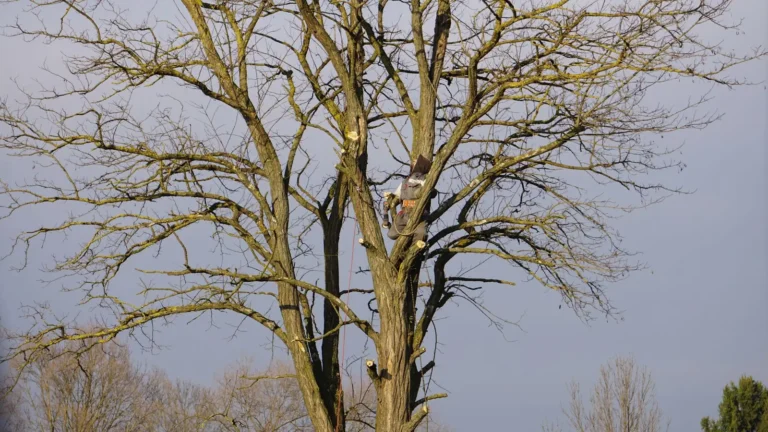
Salt, Fog, and the Wind-Shaped Tree
Quick answer: Salt, Fog, and the Wind-Shaped Tree — Pruning is a plan before it is a cut: deadwood and broken limbs first, then clearance from roofs, wires and paths, then the structure the tree will carry for the next decade. The right cut heals and the wrong one invites decay, which is why the order matters more than the number of cuts.
Field note. What we see on this coast is a pruning calendar that does not match the inland one: salt air, fog and wind mean a cut that would be minor in the valley can be the one that opens a crown to decay here, so we look at the species and the exposure before the season.
On the other hand, not every tree wants to be pruned: leaving a healthy canopy alone is a decision that pays, and a tree with plenty of space is often better served by doing nothing.
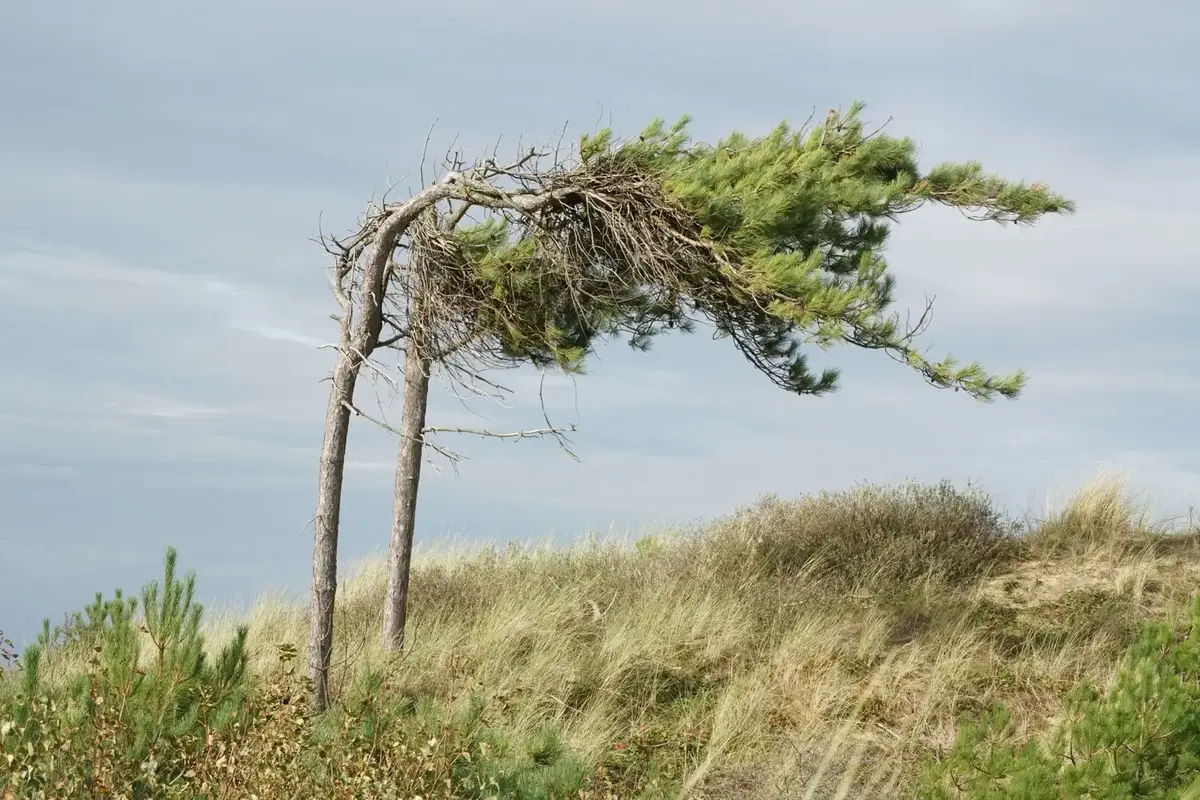
Drive up the coast on a windy day and look at the trees on the ocean side of the road. They are not symmetrical. The windward side is short, dense and often bare of fine branches; the leeward side is long and loose. That shape is not damage. It is a record of fifty years of weather, and it is the most important thing to understand before you make a cut.
What the wind has already done
Constant wind does three things. It prunes: buds on the windward side desiccate and die, so the canopy grows away from the wind. It thickens: the wood that survives is shorter and denser, with reaction wood laid down to resist the load. And it shapes the roots, which grow asymmetrically to anchor against the prevailing direction.
Salt adds a second layer. Salt spray burns leaf margins, especially on the windward edge, and the tree responds by shedding the damaged foliage and pushing new growth further back. The result is a canopy that looks sparse from the sea and full from the land. That is a healthy tree on this coast, not a dying one.
The cut that undoes fifty years of work
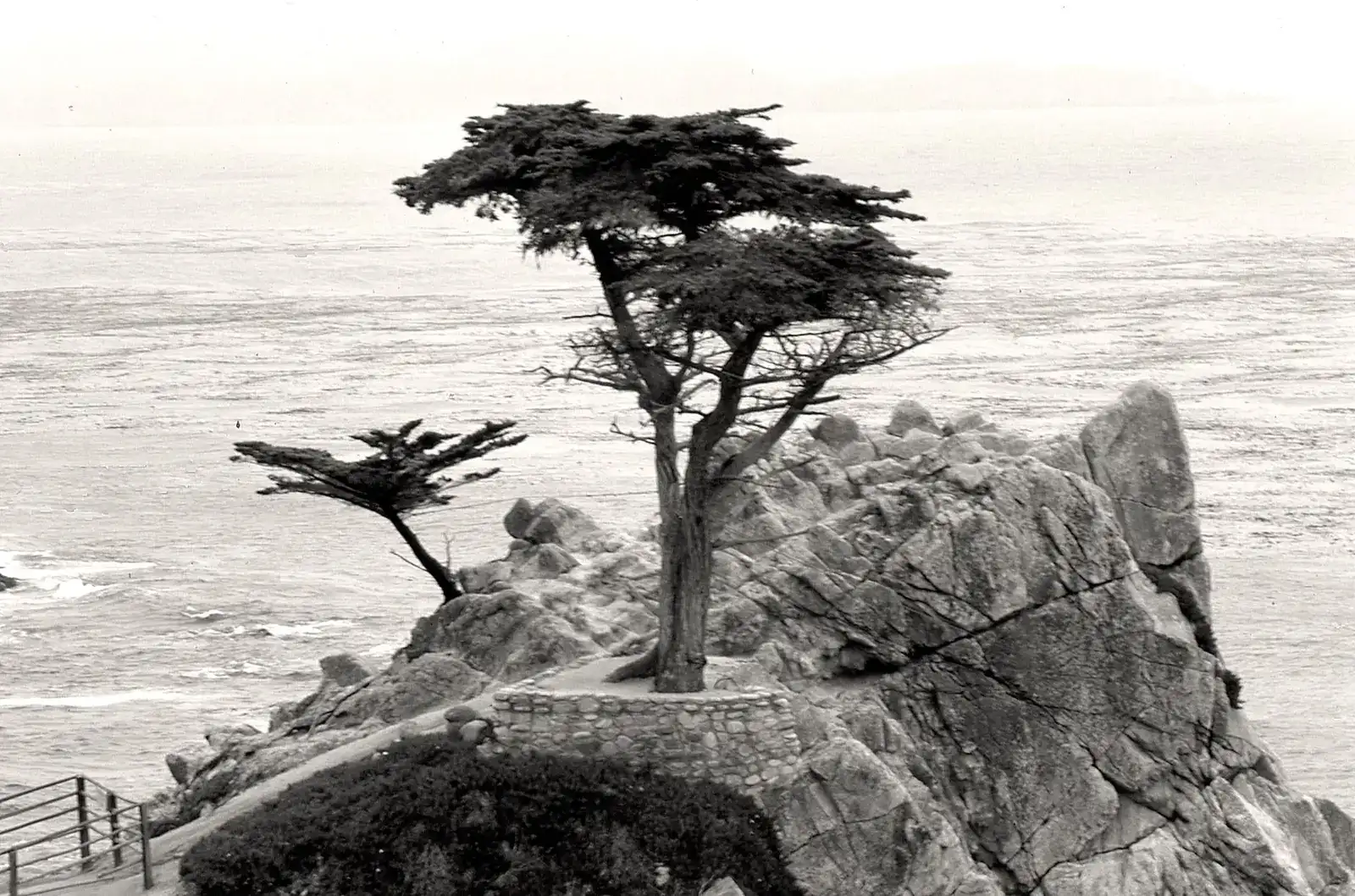
The mistake is to prune for symmetry. A homeowner looks at a lopsided cypress and asks for the long side to be shortened so the tree looks balanced. The crew takes four feet off the leeward limbs, and the tree is now balanced in a photograph and unstable in a gale.
What happens next is predictable. The tree has lost the leverage it used to counter the wind, and it has been opened on the side that was sheltered. The next big blow from the sea finds a canopy with less mass on the lee side and more exposure on the windward side. The failure is usually at the base or at the first major union.
What a coastal pruning schedule looks like
Prune after the wind, not before it. Late winter, after the storm season has done its worst, is when you can see what actually broke and what survived. Cutting in October removes the buffer the tree would have used in January.
Work from the inside. Remove dead, crossing and rubbing branches, and thin the interior for light and air. Do not shorten the long leeward limbs unless they are a specific hazard to a specific target.
Respect the windward edge. If a limb on the sea side must come off, take the smallest piece that solves the problem. The dense windward growth is the tree’s armour; every cut in it is a hole.
The fog factor
Fog keeps wounds wet, and wet wounds are slower to seal and easier to colonize. On this coast that argues for pruning in the driest weeks you can find, which usually means September and October for anything that requires a cut larger than a couple of inches. It also argues against painting wounds: a coat of tar traps moisture and does nothing about the fungi that are already in the air.
The exception is a storm break. If a limb has split and is hanging over a path, the wound is already open. Take it now, cleanly, and do not wait for ideal weather that will not arrive.
The summary is shorter than the article: on this coast the tree has already been pruned by the weather, and the best thing a pruner can do is learn to read that shape before touching it. Symmetry is a human preference. The tree is not interested.