Reading a Pine: The Four Signs That a Beetle Got There First
Quick answer: Reading a Pine: The Four Signs That a Beetle Got There First — Most tree trouble on the Central Coast is identified before it is treated: a borer, a canker and a drought-stressed root system can look the same from the ground, and each has a different answer. Diagnosis is the first cut — host, sign and season — and the least-toxic control that fits comes after it.
Field note. What we see on this coast is that the tree under fog is often the healthier one and the tree on a hot exposed edge is the one that gets hit — stress is the invitation, and the coast hides it well.
On the other hand, treatment is not always the kindest answer: for a hazard tree with internal decay, careful removal protects the neighbours, and replanting does more for the site than a season of injections.
A pine that turns brown in July was usually attacked in the previous autumn. That gap is the whole problem: the visible symptom arrives months after the moment when anything could have been done. The signs that matter are the ones on a green tree, and there are four of them.
One: pitch tubes
When a beetle bores into a pine, the tree pushes resin out of the wound. The result is a small, hard, whitish or reddish lump on the bark, roughly the size of a piece of popcorn, often with a speck of sawdust at the centre. On a healthy tree these are a good sign: the tree is fighting and may win.
On a drought-stressed tree the tubes are fewer, smaller, and sometimes absent altogether, because the tree has no resin pressure left to push. Look on the lower trunk first, then up the sunlit side.
Two: boring dust
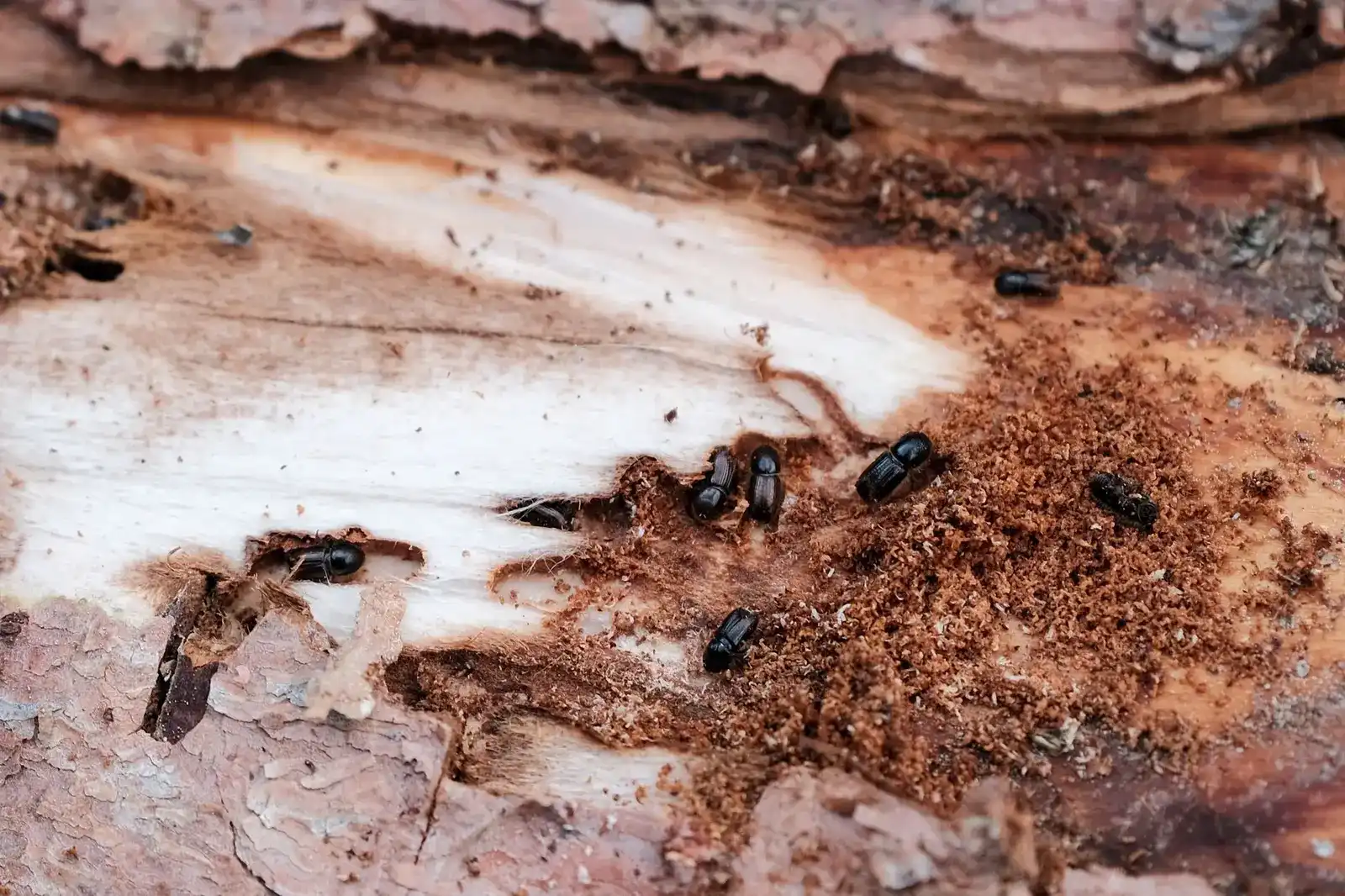
The beetle pushes fine reddish-brown dust out behind it as it tunnels. It collects in bark crevices, in spider webs, on the top of a fence rail, and in the loose soil at the base of the trunk. If you see fresh dust on a dry day, something is boring. It may be a bark beetle; it may also be a wood-boring beetle that is not a tree killer. The dust tells you where to look, not what you found.
Three: the crown fades from the top down
Drought stress fades a pine from the inside out and the bottom up, and the tree often holds the top growth longest. Beetle kill usually runs the other way: the top dies first and the fade moves down, because the beetle attacks the upper trunk where the bark is thinner. If the leader is dead and the lower branches are still green, that pattern is worth a closer look.
Four: woodpeckers
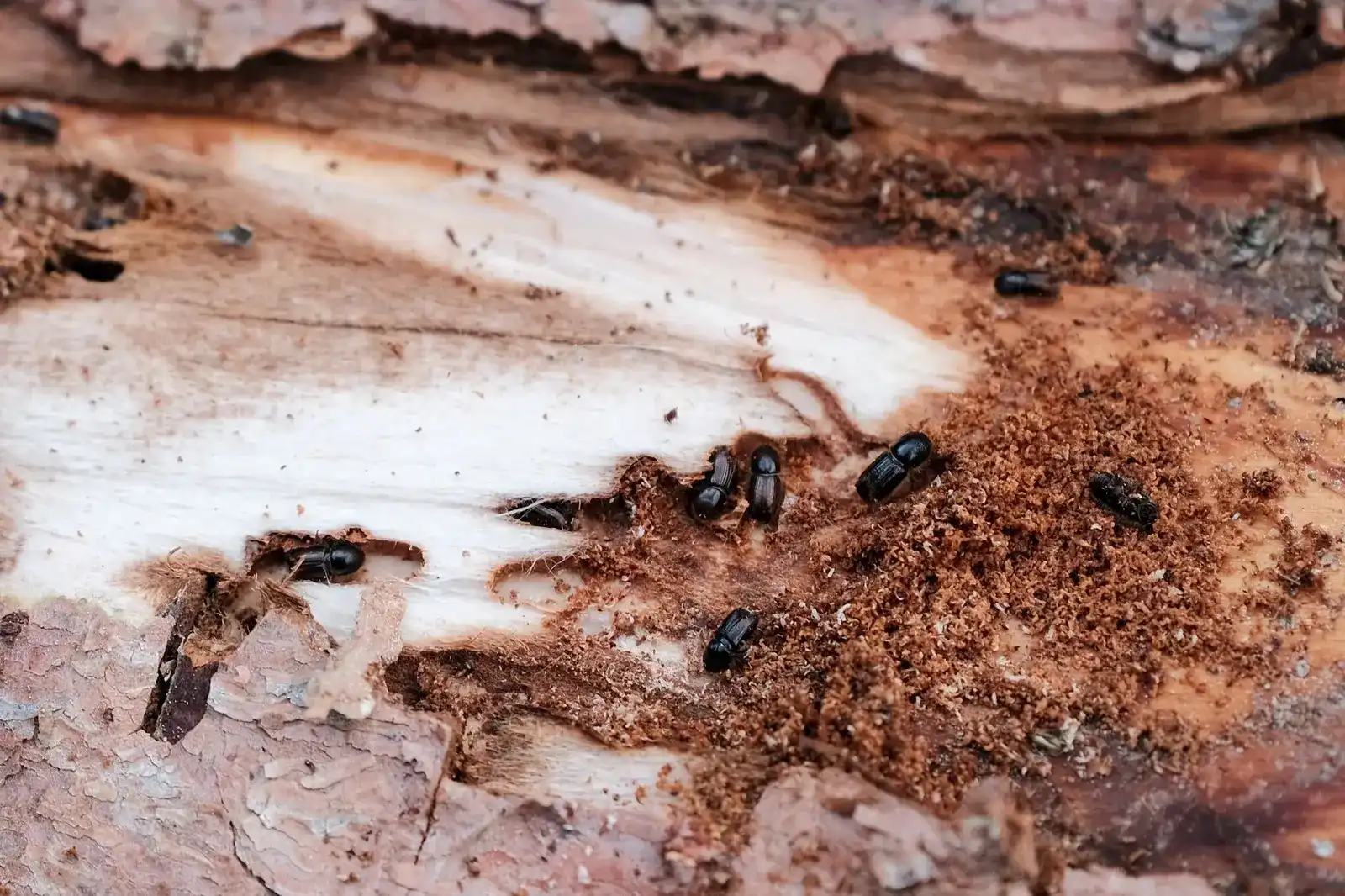
Woodpeckers find beetle larvae before you do. Heavy flaking on the bark, small rectangular holes, and piles of shredded bark at the base of the tree are all evidence that birds have been feeding. Where the birds are working, the larvae are. That is not a diagnosis by itself, but it is a reason to look at the bark above the flakes.
The confirmation, and why it matters
The definitive sign is under the bark. Lift a small patch of outer bark on a freshly dead section and look at the wood: bark beetles leave galleries, and the pattern identifies the species. The western pine beetle leaves winding, S-shaped galleries. The engraver beetles leave a central chamber with radiating arms, like a starburst. Ips beetles leave a Y-shaped or H-shaped gallery.
You do not need to identify the species to act, but you do need to know whether the tree is being attacked now or died last year, because that changes what to do with the wood.
What to do with a positive diagnosis
If the tree is still green and the attack is light, water it. Seriously: drought stress is the underlying condition that lets beetles win, and deep irrigation at the drip line is the only lever a homeowner has. Do not fertilize. Nitrogen pushes soft growth the beetle likes and does nothing for the resin defence.
If the tree is dead or dying, remove it before the beetles emerge in spring, and do not move the wood to another property. Chipping on site is fine; hauling infested logs to a friend’s lot in the pines is how an outbreak travels. If the wood is to be kept for firewood, cover it tightly or process it before the flight season.
The uncomfortable part: by the time a homeowner notices the brown crown, the useful window has closed. The four signs above are for the green tree, and the person who checks them in October is the one who still has a tree in July.