Trimming on the Coast: A Full Season, Told Through One Oak
Quick answer: Trimming on the Coast: A Full Season, Told Through One Oak — Most tree trouble on the Central Coast is identified before it is treated: a borer, a canker and a drought-stressed root system can look the same from the ground, and each has a different answer. Diagnosis is the first cut — host, sign and season — and the least-toxic control that fits comes after it.
Field note. What we see on this coast is that the tree under fog is often the healthier one and the tree on a hot exposed edge is the one that gets hit — stress is the invitation, and the coast hides it well.
On the other hand, treatment is not always the kindest answer: for a hazard tree with internal decay, careful removal protects the neighbours, and replanting does more for the site than a season of injections.
If you ask five arborists when to trim an oak on this coast, you get five answers and a sixth opinion about the fifth. The reason is that the question is the wrong shape. A tree is not trimmed; it is trimmed at a time, and the coast runs a calendar that barely resembles the one in a pruning manual written for the interior.
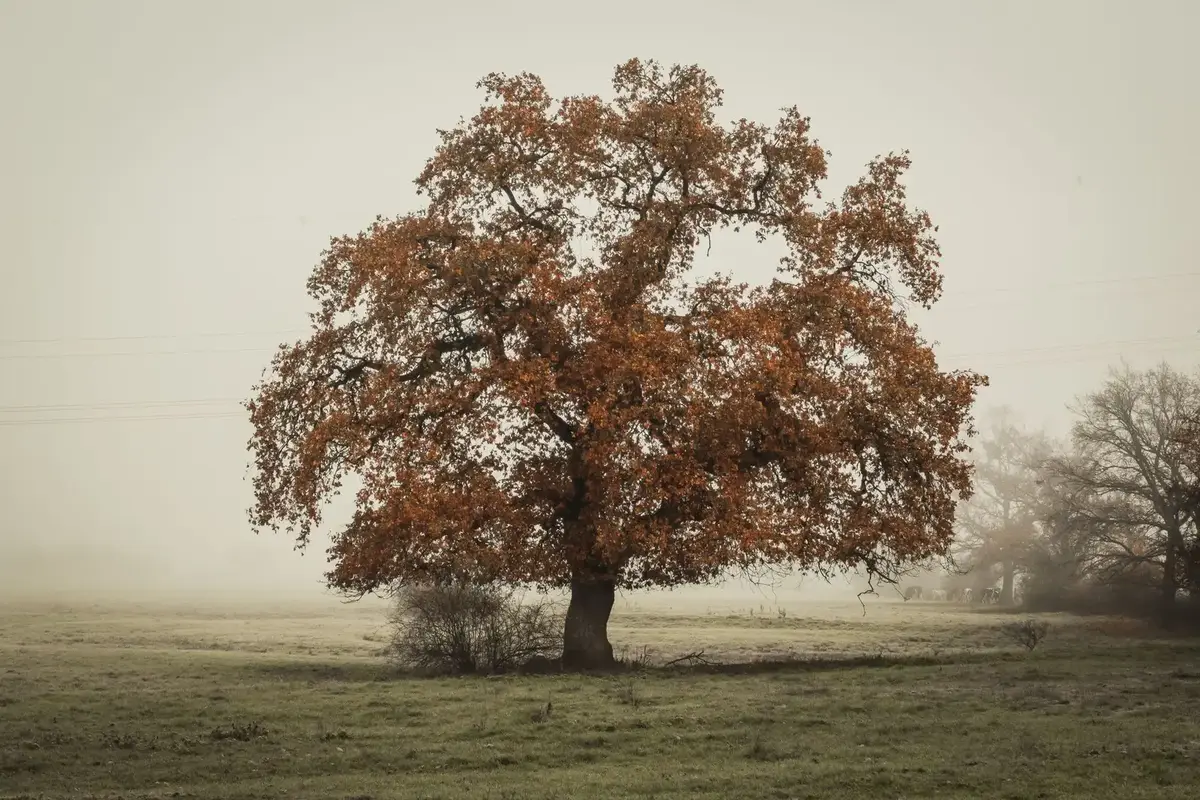
So here is a year with one tree — a coast live oak on a lot off Burton Drive that I have been visiting since it was about forty years old. Every date below is real work or real restraint on that tree.
January: the cut you do not make
The instinct in January is to get ahead of the season. On this coast that instinct is expensive. Cambria’s winter is wet and mild, which is precisely the weather oak canker and several wood-rotting fungi want when they meet a fresh wound. A cut made in a dry August seals and compartmentalises; the same cut in a wet January can sit open through weeks of fog.
What January is for, on that oak, is looking. With the canopy thin and the light low, structural problems are legible in a way they never are in June. I marked two crossings and a stub left by a previous crew, and did not touch a saw.
March: the one exception
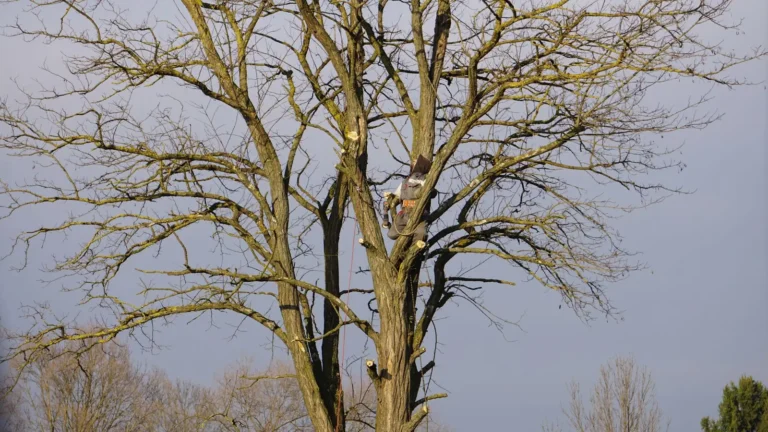
There is a narrow case for winter cutting: deadwood, and only deadwood. Dead wood is already being consumed by fungi, so the argument about a fresh wound does not apply — you are removing habitat for the organisms that would otherwise spread into live tissue. That is how I justify a February or March removal of dead limbs over a driveway, and it is the only work I will schedule in the wet months.
May: the tree is spending
By May the oak has committed. New growth is extending, and every leaf is a factory the tree has already paid to build. Remove a third of the canopy now and you have deleted a third of the season’s income after the expense was incurred. This is why heavy structural pruning in late spring is not merely unnecessary; it is a withdrawal at the worst possible moment.
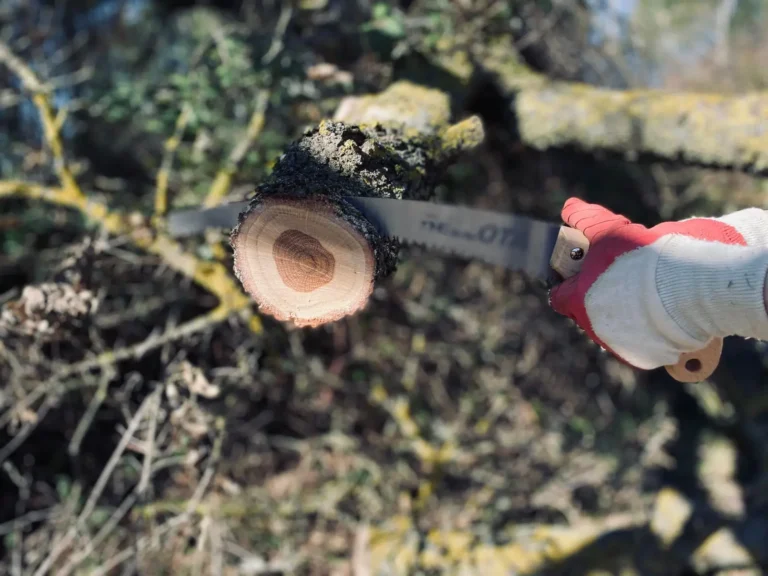
What May permits is the light touch — a watersprout that will never be anything, a sucker at the base. Fifteen minutes with a handsaw and no ladder.
July and August: the real window
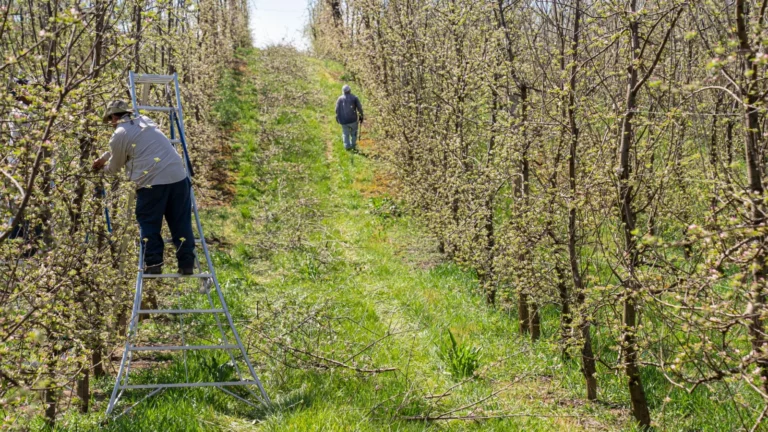
This is when the work happens, and the reasons are boringly practical. The tree has finished its spring push, so removing a limb costs it less. The wound dries fast in the fog-burn of midday. The fungal pressure of a wet winter is months away, which gives the tree time to wall off the cut before the rain returns.
On that oak in August we took a low limb that had been shading the roof, a co-dominant leader reduced by about a third so the other could take dominance, and the deadwood over the walk. Three cuts. The tree did not look pruned, which is the point.
October: the last thing worth doing
By October the tree is hardening off, and the arborist’s job is mostly to leave it alone. The one task I will still do is clearance — branches that have grown into the chimney, or low enough to catch a delivery truck. Directional cuts, back to a lateral that grows away from the obstruction, and nothing more.
What I will not do in October is ‘tidy’ the canopy. Tidying is the most common cause of the lion’s tail — the stripped interior with foliage only at the tips — and a lion’s tail in an October wind is a lever, not a sail.

The test that applies every month
Whatever the calendar says, one test decides whether a cut is legitimate: can you state the reason in a sentence that is about the tree rather than about you? The limb is dead and over the driveway. Yes. Two leaders share a seam and one should be subordinated. Yes. It looked messy. No — that is a sentence about a person, and the tree pays for it.
The oak off Burton Drive has had four visits and perhaps a dozen cuts in twelve years. It is not a heavily managed tree. It is a tree that has been asked for very little at the right moments, which is the only kind of management that has ever worked on this coast.