How Bark Beetles Actually Kill a Pine, and Why Drought Did the Rest
Quick answer: How Bark Beetles Kill a Pine — Trees are watered at the root zone, deeply and infrequently — a long soak that reaches down, then a dry spell that lets roots look for water, rather than a daily sprinkle that keeps everything in the top inch of soil. On the fog belt the question is rarely whether there is moisture in the air but how much got down to the roots.
Field note. What we see here is that salt air and wind dry a canopy faster than the thermometer suggests, so a tree can be water-stressed on a grey week when nothing looks hot to the person holding the hose.
On the other hand, more water is not a cure-all: on clay, a daily soak drowns roots more often than drought does, and the symptoms look almost identical from above.
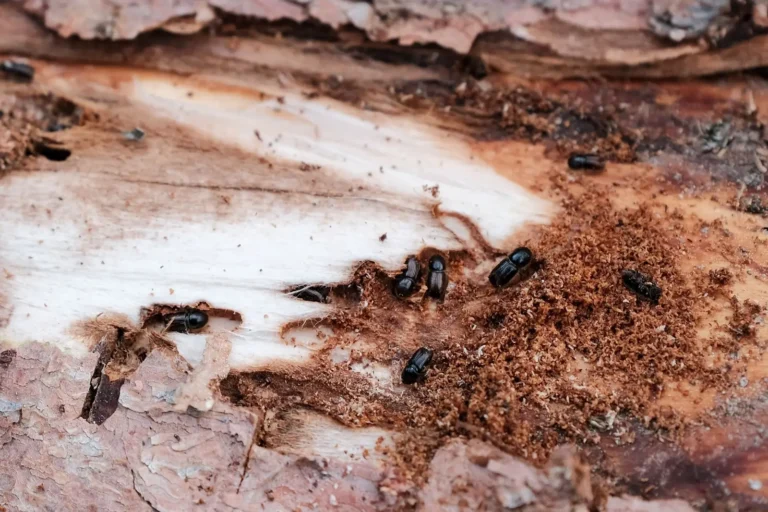
People describe bark beetle mortality as though the insect were venomous. It is not. A bark beetle does not poison a pine; it outnumbers it. Understanding that distinction changes what you do about a tree, and when.
The mechanism is worth stating precisely, because the folk version — beetles arrive, tree dies — produces both panic and, more damagingly, the wrong remedy applied at the wrong time.
The tree's defence is chemistry, not armour
Conifers defend themselves by secreting resin into the wound a beetle makes. The resin is under pressure, it is sticky, it contains compounds that are toxic or at least unpalatable to the insect, and it can physically push an invader back out of the gallery. A well-watered pine with reserves can sustain that defence against a modest number of attacks. It is a production problem: the tree must manufacture the resin faster than the beetles consume their way through it.
Which is why drought matters more than temperature. A tree under water stress has less to spend on resin, and the threshold number of beetles required to overwhelm it drops. The insects were always present. The budget changed.
- The weapon
Resin pressure and resin chemistry, produced on demand from stored reserves.
- The constraint
Water. A drought-stressed pine cannot sustain resin flow at the rate mass attack requires.
- The attack
Beetles aggregate by pheromone, so a successful colonisation recruits more beetles to the same tree.
- The kill
The larvae feed in the phloem, girdling the tree's vascular transport. The tree starves and desiccates, in that order.
Reading the pitch tubes
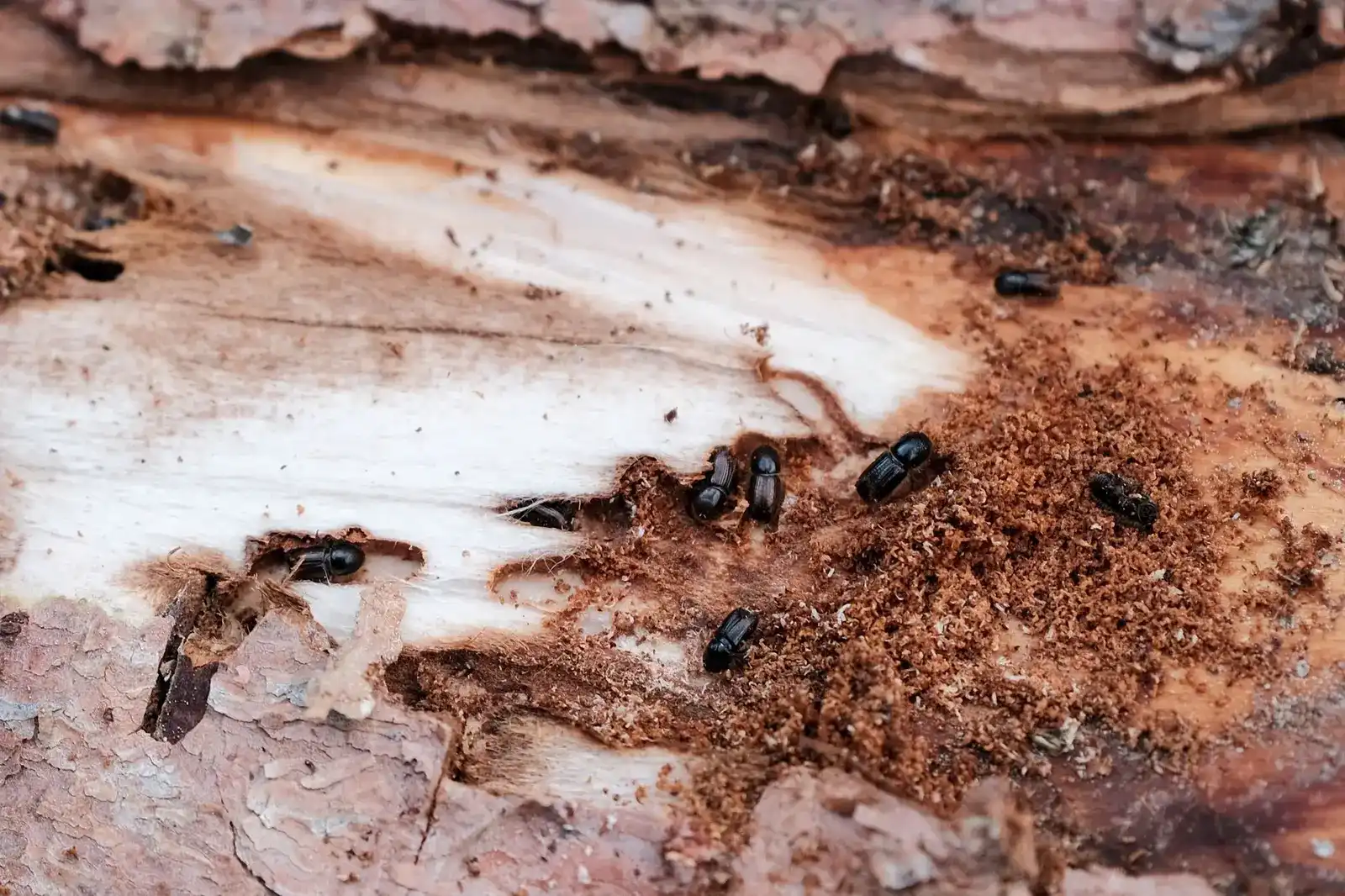
The visible sign of a defence in progress is a pitch tube: a small, whitish to reddish mass of resin at a beetle entry hole, often the size of a piece of popcorn. A tree with a scattering of fresh pitch tubes is fighting, and may well be winning. That is a tree to water and watch, not necessarily a tree to remove.
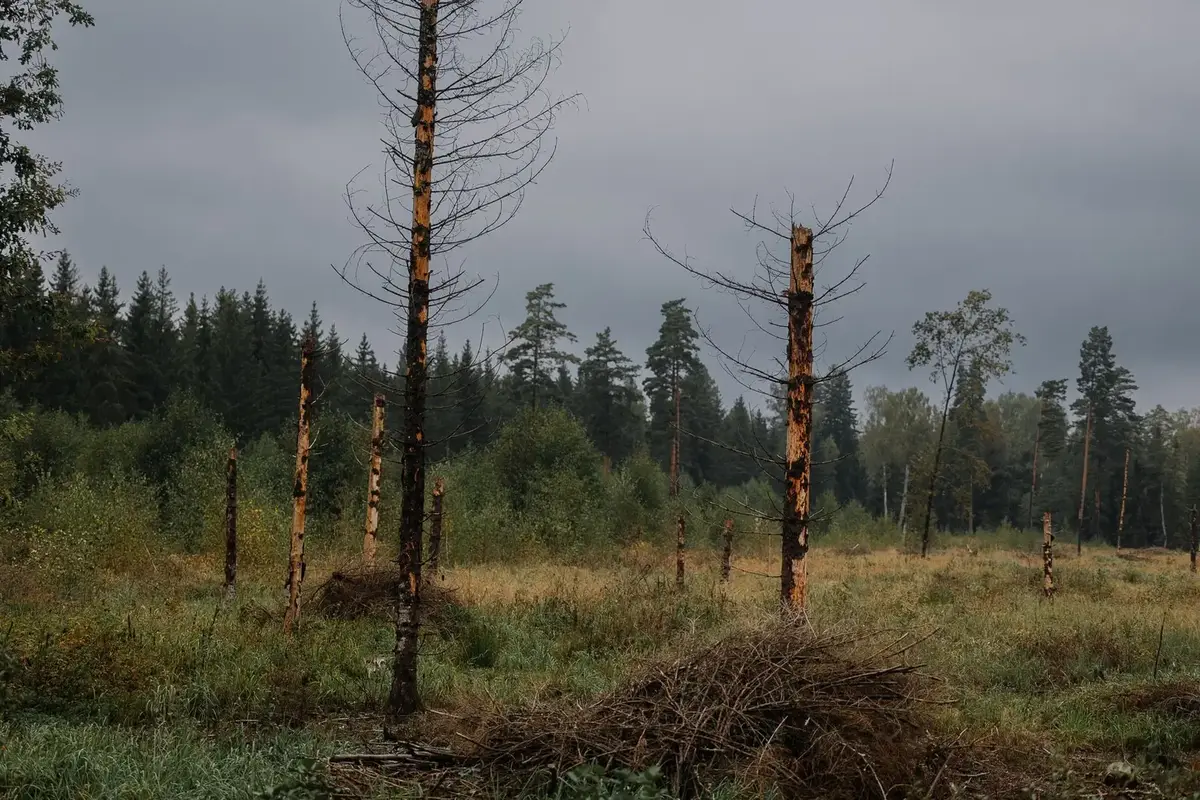
A tree with no pitch tubes and a crown that has gone from green to dull to grey in a few weeks is a different story. That progression usually means the defence failed some time ago, the brood developed under the bark, and what you are looking at now is a dead tree with a population of insects still inside it.
Why timing of removal is the whole intervention
Once a pine is colonised, the insects inside it will emerge as adults, and where they emerge is where they will attack next. That is the single reason removal timing is discussed at all. Felling and removing a colonised tree before emergence removes the brood from the landscape.
Waiting until the crown is obviously dead frequently means waiting until the brood has already left, at which point the removal protects nothing and the tree next to it is now the susceptible one.
The practical implication: an insecticide applied to a standing, healthy tree is a preventive measure with a narrow set of registered uses, and it does nothing for a tree that is already colonised. Anyone offering to spray a grey pine is selling you the wrong product for the wrong stage.
What actually reduces risk
Three things, in order of effect. Water correctly during the dry season, which means deep and infrequent rather than shallow and constant. Avoid wounding trunks and root flares with mowers, trimmers and equipment, because a wound is an entry point and a repair cost the tree cannot always fund. And remove colonised material promptly from the property, chipped or hauled, rather than stacking it as firewood against the next pine.
None of that is dramatic, and none of it is a treatment you can buy in a bottle. It is the same advice an epidemiologist gives about most outbreaks: change the conditions under which the organism succeeds, and you change the outcome more reliably than by attacking the organism.