

Air Through the Crown, Not a Stripped Tree
Crown Thinning in Atascadero, CA
Atascadero — this is the coast these pages are about.
Quick answer: Crown Thinning in Atascadero, CA — Pruning is a plan before it is a cut: deadwood and broken limbs first, then clearance from roofs, wires and paths, then the structure the tree will carry for the next decade. The right cut heals and the wrong one invites decay, which is why the order matters more than the number of cuts.
- Typical timing: Structural work in the dormant months, light clearance and deadwood any time the tree is not under stress.
- What it involves: Removing dead and crossing limbs, thinning to let light through, lifting low limbs for clearance, and never topping a tree.
- The standard: The ANSI A300 pruning standard as applied by ISA-certified arborists — including the three-cut method on every limb worth saving.
- Where we work: Cambria, San Simeon, Cayucos, Morro Bay, Los Osos and the towns between.
- Our own record: 503 pages and 291 stories published on this site. Counted from our own archive, not a stock table.
Field note. What we see on this coast is a pruning calendar that does not match the inland one: salt air, fog and wind mean a cut that would be minor in the valley can be the one that opens a crown to decay here, so we look at the species and the exposure before the season.
On the other hand, not every tree wants to be pruned: leaving a healthy canopy alone is a decision that pays, and a tree with plenty of space is often better served by doing nothing.
Crown thinning in Atascadero is usually asked for after a wind event has taken a limb off something big, and the owner wants the tree to stop catching so much wind.
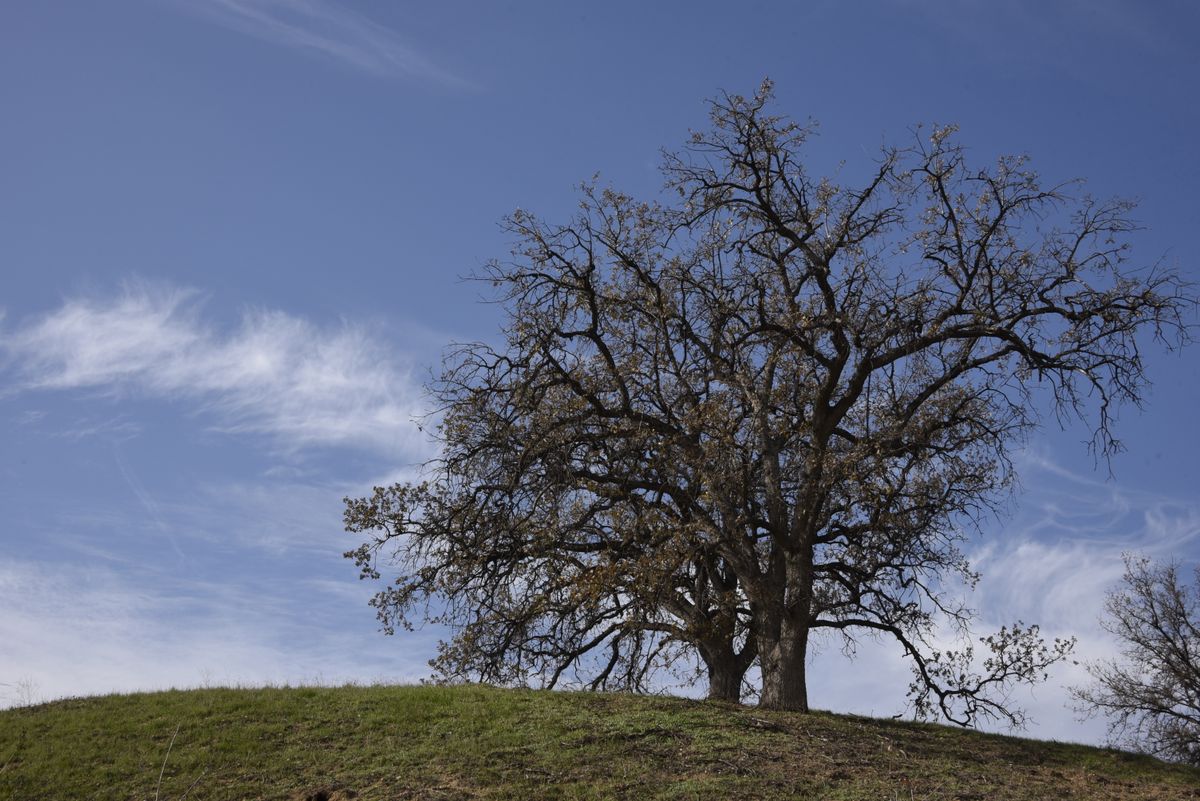
The request is right and the instinct behind it is often wrong: thinning removes selected branches from inside the crown to let air through, and the way it goes wrong here is by taking too much, which leaves a tree with a thinner crown, weaker attachment points and the same sail area, because the remaining branches grow longer and heavier in the light.
Done to the standard it is a targeted, modest cut; done as a clearance exercise it is the beginning of the tree's decline.
What thinning actually is
The work is the selective removal of inner, live branches — the crowded ones, the rubbing ones, the weak crossings — across the whole crown rather than in one zone. The purpose is to reduce density and improve light and air movement without changing the tree's outline, which is what separates thinning from reduction.
On the fast-grown oaks here the interior is often a thicket of epicormic growth: the tree's response to a previous hard prune or to light suddenly reaching the trunk. Thinning that regrowth is a maintenance cycle, not a one-off.
The dosage limits, and why they matter
The industry standard puts a firm ceiling on how much live tissue comes out in one pass, and on a mature oak that ceiling is lower than most owners expect. The reason is not style, it is physics: leaves make the food the roots live on, and roots anchor the tree.
Remove too much crown and the roots starve and recede; the tree responds by pushing vigorous shoots along the limbs, exactly where the weight and the wind load are worst. Keep it to the modest fraction the standard allows and come back in a few years. Push past it and the tree spends the next decade making the next limb failure more likely.
The failure modes we are called to fix
- Lion's-tailing — stripping the inner and lower branches off a limb and leaving a tuft at the end. It looks tidy, it puts all the weight at the tip, and it makes the limb more likely to break, not less.
- Over-thinning — more of the crown removed than a mature tree can carry, usually in one enthusiastic visit.
- Thinning the wrong zone — clearing the middle and leaving the crowded outer scaffold untouched, which changes the look and none of the load.
- Doing it in the heat — heavy pruning into a 38-degree Atascadero July adds drought stress to the insult, and the oaks here are already managing water.
When thinning is the right answer, and when it is not
Thinning suits a dense, healthy crown that has grown into itself and needs air through it. It is the wrong answer for a tree with a structural defect — a cracked fork or a hollow limb wants cabling and bracing or a removal, not a lighter crown.
And where the real complaint is that the tree is too big, thinning will not solve it: the tree gets no shorter, and the honest options are crown reduction or living with it, which is the conversation in crown reduction.
Fruit trees and the small stuff
For orchard trees and ornamentals the logic is the same, at a smaller scale and with a different calendar: deciduous fruit wants its thinning and shaping in dormancy, and pruning a stone fruit in the wet season is an invitation to disease. On this side of the county we do most ornamental structural work between the last hard frost and bud break, and leave the oaks alone in the summer.
Field note — Margot Thackeray carries a hand counter for the big cuts, because the difference between a thinning and a stripping is a number, not an opinion.
Send a photograph of the crown from a distance and one of the trunk, and say what the tree is doing that bothers you. Call (805) 927-4414 or use the contact page.
Questions, quotes, or just exploring — we’re here to help.