


The Drop Is Yours. The Line Is Not.
Power Drop & Line Clearance
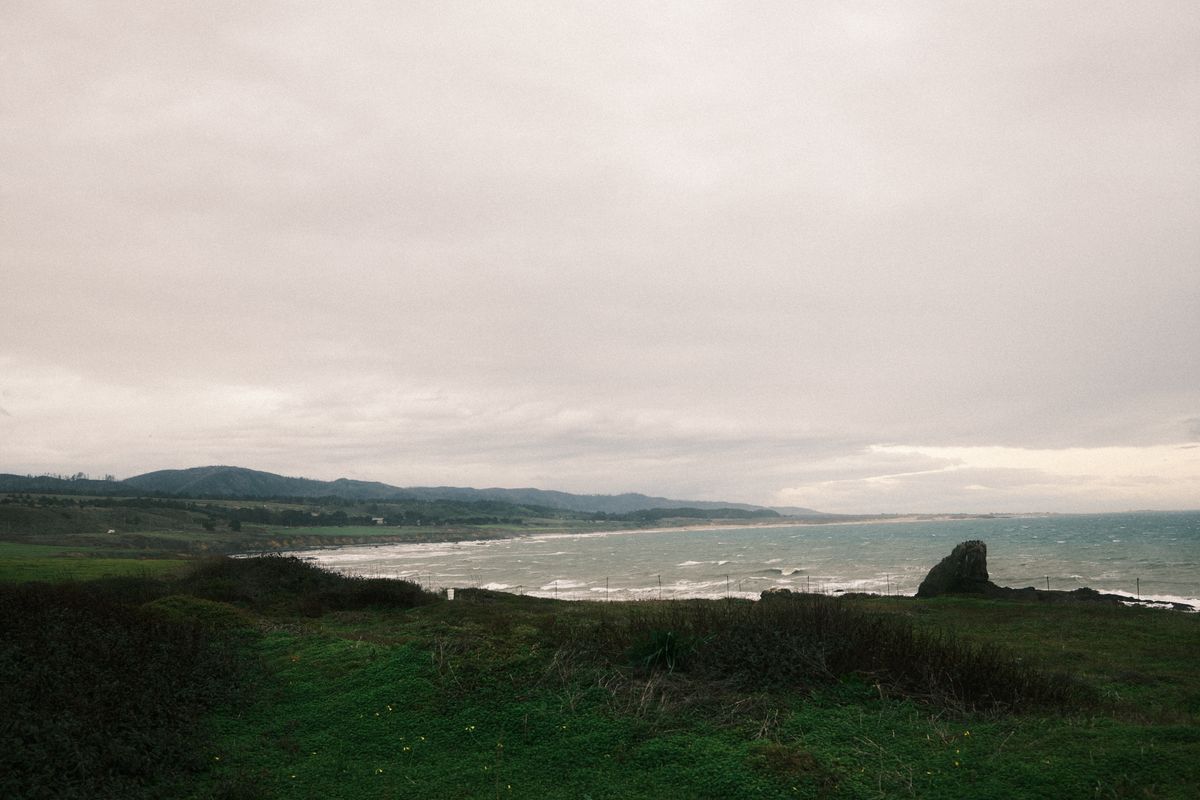
San Simeon — this is the coast these pages are about.
Quick answer: Power Drop & Line Clearance — Defensible space is the work that decides what a fire has to burn between the wildland and the house: dead material out, ladder fuels separated, and the tree you keep limbed up rather than removed. It is measured in zones from the structure, and the first few feet are the ones that matter most.
- Typical timing: Best done in the cool months so the debris is gone before the dry season; clearance rules apply year-round.
- What it involves: Removing dead and dying material, separating shrubs from low limbs, limbing trees near structures, and keeping the roof and gutters clear.
- The standard: Cal Fire's defensible-space guidance for the first 100 feet, applied to the trees a property actually has.
- Where we work: The wooded parts of Cambria, San Simeon, Harmony and the surrounding ranch country.
- Our own record: 503 pages and 291 stories published on this site. Counted from our own archive, not a stock table.
Field note. What we see on this coast that surprises people is how much of the fuel load is low: the limb at four feet and the brush beneath it carries fire into a canopy that would otherwise survive, so the work is often lifting rather than felling.
On the other hand, over-clearing has its own cost — bare ground erodes, and the wind that comes with the fog belt is harder on a thinned stand than the fire risk it removes.
On the San Simeon stretch the wires run a long way between poles, and every parcel along them has two quite different electrical things on it. The service drop — the cable from the pole to your weatherhead — is yours to maintain. The distribution line feeding the pole belongs to the utility, and who may legally cut near it is not a matter of confidence or experience.
Getting that distinction wrong is how a routine pruning job becomes an electrocution, and it is why we start by identifying what is actually overhead rather than what appears to be.
Which Wire Is Which
The wires here are frequently hidden by cypress and pine that grew up around them, so the first task is finding the conductors and their voltage class, not the branches.
- Service drop — the customer-owned span from the pole to the building. Clearance here is the property owner's responsibility, and a qualified tree contractor can generally work it with the right planning.
- Primary and secondary distribution — the utility's conductors, energised at distribution voltage. No tree contractor should be cutting within the utility's clearance zone; that work is the utility's, and it is normally done at no charge to the property owner.
- Communications — telephone and cable, usually the lowest wires on the pole and often strung on the same run, which complicates the picture.
When the Utility Does It, and When You Call Us
If a tree is touching or within the utility's clearance distance of its conductors, the correct first call is to the utility's tree programme, and the work is theirs. That includes limbs that have grown into the line, trees leaning toward it, and anything that is already in contact.
What they will not do is prune the rest of the tree for shape, clearance from a roof, or the health of the crown, and that is where we come in — on the parts of the tree that are our side of the boundary, with the safe working distance respected.
(805) 927-4414Clearing Your Own Side Safely
Where the tree is well clear of the utility's conductors and only the customer-owned drop is involved, the work is planned like any other pruning: known distances, the right access, and a stop rule if anything looks closer than it was quoted. De-energising the service while work is done near it is often the cheapest safe answer, and the utility can arrange it.
On this coast, salt and wind also mean the wires here carry a heavy load of dead material, so the drop is worth inspecting while we are on site rather than clearing in isolation.
The Fire Connection
Line clearance is also a fire matter on this coast, and a tree in contact with a conductor is the ignition nobody plans for. Where the risk is fuel rather than wires — brush under the line, dead material on the ground, a run of vegetation pointing uphill — that is our side of the work, and it is covered on fire clearance and ladder fuel removal.
Tell us where the tree is relative to the wires and who owns the span. Call (805) 927-4414 or use our contact page, and read about everything else we do on this coast.
Questions, quotes, or just exploring — we’re here to help.