



Reading the Parcel Against the Zones
Defensible Space Inspection in Harmony, CA
Harmony — this is the coast these pages are about.
Quick answer: Defensible Space Inspection in Harmony, CA — Defensible space is the work that decides what a fire has to burn between the wildland and the house: dead material out, ladder fuels separated, and the tree you keep limbed up rather than removed. It is measured in zones from the structure, and the first few feet are the ones that matter most.
- Typical timing: Best done in the cool months so the debris is gone before the dry season; clearance rules apply year-round.
- What it involves: Removing dead and dying material, separating shrubs from low limbs, limbing trees near structures, and keeping the roof and gutters clear.
- The standard: Cal Fire's defensible-space guidance for the first 100 feet, applied to the trees a property actually has.
- Where we work: The wooded parts of Cambria, San Simeon, Harmony and the surrounding ranch country.
- Our own record: 503 pages and 291 stories published on this site. Counted from our own archive, not a stock table.
Field note. What we see on this coast that surprises people is how much of the fuel load is low: the limb at four feet and the brush beneath it carries fire into a canopy that would otherwise survive, so the work is often lifting rather than felling.
On the other hand, over-clearing has its own cost — bare ground erodes, and the wind that comes with the fog belt is harder on a thinned stand than the fire risk it removes.
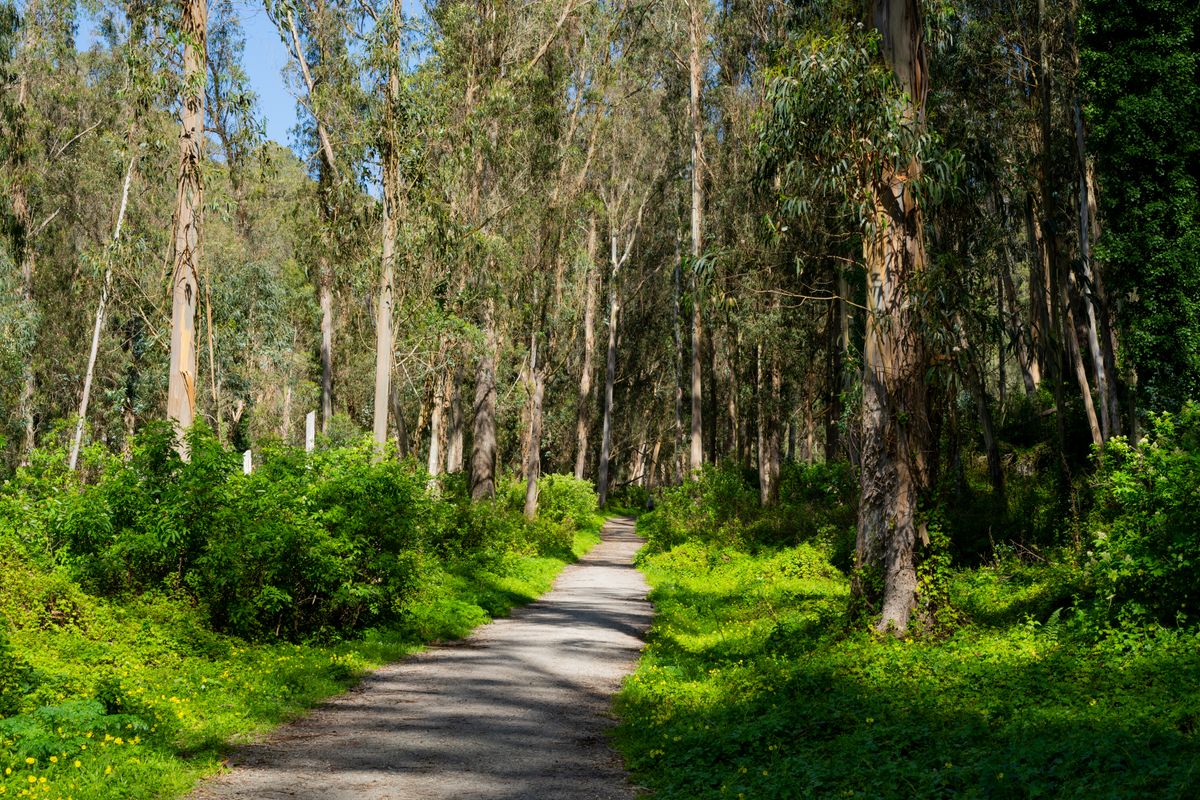
Harmony is grass country with old windrows over it, and the inspection that matters here is not about a hillside thicket — it is about a continuous bed of cured annual grass that runs from the highway to the buildings for eight months of the year, with century-old trees standing above it.
That is the fuel arrangement the Cal Fire zones were written to address, and on a parcel this size the inspection is a walk that produces a list, not a project.
The zones, on this ground
Zone 0 is the first five feet around the structure, and its whole purpose is embers: nothing combustible against the wall, no bark mulch bed under the siding, no wood stacked under the eaves, gutters clear. Zone 1 runs out to thirty feet, where the work is the grass kept short and any flammable object — a propane tank, a stored pallet, a fuel can — moved out or shielded, and where the retained trees get their lower limbs lifted.
Zone 2 reaches a hundred feet, and on a farm parcel the honest focus there is the grass and the arrangement of what is growing: bands cut, gaps left, the windrow's dead material raked out, and any route a fire could follow from the grass to the crowns broken.
The failures we actually find here
The list is consistent on the terrace. The mown strip that runs right up to the building with no gap. A stack of the last clearing season's slash sitting behind the barn in October. Limbs left low on a windrow tree that has never been pruned. A cured grass crop under a eucalyptus that drops litter onto it. A wooden gate and a gatepost standing in a continuous bed of dry grass.
A water line and a hydrant that have not been checked. And, over and over, the assumption that the property is defensible because it was cleared three years ago.
Roadside and access
Access is part of defensible space. The lane has to carry a fire engine, which means clearance over it and no low limbs at the gate, and on a property that fronts a county road the roadside clearance is often the first thing an inspector notes. On a parcel that also has a state park and highway boundary, work in that strip is planned with the right authority rather than taken on, and lead time is real.
The paperwork
An inspection that produces nothing in writing has not happened. What we leave behind is a plan view of the parcel with the zones marked, a photograph record of the conditions found, and a list separating what is required from what is merely advisable — with the second group honestly labelled, because a report that turns advice into obligations is not useful to a landowner.
What the inspection does not include
Assessment and work are kept separate on purpose. The inspection says what the ground needs; the cutting is fire clearance on the trees, and the middle rung is brush and ladder fuel. That separation is what lets an owner get a written verdict, decide what to do, and hold anyone on the property to the same list. Trees within reach of a structure are scoped through fire clearance and the brush work through ladder fuel removal.
If you have an inspection or a renewal date coming, call (805) 927-4414 and we will walk it early. See our services, the town hub at Harmony tree service, or the contact page.
Field note — Olivia Whitmore reads the ground rather than the rulebook, then quotes the rule: what is actually going to burn, and what it is going to burn toward.
Questions, quotes, or just exploring — we’re here to help.