


Breaking the Chain Fire Climbs
Ladder Fuel & Brush Removal
Los Osos — this is the coast these pages are about.
Quick answer: Ladder Fuel & Brush Removal — Defensible space is the work that decides what a fire has to burn between the wildland and the house: dead material out, ladder fuels separated, and the tree you keep limbed up rather than removed. It is measured in zones from the structure, and the first few feet are the ones that matter most.
- Typical timing: Best done in the cool months so the debris is gone before the dry season; clearance rules apply year-round.
- What it involves: Removing dead and dying material, separating shrubs from low limbs, limbing trees near structures, and keeping the roof and gutters clear.
- The standard: Cal Fire's defensible-space guidance for the first 100 feet, applied to the trees a property actually has.
- Where we work: The wooded parts of Cambria, San Simeon, Harmony and the surrounding ranch country.
- Our own record: 503 pages and 291 stories published on this site. Counted from our own archive, not a stock table.
Field note. What we see on this coast that surprises people is how much of the fuel load is low: the limb at four feet and the brush beneath it carries fire into a canopy that would otherwise survive, so the work is often lifting rather than felling.
On the other hand, over-clearing has its own cost — bare ground erodes, and the wind that comes with the fog belt is harder on a thinned stand than the fire risk it removes.
The Rungs Between the Ground and the Canopy
Ladder fuel removal los osos parcels need is about breaking a chain, and on this coast the chain is short and easy to see once you look for it: dry grass and needles on the ground, a band of coyote brush or ceanothus above them, the low limbs of a pine just overhead, then the crown. A fire that has something to climb at every step does not need much wind to reach the tops.
The Vertical Half
Most parcels here already have the fine fuel — the fog keeps the surface litter damp well into summer, but a dry autumn cures it in a fortnight. The work is to take the middle rungs out and keep the lowest branch of any tree well clear of whatever is growing beneath it, so that a ground fire has nothing to step onto.
- Dry grass and ground litter managed through the season, not once in June.
- The middle band of brush — coyote brush, dead ceanothus, broom, and the volunteer pines that come up in a wet spring and never leave — thinned and separated rather than stripped.
- Low limbs on the trees above lifted so the gap between the shrub layer and the canopy is a real gap, not a gap on paper.
- Dead material suspended in the canopy — hanging limbs and deadwood — removed, because that is the fuel that catches a spark and carries it up.
The Horizontal Half
Fire also travels sideways. Two pine crowns that have grown into one another on a Los Osos lot are a single fuel body, and a continuous hedge of shrubs running up toward the bay is a wick laid along the ground. So the work is spacing as much as clearance: shrubs in clumps with bare ground between them, tree crowns with a real gap, and breaks where the ground rises.
What We Deliberately Leave
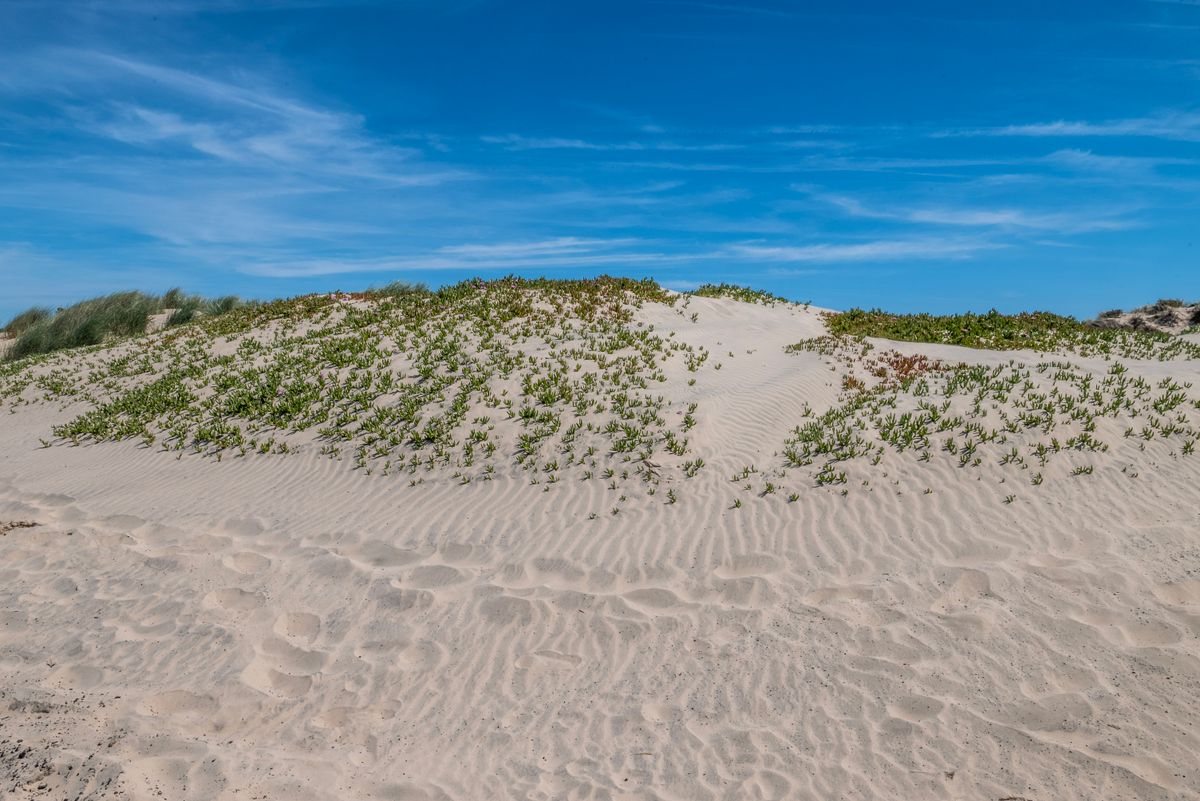
Clearing every shrub is the mistake that looks decisive and costs the parcel its soil. On the old dunes the scrub is what holds the surface together, so the healthy native brush stays — spaced rather than continuous — and so do the established trees in good condition. What comes out is the dead, the diseased, the invasive and the crowding.
The Slash Is Half the Job
Cut material left lying is fuel that has been moved, not removed. Chipping on site and leaving the chips as mulch over a root zone is usually the best answer here, with the rest leaving on the truck. See wood chip mulch delivery for the material side and forestry mulching where the ground is too rough to cut by hand.
Timing, and Where It Sits
Clear before the fuel cures rather than during it. The sequence on any parcel starts with the assessment — the defensible space inspection — then the brush, then the canopy work in fire clearance. Working backwards from an inspection or renewal date is how the timing stays calm.
Have the Parcel Walked
Tell us the size of the lot and what is growing on it, and note whether anyone has cleared it before. Call (805) 927-4414 or use the contact page to arrange a visit; Los Osos and our services have the rest.
Questions, quotes, or just exploring — we’re here to help.