



The Pine on Dune Sand That Has Already Decided
Hazardous Tree Removal in Los Osos, CA
Los Osos — this is the coast these pages are about.
Quick answer: Hazardous Tree Removal in Los Osos, CA — Removing a tree is planning before it is cutting: where the wood lands, what is under it, whether a rope or a crane takes the weight, and what is left when the crew drives away. A removal is finished when the drop zone is clear and the stump is dealt with, not when the trunk hits the ground.
- Typical timing: When the tree is a hazard, the schedule is immediate — storm damage, split leaders and leaners do not wait for good weather.
- What it involves: A written plan for the drop zone, rigging or crane work over structures, protecting driveways and roofs, and deciding the stump’s fate in advance.
- The standard: The ANSI Z133 safety standard for arboricultural operations, and ISA best practice for removals near structures.
- Where we work: Small town lots, coastal acreage and the narrow properties of the Cambria pine belt.
- Our own record: 503 pages and 291 stories published on this site. Counted from our own archive, not a stock table.
Field note. What we see here is that access decides the price more than height does: a pine over a fence on a slope with no driveway costs more to take down safely than a taller tree with a clear drop, and the plan is where that shows up.
On the other hand, removal is not the only safe answer — a tree with one failing limb, or a lean that can be corrected by reduction, is often better kept and managed than gone.
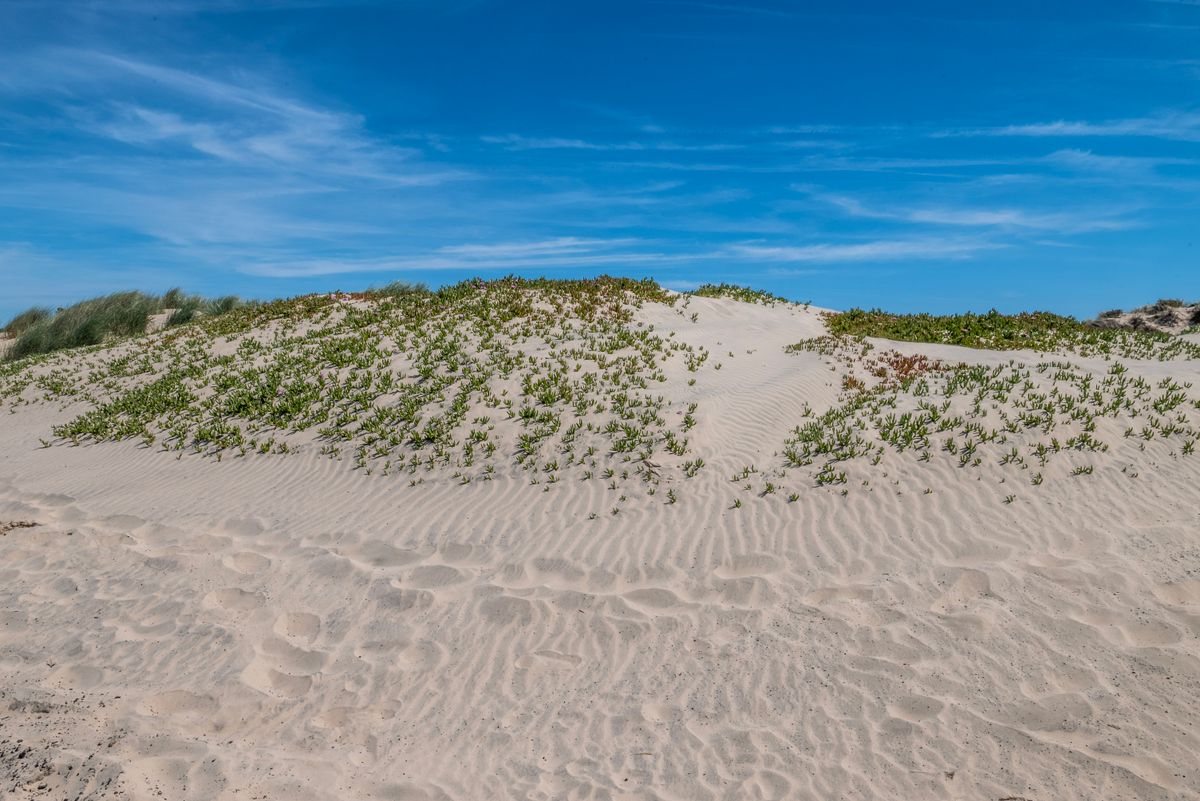
Hazardous tree removal in Los Osos starts with the ground, not the tree. This town sits on an old dune field, and a Monterey pine that germinated in that sand fifty years ago is standing on a root plate that is broad, shallow and held mostly by friction. When that plate lifts, the failure is not the snapped limb people picture — it is the whole tree rotating at the base toward whatever is downhill of it.
What Makes a Tree a Hazard Here, and What Does Not
A hazard needs two things: a defect, and a target. A pine with a hollow base over open dune is a tree to watch. The same pine over a bedroom window, a carport, a septic line or the path a child walks to school is a tree to schedule. That is the whole distinction, and it is why we walk the parcel before quoting anything.
The defects we find most often on these lots: a cracked or included fork where two leaders grew away from each other; a root plate that has lifted on the uphill side, leaving a step in the sand and a fresh crack in the duff; a lean that has changed since the last wet winter; a stem hollowed behind a 1980s topping wound. Dogs, vehicles and years of parked pressure on the roots explain a surprising share of it.
Plan First, Cut Second
A hazardous removal is planned work. We rate the tree, choose the drop zone in daylight, and decide the method before anyone leaves the ground: climb and rig where the wood is sound enough to hold a climber, and a crane where it plainly is not. On the Baywood side, where lots run narrow and two houses share one driveway, the plan is mostly about getting pieces down in a size the ground can catch.
Because dune sand compacts and shifts, the setup matters as much as the cut. Plywood pads under outriggers, a landing zone surveyed for the water meter and the septic tank, and a route out for the wood that does not cross a neighbour's fence line.
The Question People Do Not Ask
Taking out a mature pine on the bay side removes a windbreak and a root mass at the same time. Ground that was being held by both is now held by neither, and the follow-on work — mulch, replanting, sometimes drainage — belongs in the same conversation as the cut, not in a quote the following spring. We say so up front rather than sell the removal alone.
Where It Fits
A hazard rating written down is a different document from a removal; see our Los Osos hub for the assessment side. Where the tree is already past saving, see dead and dying tree removal. Where it is sound but structurally wrong, crown reduction is often the safer trade than a cut at the base.
Tell us what is under the tree and roughly how long the lean has been there. Photographs from the street and from the downhill corner save a trip. Call (805) 927-4414 or use our contact page, and start at our services for the wider picture.
Questions, quotes, or just exploring — we’re here to help.