


Wind Through the Crown
Crown Thinning in Morro Bay, CA
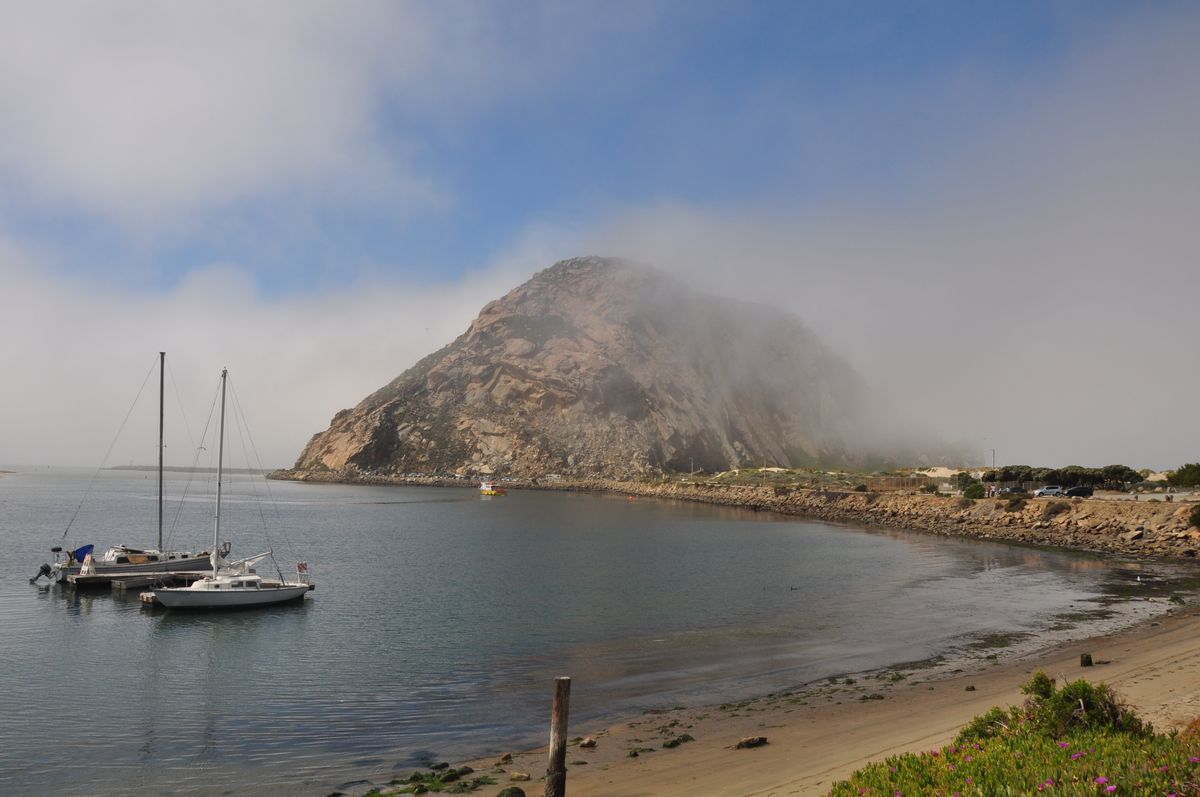
Morro Bay — this is the coast these pages are about.
Quick answer: Crown Thinning in Morro Bay, CA — Pruning is a plan before it is a cut: deadwood and broken limbs first, then clearance from roofs, wires and paths, then the structure the tree will carry for the next decade. The right cut heals and the wrong one invites decay, which is why the order matters more than the number of cuts.
- Typical timing: Structural work in the dormant months, light clearance and deadwood any time the tree is not under stress.
- What it involves: Removing dead and crossing limbs, thinning to let light through, lifting low limbs for clearance, and never topping a tree.
- The standard: The ANSI A300 pruning standard as applied by ISA-certified arborists — including the three-cut method on every limb worth saving.
- Where we work: Cambria, San Simeon, Cayucos, Morro Bay, Los Osos and the towns between.
- Our own record: 503 pages and 291 stories published on this site. Counted from our own archive, not a stock table.
Field note. What we see on this coast is a pruning calendar that does not match the inland one: salt air, fog and wind mean a cut that would be minor in the valley can be the one that opens a crown to decay here, so we look at the species and the exposure before the season.
On the other hand, not every tree wants to be pruned: leaving a healthy canopy alone is a decision that pays, and a tree with plenty of space is often better served by doing nothing.
The wind that funnels through the Embarcadero every afternoon does not push evenly on a tree — it pushes hardest on whatever the canopy presents to it, and a dense cypress or eucalyptus crown presents a great deal. Crown thinning is how that sail is reduced without shortening the tree: selected branches come out from the inside, the crown keeps its natural shape and its full height, and the air moves through it instead of against it.
Done properly it is a careful, limited operation. Done badly it is the most common mistake made on coastal trees.
What thinning removes
Thinning takes out chosen branches through the interior and the outer canopy, not a proportion of every limb. In practice the cuts that earn their place are the ones that are:
- Crossing or rubbing — two branches that will wound each other as they thicken.
- Weakly attached — a limb growing out of a tight fork with bark pinched between it and the stem is a limb that leaves on its own eventually.
- Growing inward or upward into the crown's own space, contributing shade and weight rather than structure.
- The smaller of two competing stems, where one has to go for the other to develop.
- Dead, dying or damaged material — which is really deadwooding, and is usually done in the same visit.
The dosage rule that stops it going wrong
There is a limit to how much live material a tree can lose in one pass without being damaged by the loss. Industry practice puts that at roughly a quarter of the live crown, and less for a mature or stressed tree.
Thinning past that line produces the classic failures: a lion's tail, where the inner branches have all been stripped and a heavy tuft is left at the end of each limb, and over-thinning, which forces the tree to push a dense flush of epicormic shoots along the branches it has left. Both are worse for wind resistance than the tree you started with, and both are visible in nearly every street in town.
Why it matters more here than inland
A tree with a reduced sail catches less of the afternoon wind, which means less load transferred down to the fork and to the root plate. That matters on lots where the rooting area has been reduced by paving, a retaining wall or a sewer run, because the root plate is holding less than the canopy assumes.
Thinning does not fix a structural defect — that is a job for structural pruning or, where the fork is already failing, cabling and bracing. What it does is take load off a tree that is otherwise sound, and buy back the safety margin that a dense crown spends.
What thinning is not
It is not height reduction. If the tree is too tall for its space, the cut that changes that is a crown reduction, which shortens limbs back to a living lateral and changes the outline. Thinning leaves the outline alone. Confusing the two is why so many trees are described as "thinned" when they have simply been topped, and why asking a contractor which of the two they intend is a reasonable first question.
Have it assessed
Photographs of the crown from two angles are enough for an initial read on whether thinning is the right job at all. Call (805) 927-4414 or use the contact page, and see our services for the pruning work we do on this coast.
Questions, quotes, or just exploring — we’re here to help.