

The Tree Between Two Houses
Hazardous Tree Removal in Morro Bay, CA
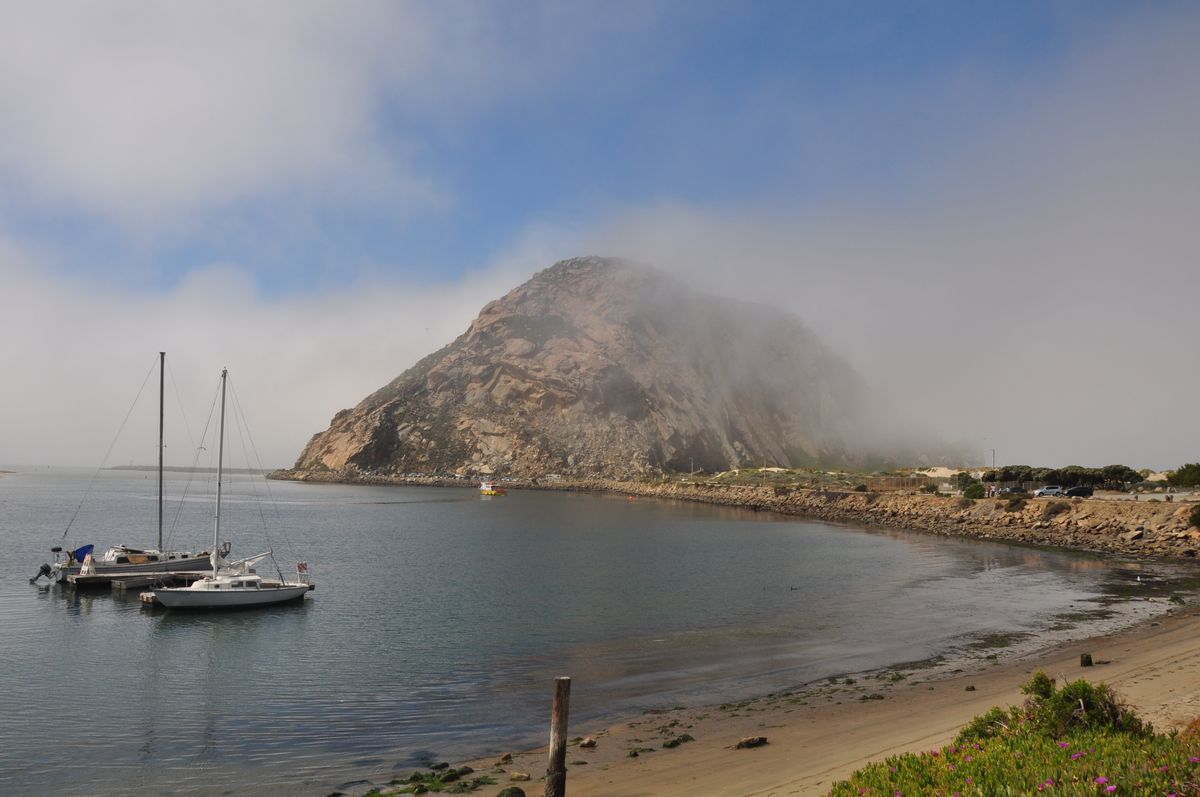
Morro Bay — this is the coast these pages are about.
Quick answer: Hazardous Tree Removal in Morro Bay, CA — Removing a tree is planning before it is cutting: where the wood lands, what is under it, whether a rope or a crane takes the weight, and what is left when the crew drives away. A removal is finished when the drop zone is clear and the stump is dealt with, not when the trunk hits the ground.
- Typical timing: When the tree is a hazard, the schedule is immediate — storm damage, split leaders and leaners do not wait for good weather.
- What it involves: A written plan for the drop zone, rigging or crane work over structures, protecting driveways and roofs, and deciding the stump’s fate in advance.
- The standard: The ANSI Z133 safety standard for arboricultural operations, and ISA best practice for removals near structures.
- Where we work: Small town lots, coastal acreage and the narrow properties of the Cambria pine belt.
- Our own record: 503 pages and 291 stories published on this site. Counted from our own archive, not a stock table.
Field note. What we see here is that access decides the price more than height does: a pine over a fence on a slope with no driveway costs more to take down safely than a taller tree with a clear drop, and the plan is where that shows up.
On the other hand, removal is not the only safe answer — a tree with one failing limb, or a lean that can be corrected by reduction, is often better kept and managed than gone.
On a Morro Bay block the gap between a leaning cypress and the neighbour's roofline is often the width of a footpath, and that single fact is what separates a hazardous tree removal from an ordinary one. Downtown lots run a few metres apart, the houses sit close to the fence, and the trees between them were planted when the street was wider than it is now.
Hazardous tree removal here is not about how big the tree is. It is about what the tree would hit, and how soon.
Hazard is a relationship, not a species
An arborist reads a tree in three parts: the defect, the target, and the exposure. A cavity at the base of a Monterey cypress at the back of an open lot is a conversation. The same cavity in a cypress standing over the footpath between two Embarcadero buildings is a job for this week. Nothing about the tree changed; the target did.
That is why a walk-around matters more than a photograph, and why we ask what the tree overhangs — the deck, the parked car, the gas meter, the service drop from the pole on the street.
What we are actually looking for
- Failed or failing structure — an included bark fork opening between two codominant stems, a seam running down the trunk, a crack that widens between two visits.
- A root plate that has moved — soil lifted or cracked on the uphill side, a fresh lean that appeared after a wet winter, a flare that has sunk below the surrounding grade.
- Decay you can see and decay you cannot — conks at the base, a hollow when you sound the trunk, and the honest admission that a cavity's outside diameter tells you almost nothing about the wall thickness inside.
- Dead material overhead — hanging limbs, bark that has let go, a top that died last summer and has been drying ever since.
Why the coast adds its own risks
Morro Bay sits in wind that arrives most afternoons off the water, and salt spray keeps bark and deadwood damper than an inland arborist would expect — which means decay can progress further before the tree looks dry and brittle. Cypress on these blocks is also long-lived and heavy, and a mature cypress limb holds more weight than it looks like it does.
The town's narrow streets mean a rigging plan has to be built around a parked car, an overhead drop, and a footpath that cannot stay open.
The plan before the saw
A hazardous removal runs in a fixed order. The tree is rated first, so the crew knows which cuts are the ones that cannot be got wrong. Then the drop zone: what is under the tree, where the pieces are allowed to land, and which way the ground falls. Then the method — climbing for most coastal trees, or a crane where the tree cannot be trusted to hold a climber.
Then the sequence, piece by piece, largest first where the rigging allows. Improvisation is what hazardous work punishes, and it is precisely the thing a homeowner with a chainsaw cannot supply.
When it is not a hazard
Plenty of trees get called dangerous when they are doing exactly what the species does. A cypress with a natural lean into open space, a pine that shed a limb in a gale without a target under it, a tree whose only sin is that it shades a view — none of those are hazardous, and we will say so.
Where the tree is worth keeping, the honest answer is often cabling and bracing or a crown reduction rather than a removal, and where it is already past that, a risk assessment in writing is what settles the question with an insurer or a neighbour.
Get the tree looked at
Tell us the species, roughly how tall it is, and what is underneath it, and send a photo of the base and the fork — that usually answers the first question before anyone drives out. Call (805) 927-4414 or use the contact page, and start at our services for the rest of the work we do on this coast.
Questions, quotes, or just exploring — we’re here to help.