Licensed Arborist Means Three Documents in California
Quick answer: Licensed Arborist in Cambria: Three Documents to Check — The crew that answers the phone is the crew that climbs the tree: locally based, insured, and working to the industry standards rather than to whatever the last job allowed. That matters most where the work is delicate — over a roof, beside a wire, or on a slope where the wood has to be lowered rather than dropped.
Field note. What we see is that the questions worth asking are the same on every property: who is climbing, what happens to the wood, and what the tree looks like in five years — so we answer those before we talk about dates.
On the other hand, credentials are a floor rather than a guarantee: what a tree gets is the judgment of the person in it, which is why we keep the same small crew on this coast.
There is no such thing as a licensed arborist in California. Not as an insult to anyone — there is simply no state arborist licence for a person to hold. What California licenses is TREE WORK as a contracting trade: the C-27 Tree Service classification, issued by the Contractors State License Board. Everything else that gets called a licence — certified, master, registered — is a private credential from a professional association, not a state document.
Which means the phrase painted on the side of a truck is doing whatever the company that painted it wanted it to do, and a homeowner has no way to tell the difference without a two-minute check.
I have bid against enough of those trucks to know how the two minutes should go. It is not about catching a fraud. It is about knowing which paper answers which question — because the three documents do genuinely different jobs, and a company can hold any one of them and be missing the others.
The one licence that is actually a licence
The C-27 covers the work itself: removal, pruning, planting, and the spraying and treating of trees. It is issued to a person or a business, and the business must have a qualifying individual who passed the trade exam. It carries a bond, and it carries a number that has to appear on your contract and on your estimate.
In California, a home improvement job over five hundred dollars in labour and materials needs a licensed contractor. Tree work over that number is not a grey area: an unlicensed operator cannot legally contract for it, generally cannot pull the permits, and usually cannot carry workers’ compensation for the crew standing in your yard.
The check takes a minute in the Board’s own public lookup, and the number to type is the one printed on the estimate in your hand. If the number is not there, that is your answer, and nothing else on the page matters.
The credentials that are not licences, and why they still matter
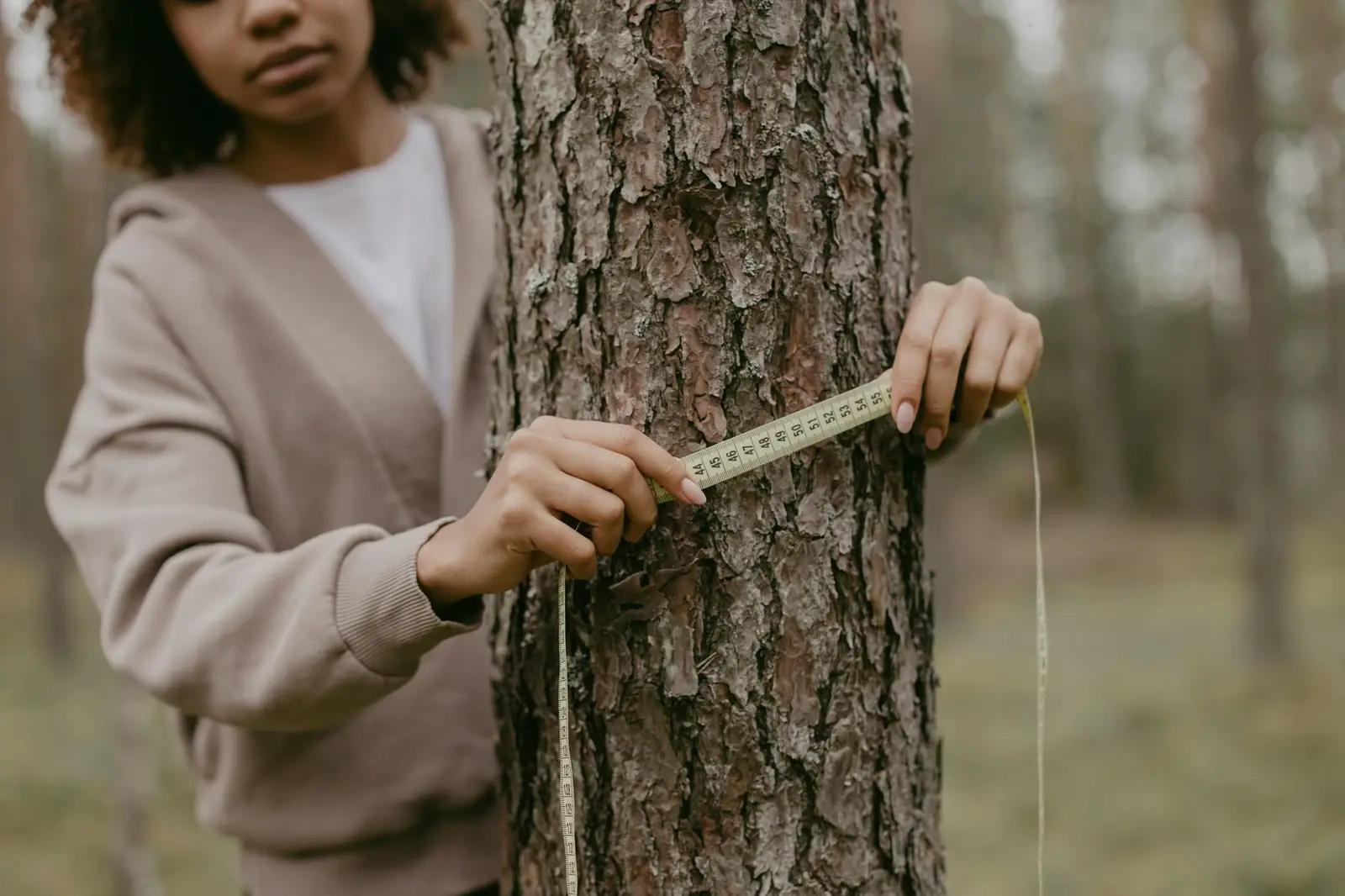
An ISA Certified Arborist is certified by the International Society of Arboriculture. It is a real credential with a real exam and required continuing education, and the ISA keeps a public directory you can search by name. It is the closest thing this trade has to a professional standard for knowing trees.
It is not a licence, and the two are not substitutes: a company can hold a C-27 with no arborist on staff, and a person can hold the ISA credential with no licence to contract for the work at all.
Two specialised ones are worth knowing by name. The Tree Risk Assessment Qualification is the training behind a defensible written assessment of a tree that worries you. And where a report has to stand up in front of a board, an insurer or a lawyer, the usual standard is a Registered Consulting Arborist.
Here is the part nobody puts on the truck. The person who assesses your tree and the person who bids its removal are not the same interest. A consulting arborist who does no removal work has nothing to gain from the answer they give you.
For a decision worth real money — a heritage oak, a tree over a neighbour’s roof, a property being sold — paying for that separation is the honest money, and the reason we hand over the report rather than the bid when the question is about risk.
The paper nobody asks for
The certificate of insurance. Ask for it, and look at four things: that the dates are current, that the business name matches the name on your contract, that it includes general liability, and that it includes workers’ compensation. That last one is the one that can reach you.
If a climber is hurt in your yard and the company carries no workers’ comp, the claim does not vanish because the worker was not your employee — it can arrive at your homeowners policy, and the argument that follows is expensive even when you win it.
Then ask who climbs. Employees or day labour called in for the day? A crew on the books is a crew that is trained and covered, and the difference shows up in the same place every time: the tree, the equipment and the insurance. Finally, get three things in writing — what leaves the property, what becomes firewood, and what the stump grinding actually includes.
Those are the three items that turn a fixed price into a disagreement, and they are all answered on paper by any company that intends to keep its price.
Five questions worth the phone call
- What is your licence number?Write it down before you call the lookup, and check it while you are still on the phone.
- Who will be in the tree?Employees, and are they trained and equipped for aerial work?
- Are you insured, and can I see the certificate?Both halves — liability and workers’ compensation.
- Is the price fixed, and what is not included?Stump depth, haul-off, permits, and the wood.
- What happens if something breaks?Who pays, and what that looks like in practice on the day.
A company that answers all five without flinching is the company you were hoping for. Ours are on our about page and attached to every estimate, and if a tree worries you enough that you want the answer written down rather than quoted, that is our risk assessment rather than a bid.
For boards and property managers the same discipline runs the other way round — the certificate and the schedule first, then the work — which is how we handle commercial and HOA properties.
The safety part of this is simple, and it is the reason the article exists. A licence says a business may take the job. A credential says somebody studied trees. Insurance says that when the worst happens in your yard, the worst does not land on your family. You want all three, and you can verify all three this afternoon.