



Chips Off Our Own Trucks, Up the Grade
Wood Chip Mulch Delivery
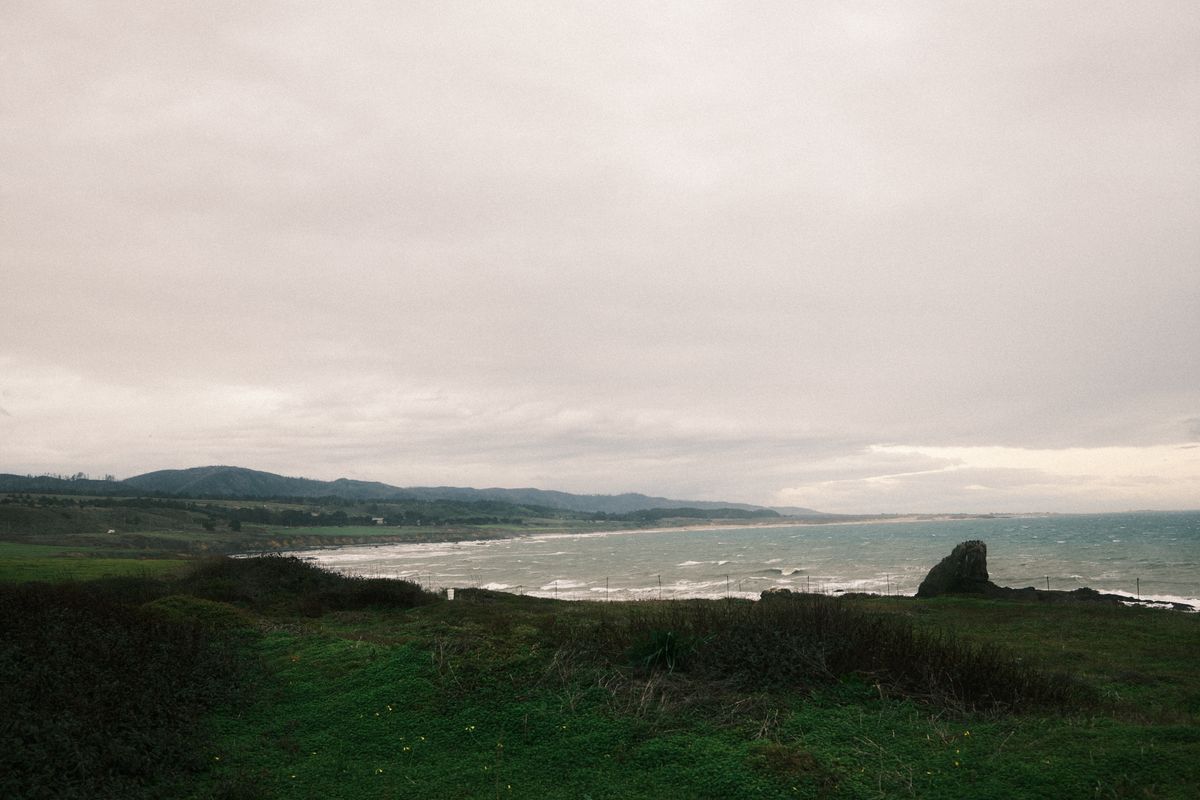
San Simeon — this is the coast these pages are about.
Quick answer: Wood Chip Mulch Delivery — Mulch is the cheapest thing that happens to a tree: a flat layer over the root zone holds moisture through the dry season, keeps the soil temperature steady and feeds the soil life the tree depends on. Almost every mulch problem is a depth problem or a contact problem — too thick, or piled against the trunk where the bark has to stay dry.
- Typical depth: Two to four inches, flat, from the drip line inward — never a cone against the trunk.
- Typical timing: After planting or after a clean-up; refreshed in autumn so winter rain carries it down.
- What it involves: Keeping the root flare visible, keeping mulch off the bark, and choosing material that breaks down rather than mats.
- The standard: ISA and university extension guidance on arboricultural mulching and the root flare.
- Our own record: 503 pages and 291 stories published on this site. Counted from our own archive, not a stock table.
Field note. What we see most on this coast is not too little mulch but too much, in the wrong place: the volcano against the trunk that keeps the bark wet through the fog season and invites rot where the tree cannot show it until the canopy thins.
On the other hand, a thin ring of the wrong material is worse than none at all — matted, water-repellent mulch sheds the rain it was meant to store.
On a San Simeon hillside there is a particular kind of good fortune in having a chipper truck already working the parcel above you. Arborist wood chips are the by-product of the work we do all along this stretch, which means a load can arrive at the top of a steep driveway the same week rather than being bought by the bag and carried up in buckets.
Wood chip mulch delivery is exactly what it sounds like: the material, and the hauling of it. It is not the same thing as the mulching service, which is the work of putting it down properly around a root zone.
What Arborist Chips Actually Are
The real thing is not the uniform bark you buy in a bag. A load from our trucks is a mixed product — chipped trunk and branch wood, leaves and needles, some bark, and a bit of finer material from the last cut — and that mixture is a feature rather than a flaw.
The varying particle sizes knit together into a mat that holds moisture and stays put on a slope, where uniform bark chips tend to float and wash.
Fresh, Aged, and Where Each Belongs
Fresh chips are fine in most places and are what we normally deliver. Two honest cautions:
For a tree root zone, fresh chips spread at the right depth are straightforwardly good. For a garden bed worked every year, aged material is easier.
- Keep them off the trunk. A fresh chip pile mounded against a trunk holds moisture against the bark and can encourage decay. The flare should always be clear.
- Where the soil is very poor, letting a load age a season helps. Fresh material ties up a little nitrogen at the surface as it breaks down, which matters for annuals and vegetable beds far more than it does for established trees.
Depth, and How Far to Spread
Two to four inches is the working range. Thinner than that and the sun and wind get through it; much thicker and water struggles to reach the soil beneath, and on a steep face a heavy layer can slump after rain.
Spread the material out to the drip line and beyond if there is room, because the absorbing roots are there rather than at the trunk, and feather the edge so it does not end in a sharp bank that sheds water.
Where Chips Earn Their Keep on This Coast
On our ground the material does three useful jobs at once: it holds moisture in sandy soil that would otherwise dry out within days, it keeps the surface from crusting and shedding rain, and it suppresses the weeds that compete with a young tree for water. On a slope, a mat of chips is one of the cheapest ways to slow surface runoff without anything structural.
The main limit is access — a full load needs somewhere to tip, and on a narrow coastal lot that is a real constraint worth talking through before delivery.
Tell us roughly how much ground you have and where a truck can reach. Call (805) 927-4414 or use our contact page, and see the rest of our services.
Questions, quotes, or just exploring — we’re here to help.