

Proving What Happened to the Tree
Insurance Claim Documentation
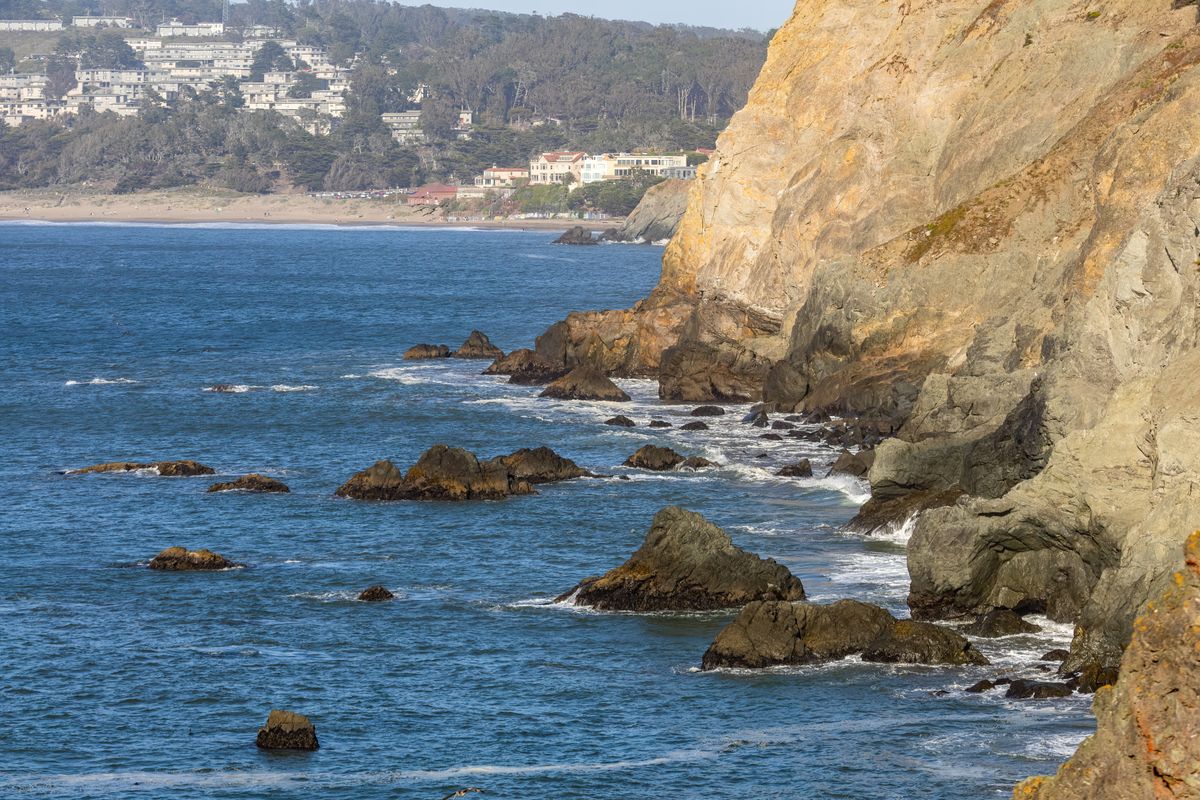
San Simeon — this is the coast these pages are about.
Quick answer: Insurance Claim Documentation — The crew that answers the phone is the crew that climbs the tree: locally based, insured, and working to the industry standards rather than to whatever the last job allowed. That matters most where the work is delicate — over a roof, beside a wire, or on a slope where the wood has to be lowered rather than dropped.
- Credentials: ISA-certified arborists; licensed and insured for work over structures and near utilities.
- The standard: ANSI A300 for pruning and ANSI Z133 for safety on every job.
- Where we work: Cambria, San Simeon, Harmony, Cayucos, Morro Bay, Los Osos and the surrounding county.
- How we quote: A site visit and a written, line-by-line quote before any work is booked.
- Our own record: 503 pages and 291 stories published on this site. Counted from our own archive, not a stock table.
Field note. What we see is that the questions worth asking are the same on every property: who is climbing, what happens to the wood, and what the tree looks like in five years — so we answer those before we talk about dates.
On the other hand, credentials are a floor rather than a guarantee: what a tree gets is the judgment of the person in it, which is why we keep the same small crew on this coast.
Before the Adjuster Arrives
An insurance claim over a tree on the San Simeon stretch is usually decided by photographs taken in the first two days, and by who took them. Wind reaches this coast off the water with nothing between it and the bluff, so a cypress that stood through forty winters can fail in one, and when it does the question is not whether the tree fell but whether anything about it was foreseeable.
That question is answered with evidence, and evidence is easier to gather on the day than to reconstruct a month later.
Insurance claim documentation is the record that answers it. We photograph, measure and write the failure up while the site still shows what happened, and the written opinion separates what can be shown from what cannot.
What the Carrier Actually Asks
Three things, in practice: what failed, why it failed, and whether the loss was avoidable.
- What failed — the limb, the fork, the root plate or the whole trunk, photographed in place before it is cut up. Once the wood is in a truck the evidence has left with it.
- Why it failed — the defect present before the wind: included bark in a codominant fork, a decay column behind an old wound, a root plate loosened by a saturated winter, or a species that was never suited to the salt line it was planted on.
- Whether it was foreseeable — where a written tree opinion matters most, and where we are careful with language. An arborist can describe what the tree showed and what a reasonable inspection would have seen. An arborist cannot decide what you knew, and does not rule on a policy.
What We Photograph, and Why the Detail Matters
A limb that broke in a gust looks like every other broken limb in a wide shot. What supports a claim is the close work: the plane of the break, the decay inside the wound, the stump or root plate where it lifted, the ground around it, and where the tree sat relative to what it hit.
On a bluff edge we also record the direction of the prevailing load, because a tree shaped by sixty years of onshore wind is already telling anyone who looks that one side was carrying more than the other.
Where a Claim Stops Being Ours
We are not the carrier, the loss adjuster or a lawyer, and the report says so. Our part is the tree: what it was, what state it was in, what failed, and what the failure implies for the rest of the parcel.
If the adjuster needs a value rather than a cause, that is an appraisal with its own method; if the question is whether a remaining tree is still a hazard, that is a risk assessment and a separate document.
After the Reporting
Most claims are finished long before the wood is. The site still has to be made safe, the debris dealt with and the remaining trees checked, because a storm that takes one tree often leaves the neighbour it was leaning against in worse shape than before. We scope that separately so the cleanup and the documentation do not get tangled together.
If you have had a failure and are still inside the first week of it, call (805) 927-4414 or use our contact page and describe what came down. Early photographs are worth more than any amount of description later, and our services page lists the rest of what we do on this stretch.
Questions, quotes, or just exploring — we’re here to help.