

Thinning What the Wind Left Behind
Crown Thinning in San Simeon, CA
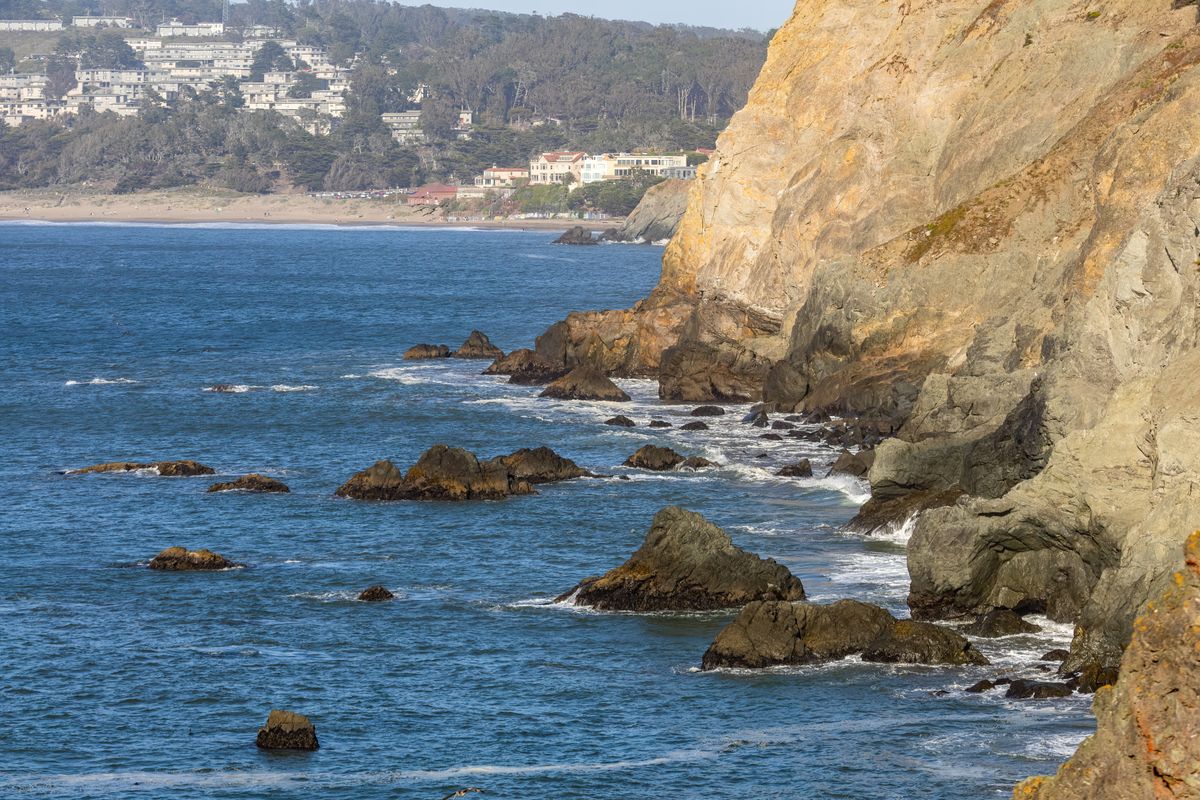
San Simeon — this is the coast these pages are about.
Quick answer: Crown Thinning in San Simeon, CA — Pruning is a plan before it is a cut: deadwood and broken limbs first, then clearance from roofs, wires and paths, then the structure the tree will carry for the next decade. The right cut heals and the wrong one invites decay, which is why the order matters more than the number of cuts.
- Typical timing: Structural work in the dormant months, light clearance and deadwood any time the tree is not under stress.
- What it involves: Removing dead and crossing limbs, thinning to let light through, lifting low limbs for clearance, and never topping a tree.
- The standard: The ANSI A300 pruning standard as applied by ISA-certified arborists — including the three-cut method on every limb worth saving.
- Where we work: Cambria, San Simeon, Cayucos, Morro Bay, Los Osos and the towns between.
- Our own record: 503 pages and 291 stories published on this site. Counted from our own archive, not a stock table.
Field note. What we see on this coast is a pruning calendar that does not match the inland one: salt air, fog and wind mean a cut that would be minor in the valley can be the one that opens a crown to decay here, so we look at the species and the exposure before the season.
On the other hand, not every tree wants to be pruned: leaving a healthy canopy alone is a decision that pays, and a tree with plenty of space is often better served by doing nothing.
A cypress on the ocean side of the San Simeon highway has already had most of its crown taken by the wind, and the last thing it needs is a contractor thinning what is left. Crown thinning is a careful, selective cut for trees that still have a crown to work with — and on this coast the reason to do it is wind, not light.
What thinning is, precisely
Thinning removes selected branches from inside the crown to reduce its density while leaving the tree's outline and its structure intact. The cuts are made at the branch collar, on branches that are competing, crossing or crowding rather than on whatever is easiest to reach. Done properly, a thinned crown lets wind pass through it instead of levering against it, which is a real structural benefit on an exposed ridge.
What it is not
- Not topping or shortening. Thinning takes branches out; it does not cut the tree back to a smaller size. That is a different operation with a different set of risks.
- Not lions-tailing. Stripping the inner growth and leaving a tuft at the end of each limb looks tidy and is one of the worst things you can do to a tree — the weight moves outboard, the limb becomes a whip, and sunburn opens the bark that was shaded before.
- Not a percentage game. The industry guidance is a modest proportion of live crown in a single pass. A tree thinned by half is a tree that will respond with a rush of epicormic growth and a weakened structure.
Why it matters on this coast specifically
The wind here arrives loaded with salt and rarely stops. A crown left too dense catches that load and translates it into the trunk and into the fork; a crown thinned within the limits sheds some of it. On the big cypress along this stretch, thinning is often the least intervention that produces a real change, and it is best judged by somebody who has watched these trees answer the last few winters.
(805) 927-4414Where thinning fits
Thinning is usually one part of a wider cut. Dead wood comes out at the same time, low limbs get lifted for clearance, and a crown that has grown into its neighbour's is separated so the two are not one wind-catching mass. Where the tree has a structural defect rather than a density problem, the right work may be cabling and bracing instead, and we will say so rather than sell the wrong cut.
Timing, and doing it once
Work away from the nesting season where you can, and away from the day the wind is up. Thinning is not an annual activity: done to the limits it should hold for several years, and a tree that needs thinning again the following spring was over-cut the first time.
Have the crown looked at properly
Send a photograph from below and one from the side, so the crown's real shape is visible. Call (805) 927-4414 or use the contact page, and see tree trimming in San Simeon for the wider range of pruning work.
Questions, quotes, or just exploring — we’re here to help.