

When the Hillside Starts to Move
Slope & Bluff Stabilization
San Luis Obispo — this is the coast these pages are about.
Quick answer: Slope & Bluff Stabilization — Trees on this coast live with fog, salt, wind and thin soil, and the work that keeps them healthy is decided by those conditions rather than by a calendar written inland. Structure, clearance and the root zone are what a tree here needs looked at, and small work done early is what keeps a tree out of the emergency list.
- What it involves: Structural pruning, clearance from structures and wires, deadwood removal, root-zone care and hazard assessment.
- Typical timing: Structural work in the dormant months; deadwood, clearance and hazard work whenever the tree needs it.
- The standard: The ISA standards for pruning and tree risk assessment, applied by ISA-certified arborists.
- Where we work: Cambria, San Simeon, Harmony, Cayucos, Morro Bay, Los Osos and the Cambria pine belt.
- Our own record: 503 pages and 291 stories published on this site. Counted from our own archive, not a stock table.
Field note. What we see on this coast is that the trees people worry about are usually not the ones in trouble: the pine with a clean crown and a lean that predates the house is often sounder than the tidy tree that has been quietly drowning in its own root zone.
On the other hand, there is no schedule that suits every tree — the same species on two sides of one street can need opposite care, which is why we look before we recommend.
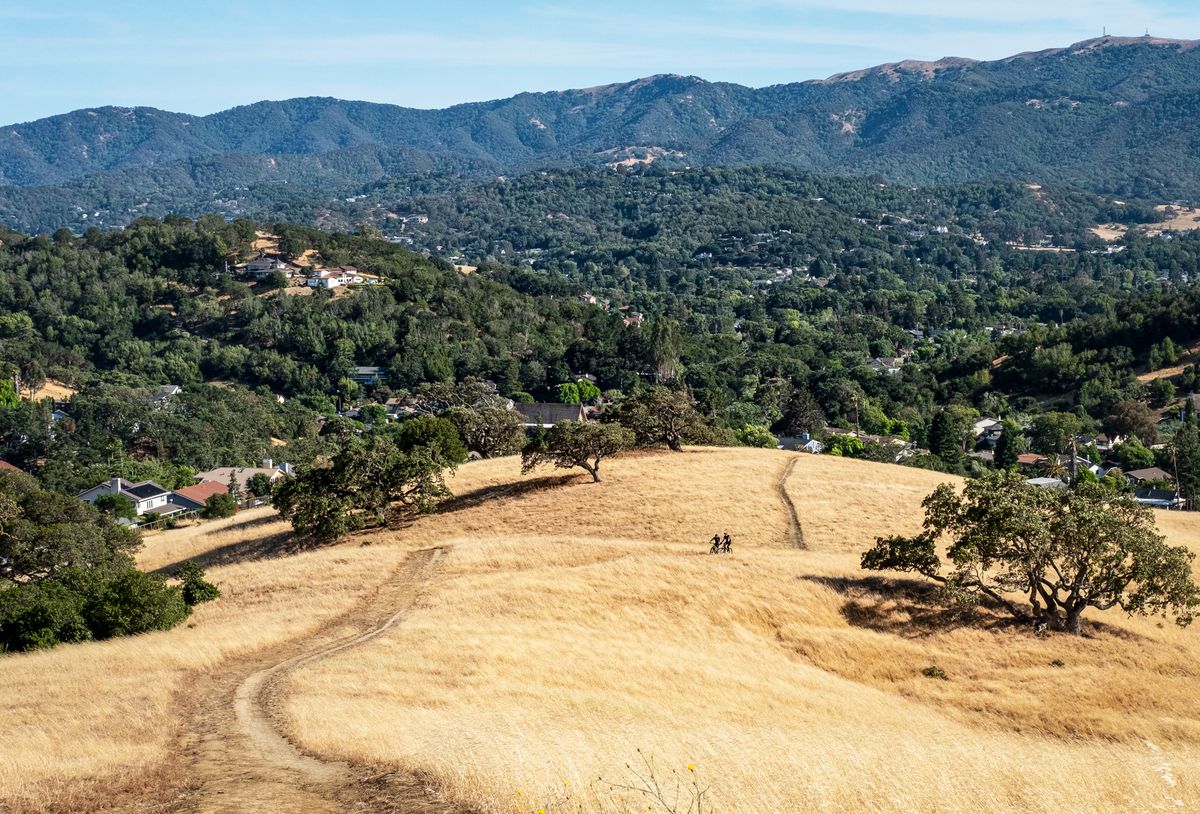
Slope work inside San Luis Obispo is mostly hillside rather than bluff: the volcanic shoulders of Bishop Peak and Cerro San Luis, the steep cuts along Poly Canyon, and the banks above San Luis Creek.
The mechanics are the same wherever the ground is inclined — water is what starts the movement, and the vegetation on a slope is both a help and a liability. Getting the order right matters, because the instinct to plant a slipping bank is often the wrong first move.
Drainage comes first, always
A slope fails when water gets into it faster than it can leave. Roof runoff dumped at the top of a cut, a broken irrigation line, a downspout that has been discharging onto the same spot for twenty years — those are the causes we find most often, and they are also the cheapest to fix.
Intercepting and carrying water away from the slope face is the first work on any project here, before a plant or a structure goes in.
What roots actually do
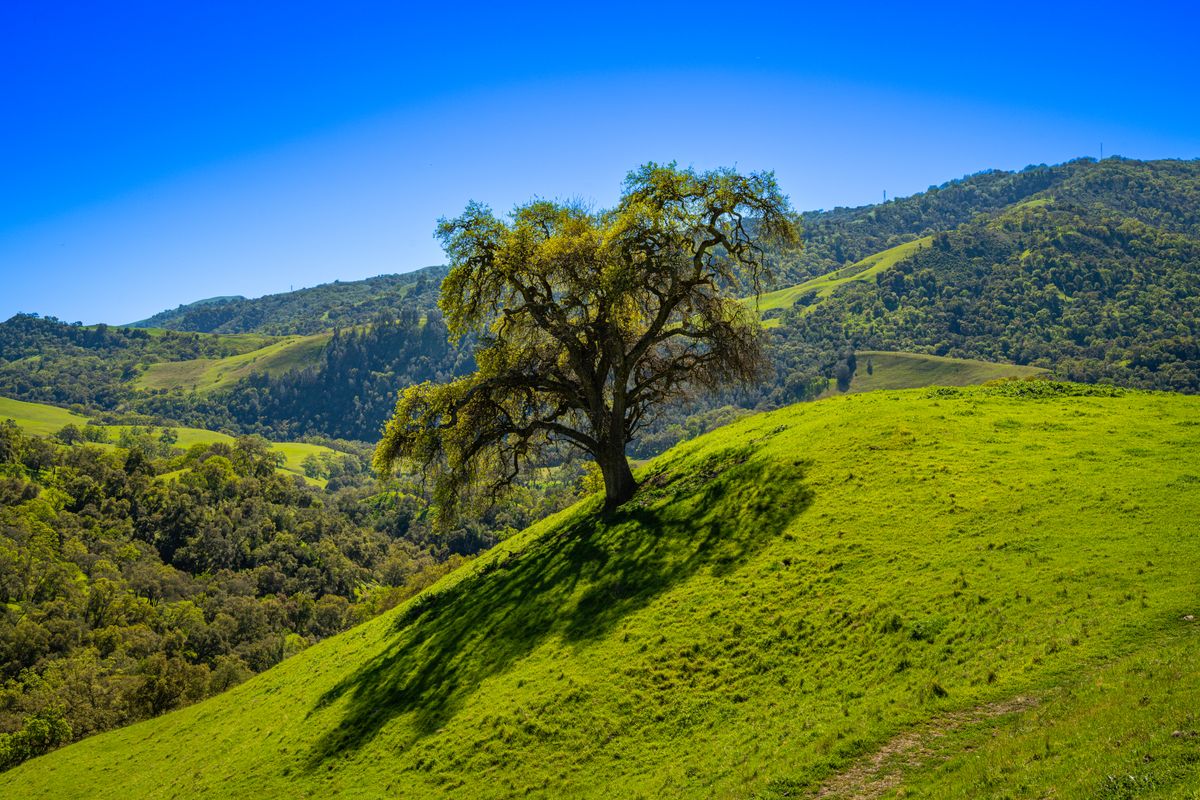
Roots reinforce soil in the top metre or so, which is where shallow slides usually begin, so established vegetation is genuinely useful. But a big tree on a bank is also a weight and a sail: mass adds load, and wind on a canopy works on the stem until the root plate gives.
On a steep cut, removing the tree can be worse than leaving it, and leaving a top-heavy one can be worse than managing it. That judgement is the actual skill.
When you need an engineer, not a contractor
If a structure, a road, a retaining wall at the toe of a slope, or the edge of a foundation is involved, the project needs a geotechnical engineer and possibly a coastal-commission or city review depending on where it sits. Grading that adds fill to a slope to create a bench is not a landscape decision; it is a engineering one. We scope the vegetation work and say plainly when the slope needs someone else in the room.
Structural options, honestly
Crib walls, soil nails, and drainage blankets each solve a specific problem and each have limits on a residential lot. Cribbing at the toe buys you stability and takes away the space; soil nails hold a face but need access for equipment; neither replaces getting the water off the slope. On the small residential slips we see in the hills above the city, drainage plus appropriate planting resolves most of them.
Planting that helps rather than hurts
Deep-rooted natives that establish without irrigation are the right material on a bank, and they need to go in behind a working drainage system rather than in front of one. Ground cover alone holds surface soil; it does not hold a slope.
Have the slope looked at properly
Tell us what has been moving, where the water goes, and what is below. Call (805) 927-4414 or use the contact page and we will walk it with you and set out the sequence.
Questions, quotes, or just exploring — we’re here to help.