

Zones, Gates and the Driveway Engine
Defensible Space Inspection
San Luis Obispo — this is the coast these pages are about.
Quick answer: Defensible Space Inspection — Defensible space is the work that decides what a fire has to burn between the wildland and the house: dead material out, ladder fuels separated, and the tree you keep limbed up rather than removed. It is measured in zones from the structure, and the first few feet are the ones that matter most.
- Typical timing: Best done in the cool months so the debris is gone before the dry season; clearance rules apply year-round.
- What it involves: Removing dead and dying material, separating shrubs from low limbs, limbing trees near structures, and keeping the roof and gutters clear.
- The standard: Cal Fire's defensible-space guidance for the first 100 feet, applied to the trees a property actually has.
- Where we work: The wooded parts of Cambria, San Simeon, Harmony and the surrounding ranch country.
- Our own record: 503 pages and 291 stories published on this site. Counted from our own archive, not a stock table.
Field note. What we see on this coast that surprises people is how much of the fuel load is low: the limb at four feet and the brush beneath it carries fire into a canopy that would otherwise survive, so the work is often lifting rather than felling.
On the other hand, over-clearing has its own cost — bare ground erodes, and the wind that comes with the fog belt is harder on a thinned stand than the fire risk it removes.
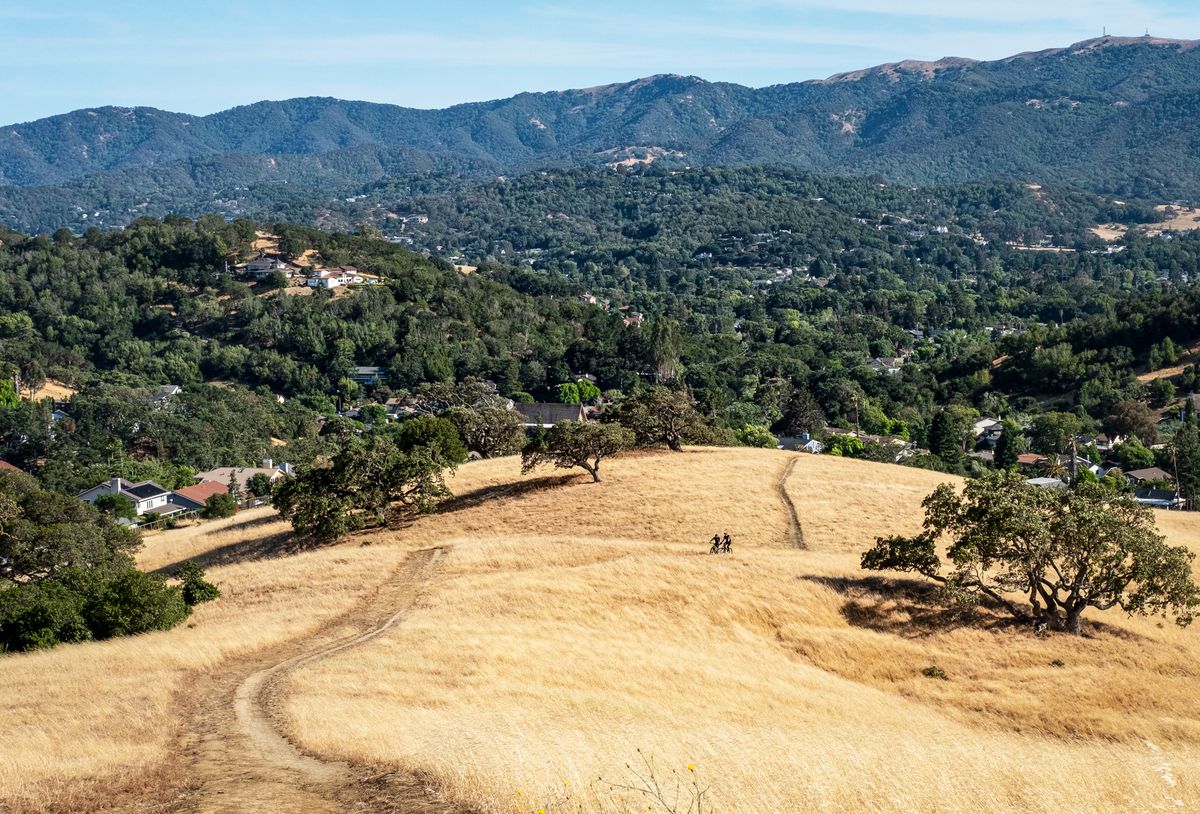
The lots that actually burn in San Luis Obispo are not the downtown parcels; they are the ones on the wildland edge above the city, where the hills run up towards the peaks and a garden meets unmanaged grass in a single line. A defensible space inspection walks that edge and reports what would carry a fire from the open ground to the house, in the order it would happen. The point is not to clear everything.
On these slopes the vegetation is also what holds the soil, and stripping it is how you trade a fire risk for a winter landslide.
The zones, and what they ask for
The framework is the familiar one: an ember-resistant zone immediately against the structure, a lean, clean and green band out to roughly ten metres, and a reduced-fuel zone further out where grass is kept short and shrubs are separated into clumps rather than a continuous mat. Then the vertical rule that matters most on wooded lots — nothing growing under a tree that could carry fire from the ground into the canopy as a ladder.
What we find on a hillside lot here
The same four things, most visits. Dry annual grass standing through the summer in the ten-metre band. Low limbs on the oaks and pines that reach down into a shrub layer. Dead material — a slash pile from last year's pruning, a broken limb still hung up in a neighbour's crown. And the house-adjacent details nobody thinks of: the wood pile against the wall, the propane tank under a canopy, the deck with the joist void a spark can enter.
Access and the driveway
On the narrow lanes that climb these hills, access is half the problem. A driveway with limbs brushing a fire engine at two and a half metres, or a gate the engine cannot pass, decides whether help arrives in time. Clearance along the access route is part of the inspection, not a separate job.
The report
You get a walk, a written list, and photographs marked up so a contractor or a homeowner association can act on it without interpretation. Where the requirement comes from a carrier or an inspection programme, the report is written to match the specifics in the letter rather than to a general standard.
Assessment first, cutting second
This is the survey, and the work follows from it: the tree-side clearance in one job, the brush in another. Doing them in isolation is how a parcel ends up cleared at the bottom and unchanged at the top.
Arrange a walk of the parcel
Tell us the address, the size of the parcel and whether anyone has cleared it before. Call (805) 927-4414 or use the contact page and we will inspect before the season does.
Questions, quotes, or just exploring — we’re here to help.