

Structure You Can Feel in a Handful
Compost & Soil Amendment
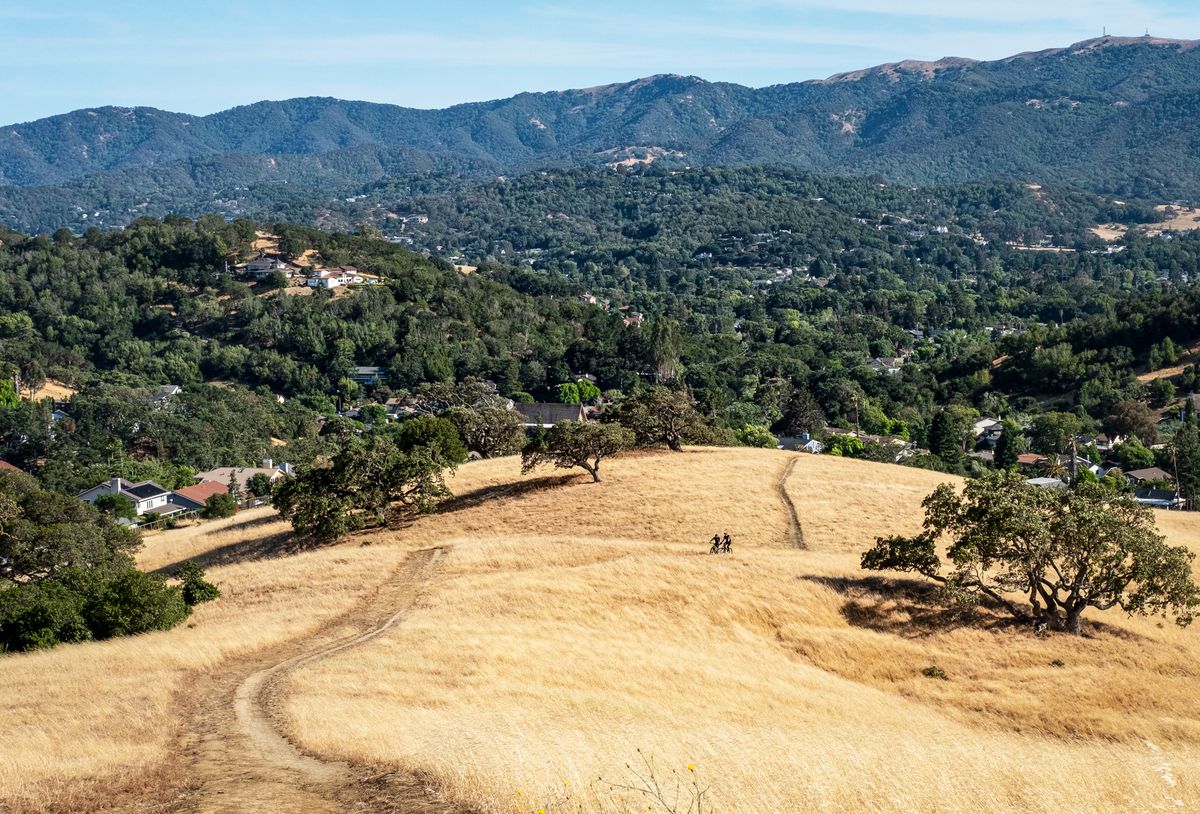
San Luis Obispo — this is the coast these pages are about.
Quick answer: Compost & Soil Amendment — Mulch is the cheapest thing that happens to a tree: a flat layer over the root zone holds moisture through the dry season, keeps the soil temperature steady and feeds the soil life the tree depends on. Almost every mulch problem is a depth problem or a contact problem — too thick, or piled against the trunk where the bark has to stay dry.
- Typical depth: Two to four inches, flat, from the drip line inward — never a cone against the trunk.
- Typical timing: After planting or after a clean-up; refreshed in autumn so winter rain carries it down.
- What it involves: Keeping the root flare visible, keeping mulch off the bark, and choosing material that breaks down rather than mats.
- The standard: ISA and university extension guidance on arboricultural mulching and the root flare.
- Our own record: 503 pages and 291 stories published on this site. Counted from our own archive, not a stock table.
Field note. What we see most on this coast is not too little mulch but too much, in the wrong place: the volcano against the trunk that keeps the bark wet through the fog season and invites rot where the tree cannot show it until the canopy thins.
On the other hand, a thin ring of the wrong material is worse than none at all — matted, water-repellent mulch sheds the rain it was meant to store.
Compost is not fertiliser, and treating it as one is why it gets a reputation for being overpriced in San Luis Obispo. What good compost actually does here is physical: it sticks the platelets of adobe clay together into crumbs, and those crumbs are pores.
A cubic metre of working compost turned into tight clay changes how water moves into that soil, how much of it the soil holds through a hot July, and how easily roots can push through it. That is worth more to a tree than any bag of nitrogen.
What to look for in the material
Municipal green-waste compost is the mainstream supply in the county and it is usually fine — screened, tested, consistent. Arborist compost, made from chipped brush and leaves, is coarser and slower and often better in a planting bed.
What you do not want is compost that is still hot, that smells sour or anaerobic, or that carries a visible share of plastic and street litter. Ask where it came from and look at a handful before it is spread across a garden.
How much, and how deep
Broadcast and tilled into the top hundred to hundred and fifty millimetres is the usual approach for a bed; a thin layer scattered on the surface does very little except feed the lawn.
For tree work the most useful delivery is the one described elsewhere on this site as a biological planting mix — compost worked into the backfill of a radial trench, or into a wide planting hole, so that the amendment goes where the roots are rather than where the spade is.
The amended planting hole dilemma
There is a long argument about whether to enrich the backfill in a planting hole or to put the tree straight into native soil. The current guidance leans towards modest amendment and a wide hole, on the reasoning that a tree which grows its roots inside a rich pocket and then meets plain clay at the edge has been set up to circle.
Our position on this clay is to mix rather than replace, and to make the hole far wider than it is deep.
Where compost does not help
Adding compost over a compacted root zone without breaking the compaction does nothing, because the problem is structure at depth rather than fertility at the surface. Adding it over a buried root flare makes the burial worse. And adding it around a mature native oak as feed is a mistake — the oak wants the soil biology it already has, and it would much rather have chips on top than amendment dug in.
Compost and mulch are a pair
One goes into the ground to build structure; the other stays on top to protect it, hold moisture, and feed the biology from above. Doing one without the other leaves the job half finished.
Ask about the soil before you buy a load
Send a photograph of what you are planting into and tell us what has been done there. Call (805) 927-4414 or use the contact page.
Questions, quotes, or just exploring — we’re here to help.