



Chipped Here or Hauled Out
Chipping & Debris Haul-Away in Morro Bay, CA
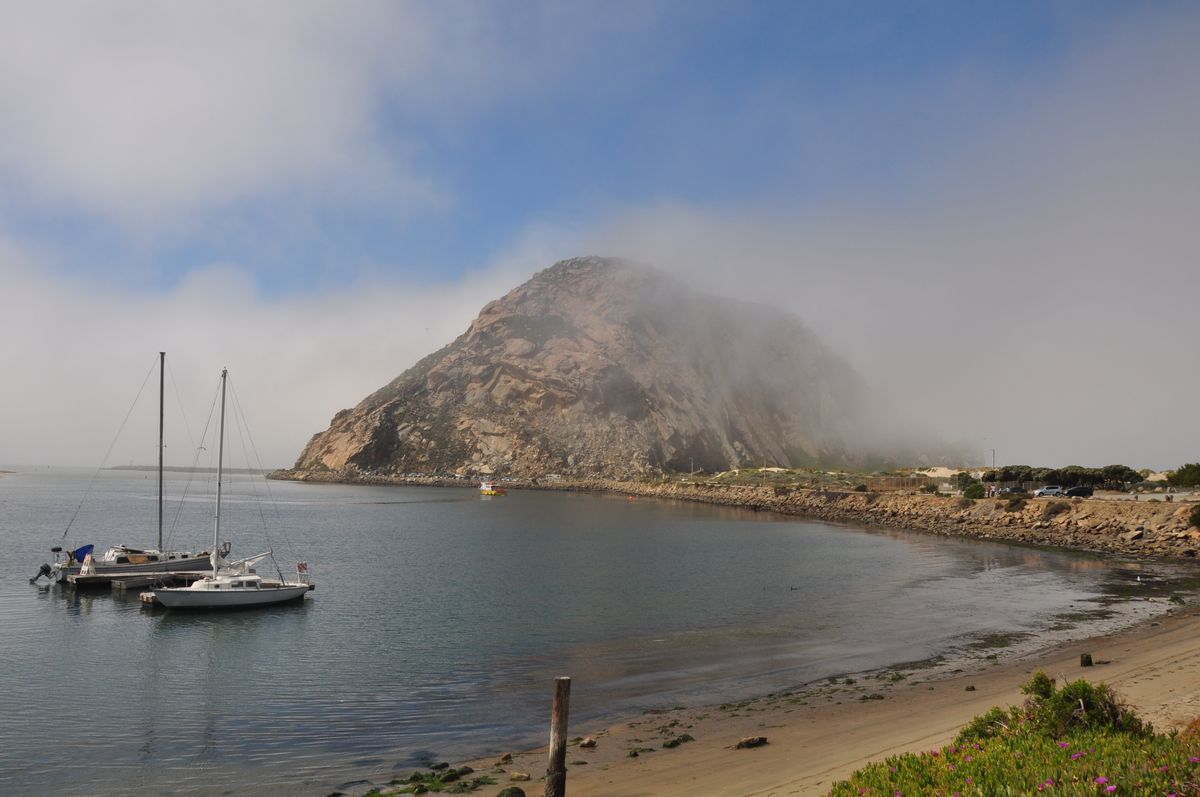
Morro Bay — this is the coast these pages are about.
Quick answer: Chipping & Debris Haul-Away in Morro Bay, CA — Mulch is the cheapest thing that happens to a tree: a flat layer over the root zone holds moisture through the dry season, keeps the soil temperature steady and feeds the soil life the tree depends on. Almost every mulch problem is a depth problem or a contact problem — too thick, or piled against the trunk where the bark has to stay dry.
- Typical depth: Two to four inches, flat, from the drip line inward — never a cone against the trunk.
- Typical timing: After planting or after a clean-up; refreshed in autumn so winter rain carries it down.
- What it involves: Keeping the root flare visible, keeping mulch off the bark, and choosing material that breaks down rather than mats.
- The standard: ISA and university extension guidance on arboricultural mulching and the root flare.
- Our own record: 503 pages and 291 stories published on this site. Counted from our own archive, not a stock table.
Field note. What we see most on this coast is not too little mulch but too much, in the wrong place: the volcano against the trunk that keeps the bark wet through the fog season and invites rot where the tree cannot show it until the canopy thins.
On the other hand, a thin ring of the wrong material is worse than none at all — matted, water-repellent mulch sheds the rain it was meant to store.
Every tree job on a Morro Bay lot ends with the same question, and it is not about the tree. It is about the pile: brush, limbs, split trunk sections and the green waste that has to leave the property before the yard is usable again. Because the alleys here are narrow and half the lots back onto another lot rather than onto a street, where that material goes is usually the part of the job that takes the longest.
Chipped here, or hauled out
There are two answers and most jobs use both. Chipping on site reduces a hedge-sized pile of brush to a fraction of its volume in a single pass, and the chips can stay on the parcel as ground cover. Anything too large or too awkward for the chipper — trunk sections, root plates, the pieces with wire or concrete grown into them — leaves on a truck.
What matters is deciding that split before the crew arrives, because it determines how many loads leave and therefore what the job costs.
Working out the volume honestly
Homeowners consistently underestimate brush volume, and it is easy to see why: a shrub that occupies a cubic metre on the ground still occupies a cubic metre when it is cut, and a pile of cut brush will not pack down the way firewood does. Screened chips run roughly a third of the original volume; leafy brush that will not chip cleanly is worse.
When we quote a haul-off we are estimating loads, not cubic yards, and the honest version of that estimate comes from a look at the material rather than a description of it.
Burning, and why it is rarely the answer here
Open burning is regulated, seasonal, and very often closed during the exact dry months when the pile is largest, and on lots this close together a permitted burn can be a nuisance to neighbours in a way that matters in a small town. It is also slow. Chipping plus hauling is the practical route, and where the material is clean the chips are worth keeping rather than loading.
What happens to the chips
Clean arborist chips are the best mulch available for this coast and the cheapest, since they are the by-product of work happening on the same block. Spread as a ring around any established tree, kept clear of the trunk and no deeper than about ten centimetres, they hold the surface moisture the wind would otherwise take.
Where a property wants more than the job produced, additional material can be delivered — see wood chip mulch delivery — and the wider practice of using mulch well is covered under mulching.
Two things to tell us up front
First, where the truck can get to: a driveway the chipper can reverse into changes the job entirely compared with material that has to be carried out by hand through a side gate. Second, whether the pile includes anything that will not chip — treated timber, fence wire, a stump with rocks grown through it — because that material is handled separately and needs to be identified before it goes near the knives. Both answers are worth a photograph.
Get it cleared
Call (805) 927-4414 or use the contact page with a rough idea of the pile and how it is reached, and see our services for the tree work that usually produces it.
Questions, quotes, or just exploring — we’re here to help.