



The Pile That Leaves With the Crew
Wood Chip Mulch Delivery in Morro Bay, CA
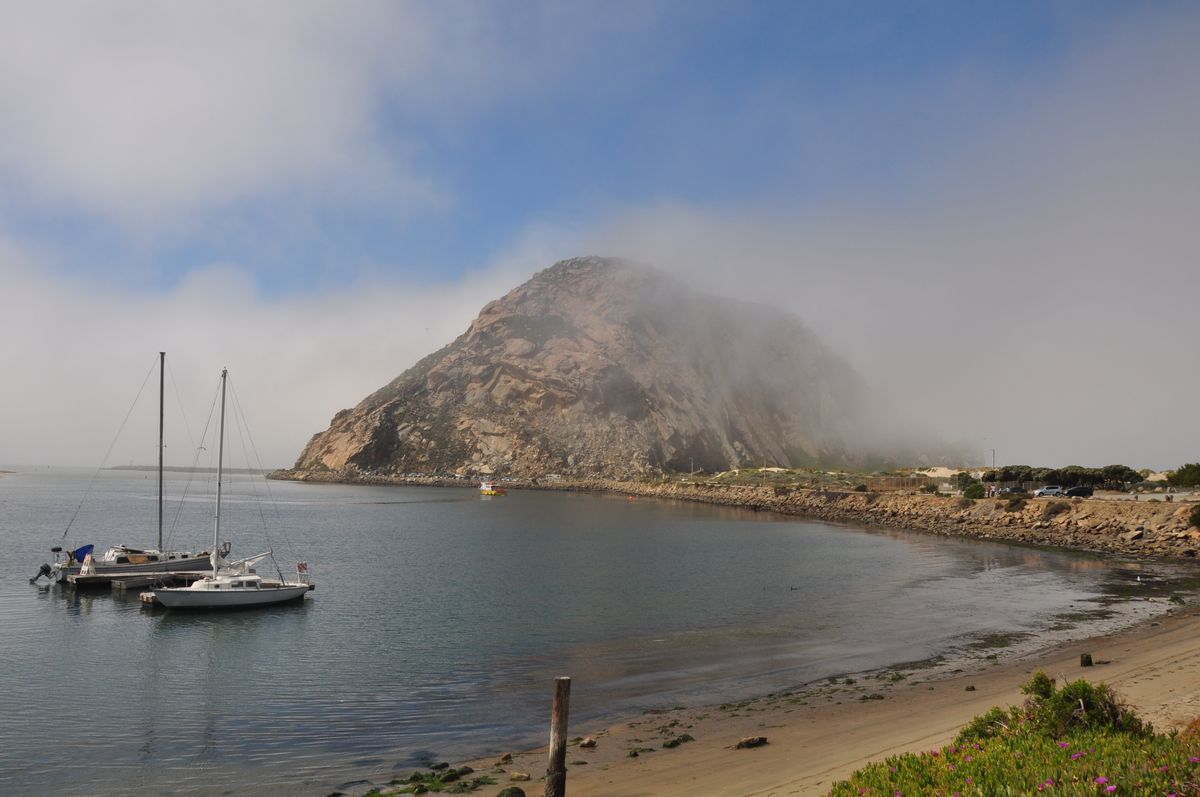
Morro Bay — this is the coast these pages are about.
Quick answer: Wood Chip Mulch Delivery in Morro Bay, CA — Mulch is the cheapest thing that happens to a tree: a flat layer over the root zone holds moisture through the dry season, keeps the soil temperature steady and feeds the soil life the tree depends on. Almost every mulch problem is a depth problem or a contact problem — too thick, or piled against the trunk where the bark has to stay dry.
- Typical depth: Two to four inches, flat, from the drip line inward — never a cone against the trunk.
- Typical timing: After planting or after a clean-up; refreshed in autumn so winter rain carries it down.
- What it involves: Keeping the root flare visible, keeping mulch off the bark, and choosing material that breaks down rather than mats.
- The standard: ISA and university extension guidance on arboricultural mulching and the root flare.
- Our own record: 503 pages and 291 stories published on this site. Counted from our own archive, not a stock table.
Field note. What we see most on this coast is not too little mulch but too much, in the wrong place: the volcano against the trunk that keeps the bark wet through the fog season and invites rot where the tree cannot show it until the canopy thins.
On the other hand, a thin ring of the wrong material is worse than none at all — matted, water-repellent mulch sheds the rain it was meant to store.
Wood chip mulch delivery in Morro Bay is the least complicated service we offer and the one that travels furthest: every time a crew finishes here with a full truck, something useful is leaving the property. Arborist chips are the by-product of the work rather than a product made for sale, which is why they are so good — and why the pile that arrives will not look like the bagged bark at the garden centre.
What is actually in the pile
Chipped branches, leaves, needles and a little bark from the species on the job: pine and cypress mostly, with oak and eucalyptus where those are the trees. Fresh chips are pale, coarse and uneven, and they break down over a year or two into a dark, soft duff. That mix is the point. A single-species bark mulch is a decoration; a mixed arborist chip is a slow-release organic layer with the texture that roots like.
Fresh or aged
Fresh chips have a reputation for robbing nitrogen at the soil surface as they decompose, and the effect is real but small and confined to the top inch or so. On a garden bed it does not matter.
Where it does matter is right around the base of a young tree or in a vegetable bed, which is why we suggest ageing a pile for a season for those spots and using it fresh for paths, under mature trees, and as cover on a slope — including as the mat left behind by forestry mulching, which is the same material in place rather than in a heap.
The depth rule, and the volcano
Four to six inches of chips spread across a root zone does the work: it holds moisture, moderates soil temperature, suppresses weeds, and lets water in rather than crusting over. The one thing it must never do is touch the trunk. Chips mounded against the bark — the volcano you see in half the front gardens in town — keep the flare damp, invite decay and rodent damage, and cause a slow decline that looks like a disease.
Leave a hand's width or more of clear ground around the trunk, and extend the ring out to the drip line if you want the tree to notice.
Where they help most here
- Root zones on the sandy flats, where bare sand loses water faster than anything else in town.
- Steep banks that have been cleared, as rough cover while native planting establishes.
- Garden paths, and the margins of a driveway where nothing will grow anyway.
- Around new plantings, as the ring that makes the first three summers survivable.
Availability, honestly
Because the chips come from this work, the supply is a by-product of the schedule rather than a stock item: some weeks there is a truckload with nowhere to go, and some weeks there is none. Tell us roughly how much ground you have and what it is for, and we will tell you when the next load is free rather than promising a delivery date the work cannot guarantee.
Where there is nothing available, the mulching service that produces the material is the same conversation from the other side. Call (805) 927-4414 or use the contact page.
Field note — Ethan Reed measures a load in cubic yards of chips and then watches the owner spread it too thin; two inches is a dusting, six is a mulch.
Questions, quotes, or just exploring — we’re here to help.