

Tree Risk Assessment in Morro Bay, CA
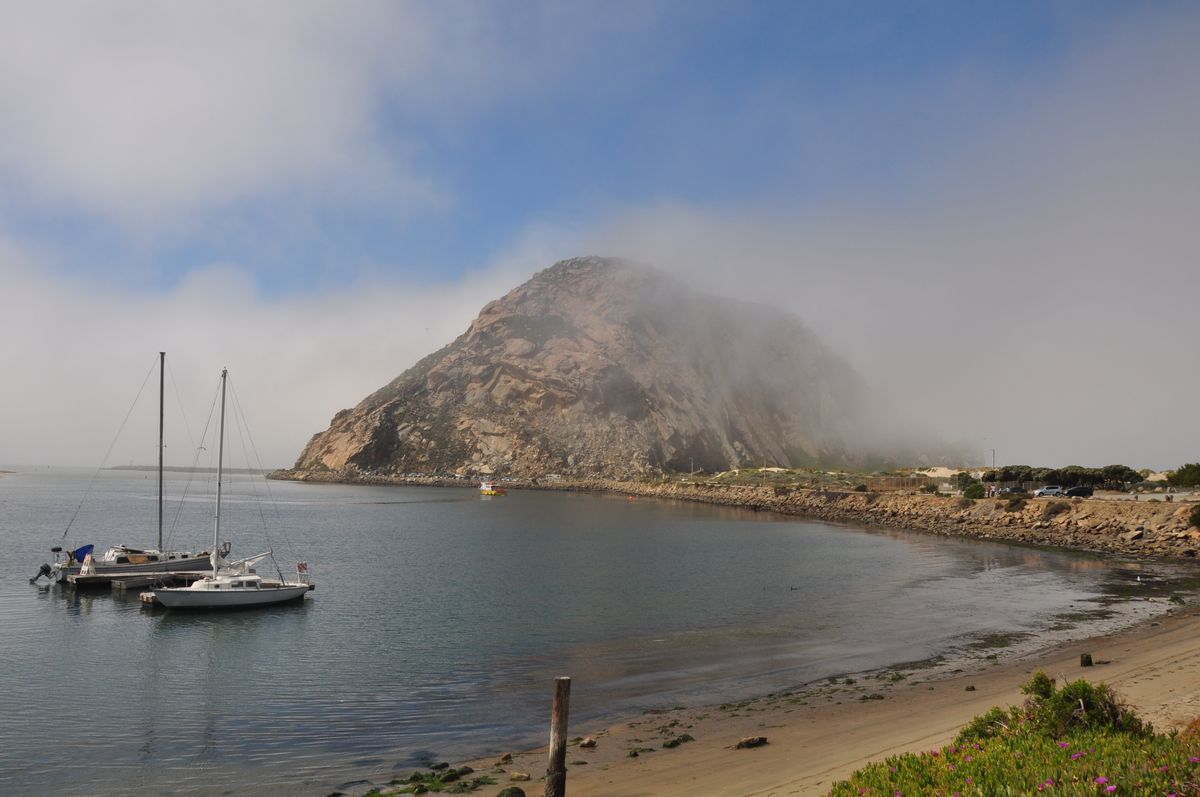
Morro Bay — this is the coast these pages are about.
Quick answer: Tree Risk Assessment in Morro Bay, CA — Trees on this coast live with fog, salt, wind and thin soil, and the work that keeps them healthy is decided by those conditions rather than by a calendar written inland. Structure, clearance and the root zone are what a tree here needs looked at, and small work done early is what keeps a tree out of the emergency list.
- What it involves: Structural pruning, clearance from structures and wires, deadwood removal, root-zone care and hazard assessment.
- Typical timing: Structural work in the dormant months; deadwood, clearance and hazard work whenever the tree needs it.
- The standard: The ISA standards for pruning and tree risk assessment, applied by ISA-certified arborists.
- Where we work: Cambria, San Simeon, Harmony, Cayucos, Morro Bay, Los Osos and the Cambria pine belt.
- Our own record: 503 pages and 291 stories published on this site. Counted from our own archive, not a stock table.
Field note. What we see on this coast is that the trees people worry about are usually not the ones in trouble: the pine with a clean crown and a lean that predates the house is often sounder than the tidy tree that has been quietly drowning in its own root zone.
On the other hand, there is no schedule that suits every tree — the same species on two sides of one street can need opposite care, which is why we look before we recommend.
Morro Bay's trees live in wind, and wind changes what a defect means. A limb that is an ornament on a sheltered street is a lever on the hillside above the Embarcadero, and the trees that have grown up in that exposure have spent forty years adapting to it — thicker at the base, stiffer in the trunk, smaller in the crown than the same species would be inland.
When one of them fails, it is usually not because the tree was weak. It is because something on the lot changed: a neighbour's tree came out, a building went up, a root was cut for a sewer line, and the load path the tree had been managing was quietly rearranged.
Risk is a target, a likelihood and a consequence
The word has three parts and all three have to be answered. Target: what gets hit — the bedroom, the parking stall a tenant uses every morning, the walkway to the front door, the service drop, the sidewalk. Likelihood of failure in a stated window, because "at some point this tree will do something" is not a finding. And consequence, the cost in safety and money when it does.
A tree with a hollow and a heavy lean over the green belt behind a lot is a note in a maintenance cycle. The same tree over the only exit from a second-storey unit is a different conversation, and the difference is not the tree.
What we read on a Morro Bay hillside
The root plate first, since it is the failure mode this coast actually produces in a wet winter: soil lifting on the upslope side, a crack arc in the duff, a fence or retaining wall that has begun to disagree with the tree beside it. Then the stem — old topping wounds, resin, dead stubs, a lean that curves because it grew that way or a lean that hinges from one point.
Then the crown, where salt burn and true dieback look similar from a porch and nothing alike up close: salt burn is on the windward outer foliage and the inner crown is fine; a thinning inner crown with a full outer shell is a root or vascular problem and a much worse sign. Where the decision turns on the inside of the wood, out come the borer or the tomograph, and the report says which question that instrument answered.
What a report is worth
A written assessment names the tree, the target, the defects, the likelihood and consequence ratings, and one recommended action with a timeframe: reduce within twelve months, remove before winter, monitor and re-inspect after the next wet season. That is the document an adjuster reads, a city planner can file, and a property disclosure can carry — and it is deliberately written so another arborist could dispute one line rather than the whole opinion.
It is also honest about its limits. An assessment describes the tree on the day it was walked; no arborist can warranty a living structure through a wet January and a sixty-mile-an-hour southerly. And on this coast the safe answer is not always the removal: take a mature tree off an exposed knoll and the wind that was spread across its crown now arrives at the next structure, which is a worse trade than the branch you were worried about.
Field note — Clara Young keeps the arithmetic visible: what each option costs now, what it costs a year, and how many years it buys before the question comes back.
Questions, quotes, or just exploring — we’re here to help.