



Roots, and the Limit of a Cut
Root Pruning & Root Barriers in Morro Bay, CA
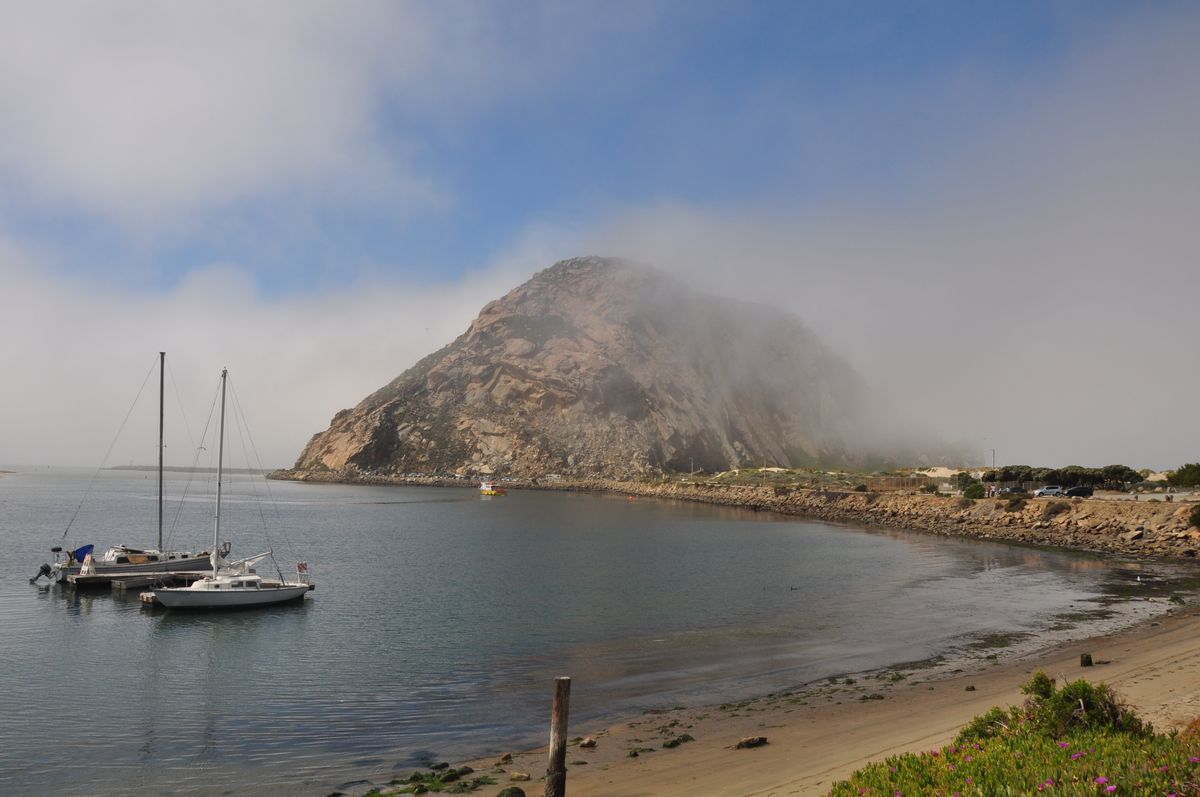
Morro Bay — this is the coast these pages are about.
Quick answer: Root Pruning & Root Barriers in Morro Bay, CA — A stump is the part of the problem that is still in the ground: it holds the roots that lift pavement, keeps a species alive if it re-sprouts, and occupies the spot where the next planting goes. Grinding removes it below the surface so the ground can be worked again, and the roots that matter are the ones under the driveway rather than the ones beside the trunk.
- Typical timing: Any month the ground is workable; rain-softened soil grinds fastest and leaves the cleanest spoil.
- What it involves: Assessing re-sprout risk by species, grinding below grade, raking the spoil back, and handling surface roots separately from the stump.
- The standard: ISA guidance on root cutting and the ANSI A300 pruning standard where roots and crown are worked together.
- Where we work: Cambria, San Simeon, Harmony, Cayucos, Morro Bay, Los Osos and the Cambria pine belt.
- Our own record: 503 pages and 291 stories published on this site. Counted from our own archive, not a stock table.
Field note. On this coast the stump is rarely the end of the job: Monterey pine and eucalyptus both keep enough energy in the roots to push new growth, so we are looking at the species before we quote the grind rather than after.
On the other hand, a stump left in a garden bed is sometimes the better answer — it decays, feeds the soil and costs nothing — so grinding is a choice, not a rule.
The roots that lift a driveway on a Morro Bay lot are almost never the roots anyone pictures. They are the ones growing in the top few inches of soil, spreading well beyond the canopy, and by the time they have raised a slab they are usually a good deal bigger than the crack they caused.
Root work is therefore one of the least forgiving jobs in this trade: roots can be cut, but the tree has to be able to stand without what is removed, and on a lot where paving and walls have already taken their share of the rooting area, the margin is thin.
Two kinds of root, two different stakes
The roots holding a tree up are the large woody ones radiating from the trunk and the framework that braces them — they are structural, and cutting one is an engineering decision rather than a gardening one. The fine roots that take up water and nutrients grow in the top layer and are replaceable within a season.
A barrier or a trench that removes fine roots is usually tolerated; the same cut through a structural root on one side of a tree reduces its foundation and is how a tree that looked fine falls over two winters later.
How much can safely come off
There is no safe percentage to quote, only a set of conditions that make a cut defensible: the tree's size and species, how much root zone it has already lost, the soil, whether it is one root or several, and whether the tree is on a slope where a reduced plate matters more. As a rule the more of a tree's root crown a single trench takes away, the more that tree should be the one that comes out instead.
Where a trench has to cross within the canopy spread, taking it further out and cutting fewer roots is almost always better than a neat cut close to the trunk, and arborists working on this coast will often specify a careful air-excavation to see what is actually there before deciding.
Where barriers genuinely help
A root barrier is a physical shield set in the ground to keep roots out of a defined area, and it works when it is installed before the roots are the problem:
What it will not do is solve a problem already present. Set against a mature cypress, a barrier simply moves the site of the conflict a metre outward and creates a cut plane the tree's roots will colonise around and behind.
- Along a new driveway or path, so roots are deflected rather than cut later.
- Between a planting and a sewer or drainage line, where the line cannot be moved.
- Against a wall or footing, in combination with sensible spacing at planting.
The other half of the answer
On these blocks the recurring cause is paving and structures taking ground away from trees that were there first, and the mitigation is as much about water and grade as about roots. A lot that has been graded toward the house pushes water through a root zone that was never compacted before, and a slope that loses its cover sends the soil down the hill.
Those are the neighbouring jobs to this one — see drainage and grading, erosion control, and soil and root-zone remediation where the ground around a tree has been the thing damaged. Where a tree's rooting area is already compromised and a cut would decide its future, a risk assessment is the honest way to answer it.
Look before you cut
Tell us what the roots are lifting or reaching, and send a photo of the tree plus a plan of where the work needs to go. Call (805) 927-4414 or use the contact page, and see our services for the soil and drainage work that usually accompanies it.
Questions, quotes, or just exploring — we’re here to help.