

Clearance for What Drives Through
Roadway & Right-of-Way in Morro Bay, CA
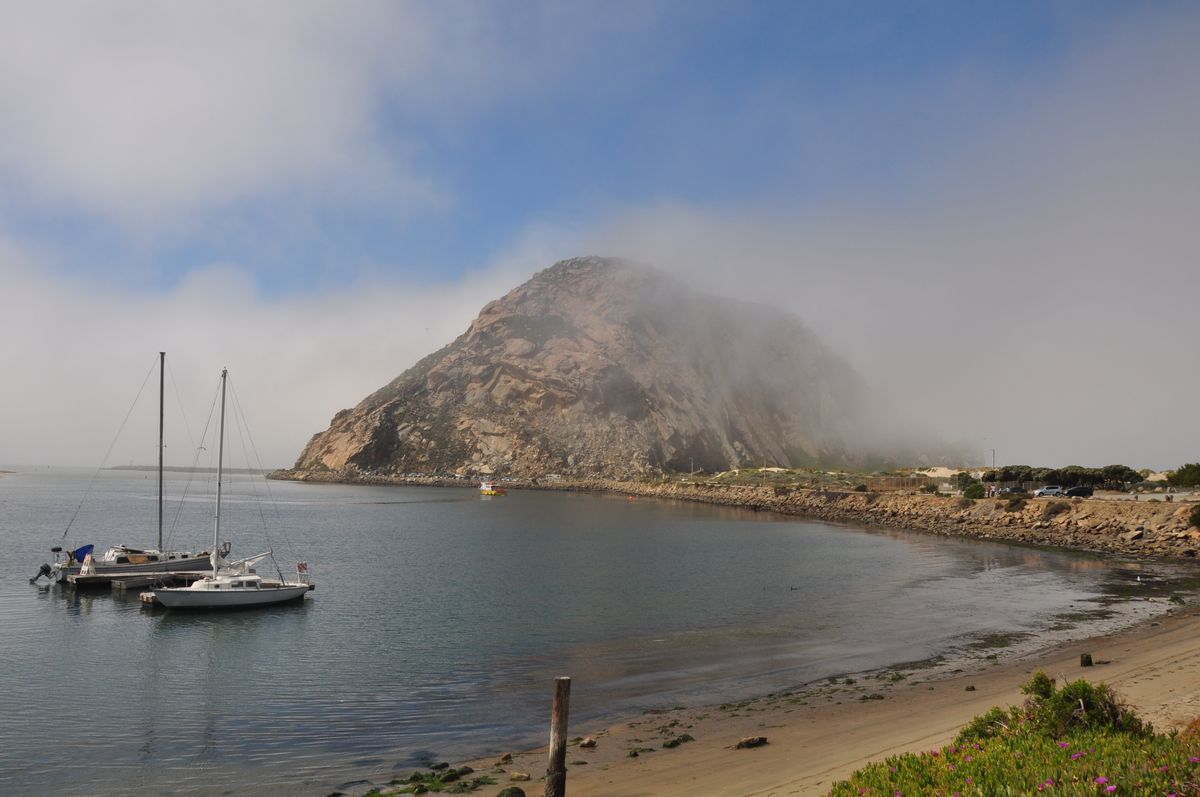
Morro Bay — this is the coast these pages are about.
Quick answer: Roadway & Right-of-Way in Morro Bay, CA — Defensible space is the work that decides what a fire has to burn between the wildland and the house: dead material out, ladder fuels separated, and the tree you keep limbed up rather than removed. It is measured in zones from the structure, and the first few feet are the ones that matter most.
- Typical timing: Best done in the cool months so the debris is gone before the dry season; clearance rules apply year-round.
- What it involves: Removing dead and dying material, separating shrubs from low limbs, limbing trees near structures, and keeping the roof and gutters clear.
- The standard: Cal Fire's defensible-space guidance for the first 100 feet, applied to the trees a property actually has.
- Where we work: The wooded parts of Cambria, San Simeon, Harmony and the surrounding ranch country.
- Our own record: 503 pages and 291 stories published on this site. Counted from our own archive, not a stock table.
Field note. What we see on this coast that surprises people is how much of the fuel load is low: the limb at four feet and the brush beneath it carries fire into a canopy that would otherwise survive, so the work is often lifting rather than felling.
On the other hand, over-clearing has its own cost — bare ground erodes, and the wind that comes with the fog belt is harder on a thinned stand than the fire risk it removes.
Right-of-way clearance in Morro Bay is a narrow-road problem before it is a tree problem. A coastal lane loses width from both sides at once — vegetation pushing in from the bank, an armco barrier or a kerb taking the other side — and by the time the road is visibly tight, the sightline at the bend has been gone for two seasons.
The clearance here is measured in what a driver can see and what a vehicle can pass, not in how tidy a tree looks.
What the clearance is actually for
- Vertical clearance. Limbs low enough to strike a delivery truck, a bin lorry or an emergency vehicle, which is a different height from what a car needs.
- Sightlines. The corridor a driver needs at a junction, a driveway or a bend. Vegetation that grows back into a sightline is the most common complaint we hear and the easiest to overlook from the ground.
- Sign and mirror visibility. Signs and convex mirrors on a narrow street are useless once foliage covers them, and on a hill road they are the only warning of what is coming the other way.
- Encroaching brush. The bank vegetation that steals a foot of sealed surface every year and takes the verge with it.
Who owns the road changes the answer
Three different situations look identical from the cab of a truck. A private road serving several properties is the owners' responsibility and the work is arranged between them, which on a shared Morro Bay lane means agreeing a scope before anyone starts. A county or city road has a public body responsible for its clearance, and the right move is usually a report to that body rather than our quote.
A utility easement carries a different set of rights again, and the line clearance rules in power drop and line clearance apply on top of whatever the road itself requires.
Traffic control, on a road with nowhere to put it
The hardest part of this work on the coast is not the cutting, it is standing next to a live carriageway with no verge. That means signage set well before the work, a spotter whose only job is the traffic, flagging where a lane has to be taken in turns, and short working windows rather than a full day of stopped traffic — with a plan for the school run and the bin collection if the road carries either.
Any crew working a public road should be set up to do this properly; the alternative is a works vehicle with its hazards on and a licence plate in the way.
Disposal, and the bank behind
Cut material has to go somewhere that is not the road or the drain, and on a slope it has to go somewhere that will not wash into both. Chipping on site with the chips kept on the verge is usually the answer, and where the bank is steep and the material heavy, the same considerations as land clearing apply to the spoil.
Clearing the bank back to bare ground also removes what was holding the soil, so the vegetation that does the erosion work is worth keeping where it can be, spaced, rather than stripped for the look of it.
Getting it on a cycle
Roadside clearance is maintenance, and it reinstates itself on a fairly predictable clock of two to three years on this coast. A single pass fixes the sightline and the overhang; a cycle is what keeps the road usable. For a private lane with several owners, that cycle is worth putting in writing — see the shared-property program.
Call (805) 927-4414 or use the contact page and tell us which road it is, and we will say whether it is ours to do or the city's.
Field note — Adrian Delacroix measures a sightline with a spotter and a tape, not from the driver's seat; the road looks fine from a car right up until it does not.
Questions, quotes, or just exploring — we’re here to help.