

The Report the Adjuster Reads First
Insurance Claim Documentation in Morro Bay, CA
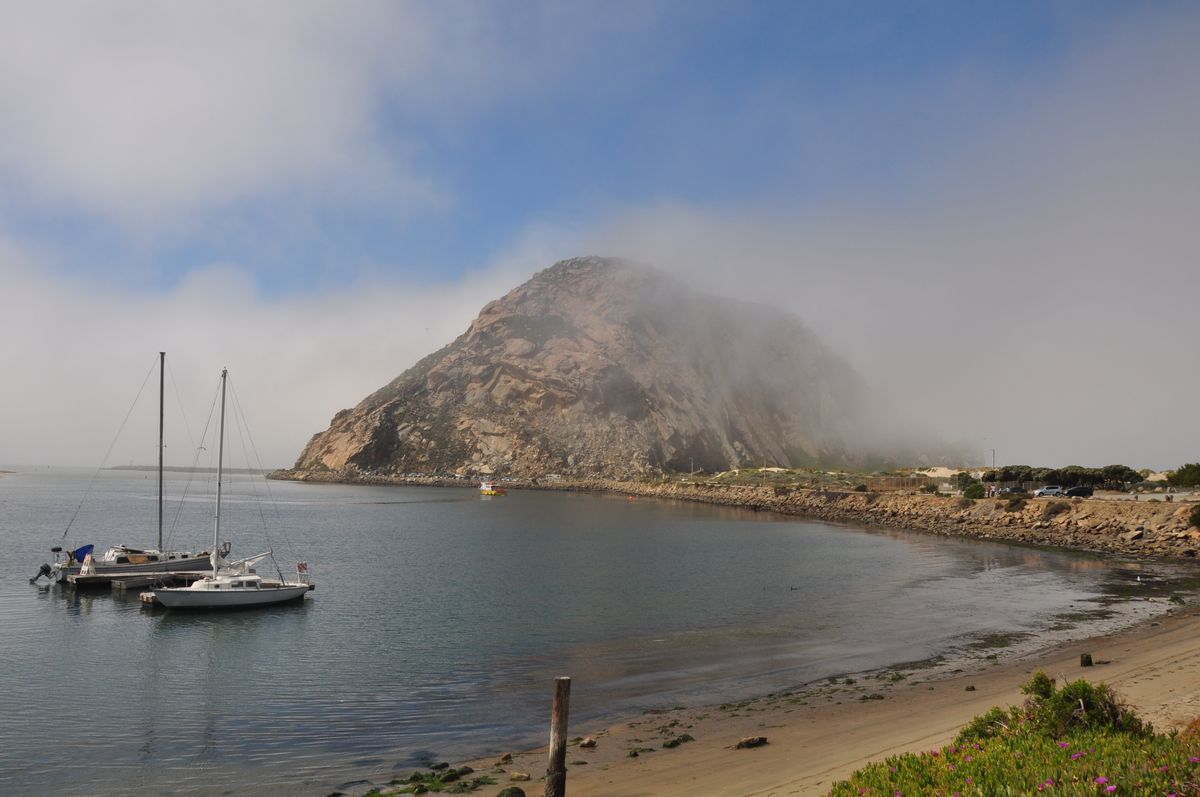
Morro Bay — this is the coast these pages are about.
Quick answer: Insurance Claim Documentation in Morro Bay, CA — The crew that answers the phone is the crew that climbs the tree: locally based, insured, and working to the industry standards rather than to whatever the last job allowed. That matters most where the work is delicate — over a roof, beside a wire, or on a slope where the wood has to be lowered rather than dropped.
- Credentials: ISA-certified arborists; licensed and insured for work over structures and near utilities.
- The standard: ANSI A300 for pruning and ANSI Z133 for safety on every job.
- Where we work: Cambria, San Simeon, Harmony, Cayucos, Morro Bay, Los Osos and the surrounding county.
- How we quote: A site visit and a written, line-by-line quote before any work is booked.
- Our own record: 503 pages and 291 stories published on this site. Counted from our own archive, not a stock table.
Field note. What we see is that the questions worth asking are the same on every property: who is climbing, what happens to the wood, and what the tree looks like in five years — so we answer those before we talk about dates.
On the other hand, credentials are a floor rather than a guarantee: what a tree gets is the judgment of the person in it, which is why we keep the same small crew on this coast.
Insurance claim documentation in Morro Bay almost always comes down to one question a photograph cannot answer on its own: was the tree that came down already known to be failing? The adjuster is not disputing that the gust came off the water — everyone who lives here heard the same one.
What is being decided is whether the loss was a sudden accident or the foreseeable result of something a reasonable owner could have seen, and that answer is a document, not an opinion.
What the carrier is actually reading
A tree claim is a small liability case wearing a property-loss costume. Carriers pay for what is documented and decline what is merely asserted, so the file has to do three things in order: identify the tree, show what failed and why, and separate the weather from the maintenance.
On a Morro Bay lot that last part is where claims turn, because the same north-westerly that drops a limb through a carport is also the reason a cypress on a graded street has been leaning for twenty years.
The photographs that matter, and the ones that do not
Forty pictures of the same fallen trunk are worth less than eight deliberate ones. What survives review: the failure point itself, in close detail, with a scale; the stump and root plate, lifted or still in the ground; the direction of the lean or the snap relative to the structure; the whole tree in its setting, so the target is obvious; and the foliage, before it is chipped, because dead needles and beetle galleries are evidence and chips are not.
The ones that carry no weight are artistic wide shots and anything taken after the spoil has been hauled.
Measurements, and why an arborist bothers
Diameter at the break, the length of the piece that failed, the distance it travelled, the clearance that existed before and after — these are the numbers that turn a story into a finding.
Where a defect is visible in the stump, the measurements say how much sound wood was holding the tree up, which is the difference between a healthy tree met by an unusual wind and a compromised tree met by an ordinary one. That is the whole argument.
Where the opinion stops
An arborist can name the species, the condition of the wood, the presence of a conk or a cavity, and whether the failure was consistent with a structural defect. An arborist cannot decide coverage, cannot put a dollar figure on the claim, and cannot speak for the carrier's duty to defend. Documents that overreach get rejected on the overreach, which is why our write-ups stay inside the tree and let the adjuster do the rest.
Act of God, or a tree nobody attended to
Both trees fall in a storm. One was healthy, well-spaced and pruned on a cycle, and the storm broke it; the other had a cracked fork an owner had been told about. Excluding the second as an act of nature is exactly what a carrier is entitled to do. The documentation that helps the first tree is the same documentation that is honest about the second, which is why the visit comes before anyone decides what to file.
Do the paperwork while the site is still a site
Evidence goes away quickly here. On the flat the water table comes up and the stump is gone in a season; on the hill the slope is re-graded by whoever repairs the fence. If a claim is likely, call before the cleanup finishes — the storm damage cleanup and the documentation are two halves of the same visit, and the risk assessment that follows can often be the same file.
Call (805) 927-4414 or use the contact page and we will walk the property while the reason for the claim is still lying on the ground.
Field note — Clara Young writes these reports in the order an adjuster reads them: what happened, what failed, and only then what it cost.
Questions, quotes, or just exploring — we’re here to help.