


Reading the Clues a Tree Leaves
Hazard Tree Evaluation in Morro Bay, CA
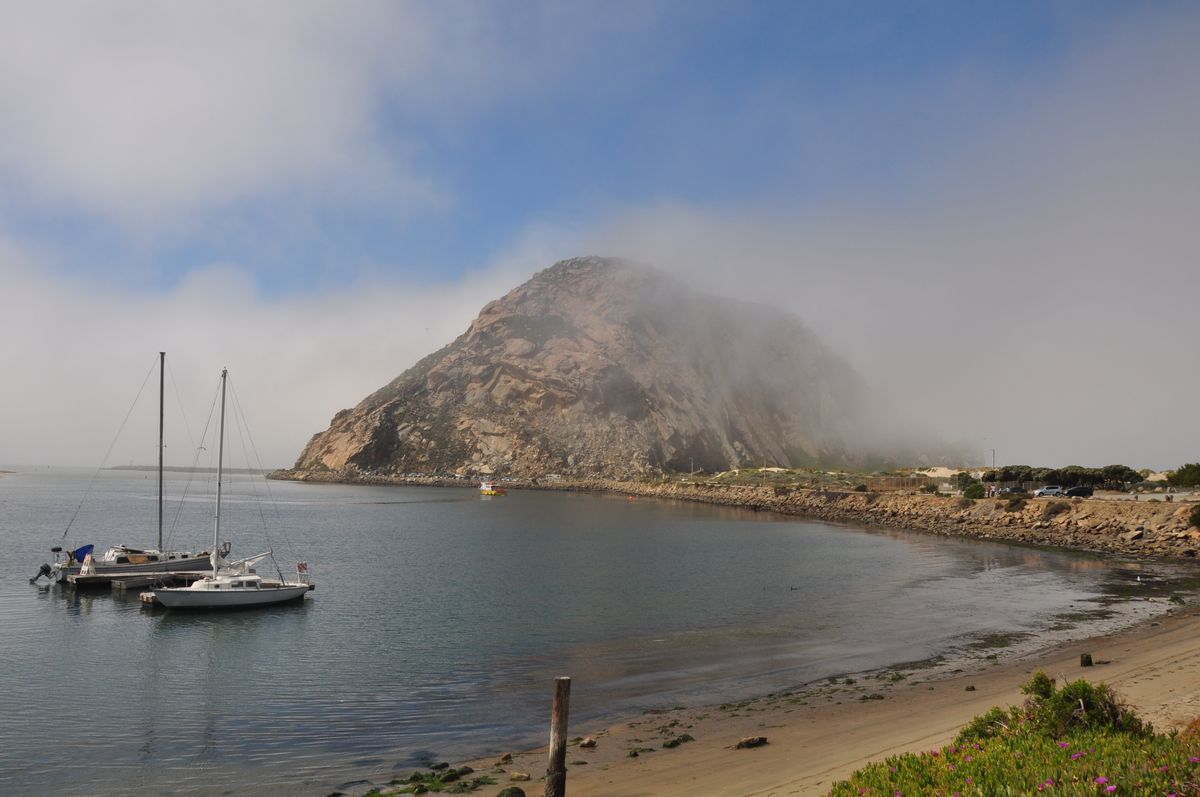
Morro Bay — this is the coast these pages are about.
Quick answer: Hazard Tree Evaluation in Morro Bay, CA — Removing a tree is planning before it is cutting: where the wood lands, what is under it, whether a rope or a crane takes the weight, and what is left when the crew drives away. A removal is finished when the drop zone is clear and the stump is dealt with, not when the trunk hits the ground.
- Typical timing: When the tree is a hazard, the schedule is immediate — storm damage, split leaders and leaners do not wait for good weather.
- What it involves: A written plan for the drop zone, rigging or crane work over structures, protecting driveways and roofs, and deciding the stump’s fate in advance.
- The standard: The ANSI Z133 safety standard for arboricultural operations, and ISA best practice for removals near structures.
- Where we work: Small town lots, coastal acreage and the narrow properties of the Cambria pine belt.
- Our own record: 503 pages and 291 stories published on this site. Counted from our own archive, not a stock table.
Field note. What we see here is that access decides the price more than height does: a pine over a fence on a slope with no driveway costs more to take down safely than a taller tree with a clear drop, and the plan is where that shows up.
On the other hand, removal is not the only safe answer — a tree with one failing limb, or a lean that can be corrected by reduction, is often better kept and managed than gone.
A hazard tree evaluation is what a walk around a Morro Bay lot can honestly tell you: whether this tree, in this position, with this defect, is a problem worth acting on now. It is the judgement a person makes with their eyes and their hands, and it is deliberately different from the formal written assessment that a report produces.
Most of the trees we are asked about are answered at this level, and the answer is often that the tree is fine.
The clues a tree leaves
Every failure a tree is going to have announces itself somewhere, and the visual assessment is a matter of knowing which signals carry weight:
- Fungal conks at the base or on the trunk. A shelf or hoof-shaped bracket at the base usually means decay inside the wood behind it, and the species of conk tells you roughly which fungus and how aggressive it is. A conk is one of the most reliable signs on this coast.
- Cavities and hollows. A hole is not automatically a failure — trees can hold a hollow trunk for decades — but the size of the opening tells you almost nothing about the thickness of the wall behind it, which is why a hollow near something that matters earns a closer look.
- Included bark. A fork with bark pinched between the two stems has no physical connection across the join, however healthy the tree looks above it. On cypress this is the defect we see most.
- Cracks and seams. A vertical seam or a split that has opened on one side of a trunk is the tree telling you where it will fail.
- Root-plate and lean signals. Soil lifted or cracked on the far side of a lean, a flare that has sunk below the surrounding grade, or a lean that has appeared or increased since a wet winter.
- Dead and hanging material. Not a structural defect in the trunk, but a real hazard above whatever is underneath.
The three questions that set urgency
Once a defect is identified the practical question is not whether it is a defect but how quickly it matters, and that resolves into three parts: how likely the defect is to lead to failure, how large the piece or the tree is, and what is underneath. A big defect with nothing under it is a lower priority than a modest one leaning over the footpath outside a shop on the Embarcadero.
Ageing is the extra factor on these blocks, since a cypress that has stood in wind for eighty years has already been tested in a way a younger tree has not.
What an evaluation cannot do
A walk-around cannot measure the wall thickness inside a hollow trunk, cannot see a root plate below the ground, and cannot put a number on the probability of failure. It is judgement, and it is honest about being judgement.
Where the decision has consequences beyond the property owner — an insurer asking, a neighbour disputing, a purchase about to complete — the level of rigour has to rise, and that is the work of a formal written tree risk assessment.
Where the tree turns out to be a candidate for support rather than removal, the answer may be cabling and bracing, and where it is dead beyond question, a planned dead tree removal is simpler and safer than any amount of further evaluation.
Have the tree walked
Photographs of the whole tree from two angles plus close-ups of anything that worries you will usually let us place a tree on the scale before anyone visits. Call (805) 927-4414 or use the contact page, and see our services for the removal and pruning work that follows an evaluation.
Questions, quotes, or just exploring — we’re here to help.