

Where the Water Actually Goes
Drainage & Grading in Morro Bay, CA
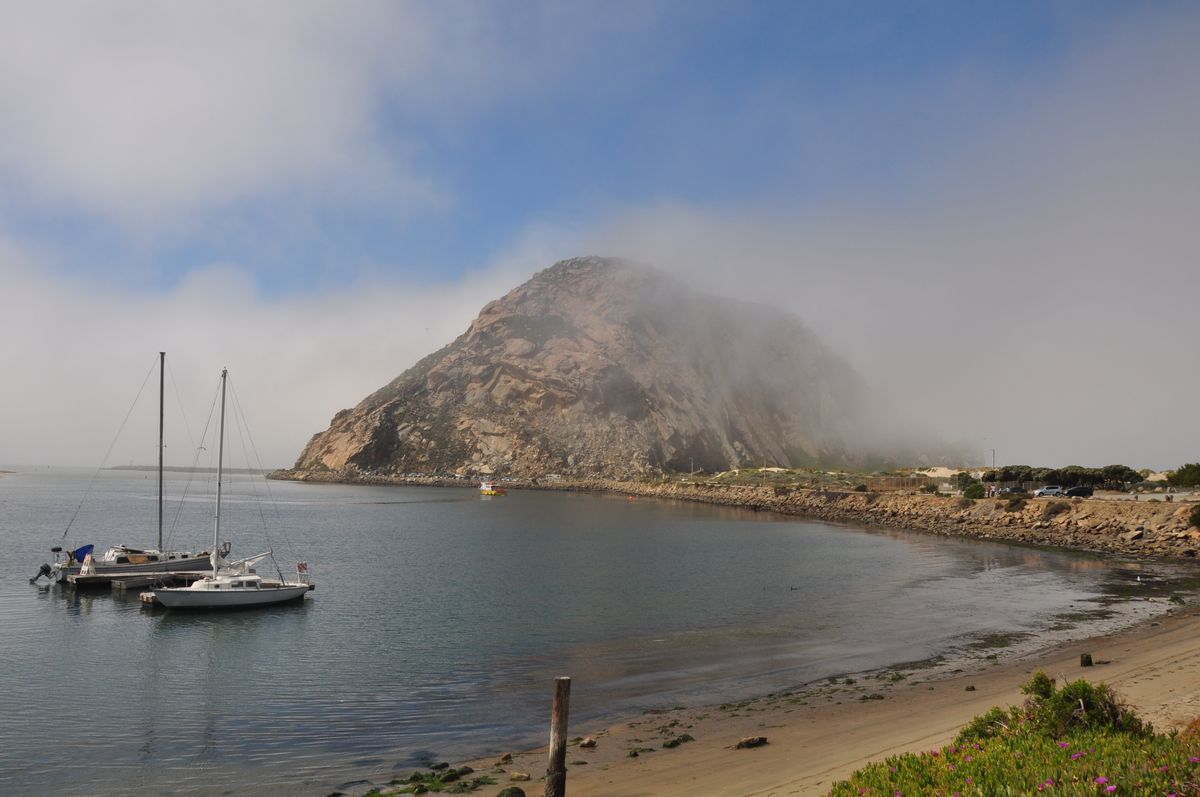
Morro Bay — this is the coast these pages are about.
Quick answer: Drainage & Grading in Morro Bay, CA — Trees are watered at the root zone, deeply and infrequently — a long soak that reaches down, then a dry spell that lets roots look for water, rather than a daily sprinkle that keeps everything in the top inch of soil. On the fog belt the question is rarely whether there is moisture in the air but how much got down to the roots.
- Typical timing: Deep watering through the dry season, spaced further apart as the tree establishes; young trees need it far more often than mature ones.
- What it involves: Watering at the drip line rather than the trunk, checking the soil six to eight inches down, and mulching so the water stays where it landed.
- The standard: University extension guidance on landscape tree irrigation and drought response.
- Where we work: The coastal terrace from Cambria to Morro Bay, sandy soil and clay both.
- Our own record: 503 pages and 291 stories published on this site. Counted from our own archive, not a stock table.
Field note. What we see here is that salt air and wind dry a canopy faster than the thermometer suggests, so a tree can be water-stressed on a grey week when nothing looks hot to the person holding the hose.
On the other hand, more water is not a cure-all: on clay, a daily soak drowns roots more often than drought does, and the symptoms look almost identical from above.
Drainage and grading problems in Morro Bay are rarely where the owner is looking. The puddle beside the back step is the symptom; the cause is usually a roof that discharges at the top of a bank, a driveway that has been re-graded to shed water onto a neighbour's lot, or an irrigation line running under an oak on a slope. Find where the water enters and the puddle is a repair rather than a project.
Start at the roof
Most of the water a house sends onto its own land comes off its roof, and in a wet winter on the hill that is a serious volume. Downspouts that discharge onto a slope put the water straight into the soil that the slope's stability depends on; downspouts that discharge near a foundation keep the ground at the wall saturated.
Carrying them to a proper outfall — a splash block and a swale that daylights downhill, or a curtain drain that collects and carries it past the building — is the first line of any drainage plan here.
Swales, French drains and dry wells
The mistake we see most is a drain that solves the water by moving it somewhere worse, which on a coastal hillside usually means onto a downslope neighbour or into a slope. Water has to be delivered to a legitimate outfall, and that often means the street or a city drain rather than the lot below.
- A swale is a shaped, vegetated channel that moves surface water on the surface. It suits a graded Morro Bay yard better than pipe, because a pipe silts up and a swale can be seen to work.
- A French drain is a gravel-filled trench with a perforated pipe, for subsurface water and for collecting spread-out flow. Where it discharges matters as much as where it starts.
- A dry well is a stone-filled pit that soaks water away — useful on the sandy flats, and a liability on the clay-heavy ground inland where it simply fills and stays full.
Grading has to respect the tree
Cut and fill are the two ways grading damages a tree, and both are invisible in the finished work. Fill over a root zone buries the flare and starves the roots; a cut severs them and removes the soil the tree was standing in. The rule is the same one the protection plan uses — the root zone is a fixed volume, and the grade around it is not free to change.
Where a terrace is the only way to make a slope usable, terracing should be designed around the trees that are staying, not adjusted to afterwards.
Retaining, and the wall that moves
A retaining wall is a drainage structure as much as a structural one: the water that collects behind it is what pushes it over, and a wall without weepholes and backfill drainage will lean within a few years. On these slopes that means a wall is a job for a designer, and the tree work around it has to come in a sensible order — root pruning and clearance before the excavation, not after.
The tree side of the same conversation
Once the water is going where it should, the downstream work is usually erosion control on the exposed ground and a fresh look at what the root zone lost while the water was flowing through it, which is remediation. Call (805) 927-4414 or use the contact page and we will trace the water before quoting the fix.
Field note — Samuel Delacroix has yet to see a "drainage problem" on a coastal slope that was not first a roof-water problem.
Questions, quotes, or just exploring — we’re here to help.