


Making the Claim Read Off the Tree
Insurance Claim Documentation
Los Osos — this is the coast these pages are about.
Quick answer: Insurance Claim Documentation — The crew that answers the phone is the crew that climbs the tree: locally based, insured, and working to the industry standards rather than to whatever the last job allowed. That matters most where the work is delicate — over a roof, beside a wire, or on a slope where the wood has to be lowered rather than dropped.
- Credentials: ISA-certified arborists; licensed and insured for work over structures and near utilities.
- The standard: ANSI A300 for pruning and ANSI Z133 for safety on every job.
- Where we work: Cambria, San Simeon, Harmony, Cayucos, Morro Bay, Los Osos and the surrounding county.
- How we quote: A site visit and a written, line-by-line quote before any work is booked.
- Our own record: 503 pages and 291 stories published on this site. Counted from our own archive, not a stock table.
Field note. What we see is that the questions worth asking are the same on every property: who is climbing, what happens to the wood, and what the tree looks like in five years — so we answer those before we talk about dates.
On the other hand, credentials are a floor rather than a guarantee: what a tree gets is the judgment of the person in it, which is why we keep the same small crew on this coast.
What the Adjuster Can See, and What They Cannot
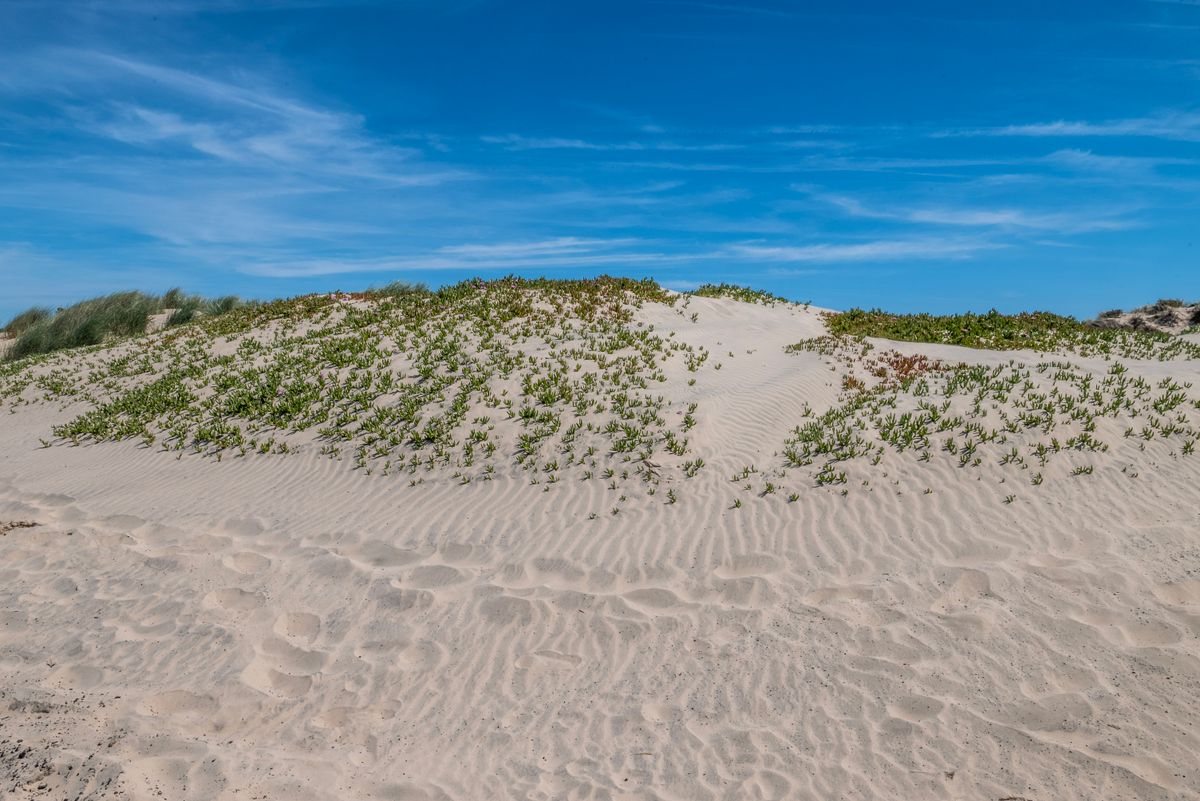
A tree insurance claim los osos homeowners file usually begins with a Monterey pine that came down across a fence line on dune sand, and the carrier's first question is never who cuts it up — it is what that tree was standing in, and whether anyone could have known. Sand holds a root plate far less firmly than the clay up the hill, so a claim here often turns on a soil condition rather than on the wind alone.
Documentation is the work of answering that question in a form an adjuster can act on. It is not the same as a cleanup estimate, and it is not the same as an opinion about who is at fault.
The Three Things the File Has to Establish
- What failed, and at what point. A root plate that lifted whole tells a different story from a trunk that snapped above grade, and a stem that broke at an old wound tells another one again. The failure point is the single most useful fact in the file, and it is gone the moment the pieces are cut to length and hauled.
- Why it failed there. Saturated sand after a wet winter, a grade change that buried the flare years ago, a summer irrigation line running under the tree, a hollow the conk betrayed. Each of these is a different answer to the same question.
- What the tree's condition was before the weather. A standing dead pine that the owner had been told twice to remove reads very differently from a sound tree in leaf that a ninety-mile gust took.
Photograph Before the Saw
The opportunity to document a Los Osos claim closes as soon as the debris leaves the lot. Photographs work when they show scale and position: the stump with a tape across it, the lifted plate with the soil still standing on the roots, the direction of the fall relative to the structure it hit, the downed line, the intact side of the tree that shows whether the failure was old or new.
A photograph of a brush pile tells an adjuster almost nothing.
What an Arborist May and May Not Put in Writing
An arborist can describe what failed, why the species and site make that failure more or less likely, and whether the defect was visible to a competent inspection before the event. An arborist cannot decide coverage, cannot certify that a tree was or was not a known hazard as a matter of law, and cannot settle a boundary dispute about whose tree it was.
Wording that respects that line is wording an adjuster accepts; wording that reaches past it gets the report set aside.
Where the cause is contested, the file pairs well with a tree risk assessment or, for a number, a tree appraisal. Where the debris itself still has to leave, see storm damage cleanup.
The Honest Limits
We do not write causation into a report where the evidence has already been cut away, and we will say so rather than fill the gap with an assumption. A claim built on a guess is worse than a claim that acknowledges a missing fact, because the carrier will find the same gap and price the whole report accordingly.
Arrange a Site Visit
Call (805) 927-4414 before the debris is moved if you possibly can — the photographs we take in the first hour are worth more than any report written afterwards. Use the contact page to send a picture of the tree and the damage, or start at our services for the wider picture on this coast.
Questions, quotes, or just exploring — we’re here to help.