


Erosion Control in Los Osos, CA
Los Osos — this is the coast these pages are about.
Quick answer: Erosion Control in Los Osos, CA — Trees are watered at the root zone, deeply and infrequently — a long soak that reaches down, then a dry spell that lets roots look for water, rather than a daily sprinkle that keeps everything in the top inch of soil. On the fog belt the question is rarely whether there is moisture in the air but how much got down to the roots.
- Typical timing: Deep watering through the dry season, spaced further apart as the tree establishes; young trees need it far more often than mature ones.
- What it involves: Watering at the drip line rather than the trunk, checking the soil six to eight inches down, and mulching so the water stays where it landed.
- The standard: University extension guidance on landscape tree irrigation and drought response.
- Where we work: The coastal terrace from Cambria to Morro Bay, sandy soil and clay both.
- Our own record: 503 pages and 291 stories published on this site. Counted from our own archive, not a stock table.
Field note. What we see here is that salt air and wind dry a canopy faster than the thermometer suggests, so a tree can be water-stressed on a grey week when nothing looks hot to the person holding the hose.
On the other hand, more water is not a cure-all: on clay, a daily soak drowns roots more often than drought does, and the symptoms look almost identical from above.
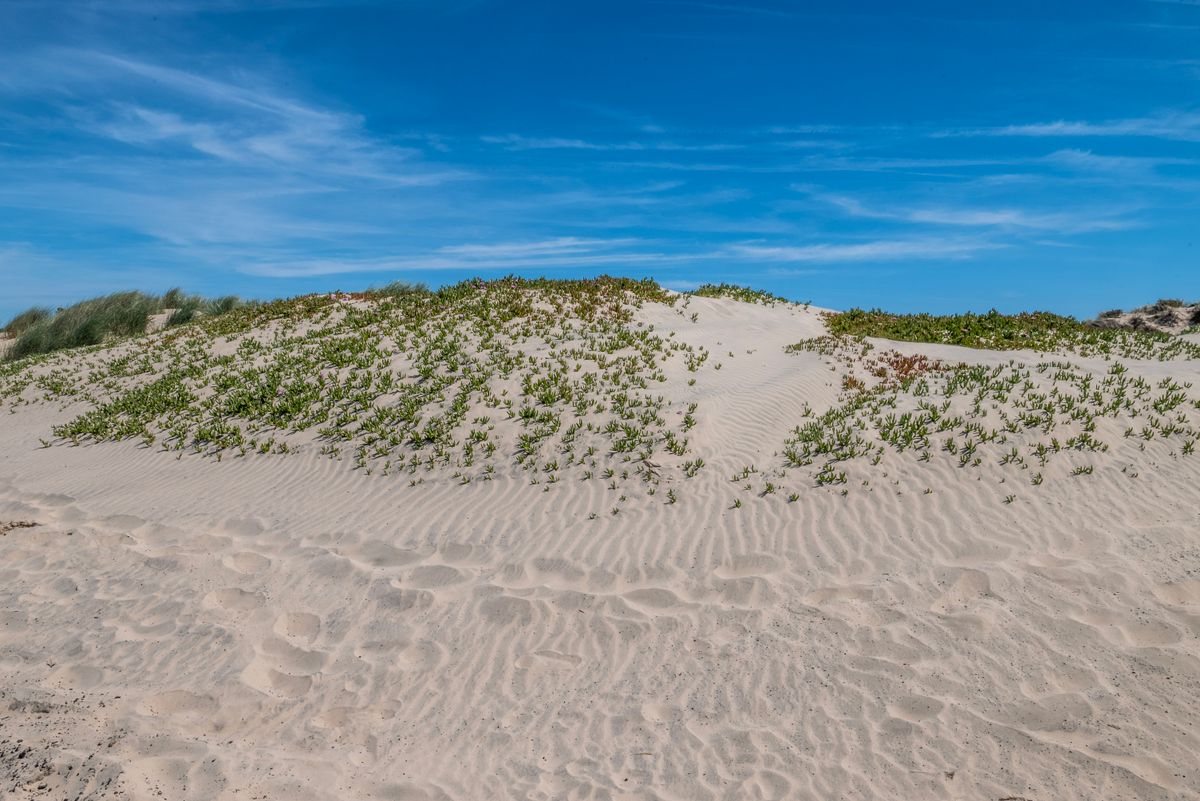
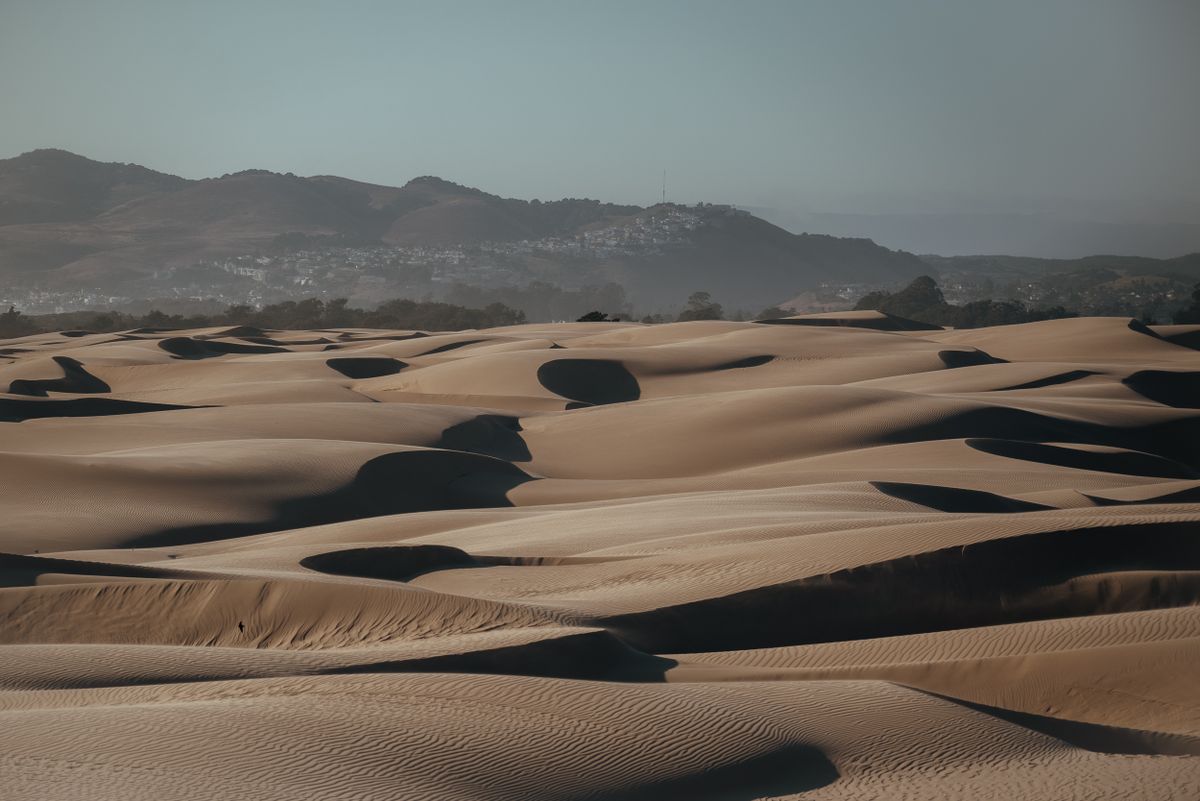
The soil of Los Osos is sand that used to be someone else's beach, and it is always in transit. On the bay side it moves with wind and tides; on the creek side it moves with every winter storm; and on the bluffs and hill streets it moves downhill the moment something stops holding it. Trees are part of that holding.
When a tree comes off a slope — dead, dangerous, or simply in the way of a project — the ground it was pinning is suddenly exposed, and the rain that arrives months later does the rest. Erosion control is the work of making sure a removal does not turn into a washed-out bank by spring.
Where the problems show up
The typical call follows a removal on a slope: a bare cut bank above a driveway, sand moving down a bluff toward the estuary, a creek-side property losing ground where roots used to be. The failure is not instant. It starts with rain running over bare sand instead of soaking where roots opened channels; then rills, then a slump, then a fence post that is suddenly four inches lower.
On the dunes, the same process runs on wind: bare sand moves on its own, and what took a tree fifty years to anchor can drift in a season.
What we do about it
The first step is triage: keep water off the disturbed ground and keep the sand that is there in place. Rock or gravel at the outfall, a dispersion trench above the bank, straw or fiber matting over exposed faces when planting will establish naturally — these are the ordinary tools.
Where trees can help, we plant what belongs on the site and what holds fast: the oaks, wax myrtle and other natives that built this coast's ground cover in the first place. Where the bank is beyond tree work — a real structural failure — we say so and refer the job to the engineers who do it, rather than selling a planting as a fix.
What stabilization looks like a year later
A working fix is boring to look at: water arrives somewhere safe, the face of the bank holds, and the plants that went in are alive a year later. On the sand country the right plants are the ones that evolved here — dune natives like coast buckwheat, sand verbena and yellow bush lupine knit the surface with roots that find moisture deep, and they hold ground in wind as well as rain.
On creek and bay edges we plant with the season, fall and winter while the soil is workable and the rain does the irrigation. A year on we come back and look, because a plan that needs a second pass is better than one that needs a rewrite, and the difference is almost always whether the water was guided or just chased.
The other half of the work is scheduling. On a Los Osos slope, removals and stump grinding are best finished before the wet season, so the ground has time to be stabilized and planted before the first serious rain. If it is already October and the tree has to go, the plan includes the winter protection from day one.
Either way, the question we ask at the estimate is the one that saves the money later: what will this slope do when the roots stop drinking? When the site's problem starts at the stump — a stump grind that opened up a bank — the answers are on our stump grinding page, and when the site has a real slope problem the estimate includes the stabilization from the start.
Questions, quotes, or just exploring — we’re here to help.