


Taking Out What the Next Gale Would
Deadwooding in Los Osos, CA
Los Osos — this is the coast these pages are about.
Quick answer: Deadwooding in Los Osos, CA — Pruning is a plan before it is a cut: deadwood and broken limbs first, then clearance from roofs, wires and paths, then the structure the tree will carry for the next decade. The right cut heals and the wrong one invites decay, which is why the order matters more than the number of cuts.
- Typical timing: Structural work in the dormant months, light clearance and deadwood any time the tree is not under stress.
- What it involves: Removing dead and crossing limbs, thinning to let light through, lifting low limbs for clearance, and never topping a tree.
- The standard: The ANSI A300 pruning standard as applied by ISA-certified arborists — including the three-cut method on every limb worth saving.
- Where we work: Cambria, San Simeon, Cayucos, Morro Bay, Los Osos and the towns between.
- Our own record: 503 pages and 291 stories published on this site. Counted from our own archive, not a stock table.
Field note. What we see on this coast is a pruning calendar that does not match the inland one: salt air, fog and wind mean a cut that would be minor in the valley can be the one that opens a crown to decay here, so we look at the species and the exposure before the season.
On the other hand, not every tree wants to be pruned: leaving a healthy canopy alone is a decision that pays, and a tree with plenty of space is often better served by doing nothing.
Deadwooding is the least glamorous work on this page and the best value on the invoice. On a Los Osos pine, the wood that comes down in a northwesterly is almost never the wood anyone was watching — it is the limb that died three years ago, weathered grey, and finally let go on a wet morning.
Telling Dead Wood From Living Wood
The obvious signs are the easy ones: no buds, no bark, a duller colour, fungal growth along the underside. The harder calls are the ones that matter. A dead stub on a live branch is a wound that has sealed and can be left or cut flush depending on size.
A limb that still carries green needles but has a hollow at the attachment, or a crack across the union, is dying wood and is more dangerous than plainly dead material because it has both weight and weakness. And a hung-up limb resting in a lower branch is a hazard with a fuse on it.
Why Dead Wood Fails on Its Own Schedule
Living wood bends, holds moisture and works with the tree's own damping. Dead wood does none of that. It dries, checks, loses strength unevenly, and breaks at the point where the decay is worst rather than where the load is greatest. That unpredictability is why a limb can sit through a decade of gales and come down on a calm afternoon when someone is mowing under it.
What the Work Looks Like
Every dead, broken and hanging limb above a target is identified on the way up and removed with a controlled cut. The cut itself is a judgment: where the dead wood meets live tissue the cut goes to the branch collar, and where a stub is large and solidly sealed it may be left rather than opened up into a wound.
Where whole limbs are dead from the trunk out, the risk conversation moves to the base and the crown as a whole, which is hazard tree evaluation territory rather than a pruning visit.
Where the Wood Goes
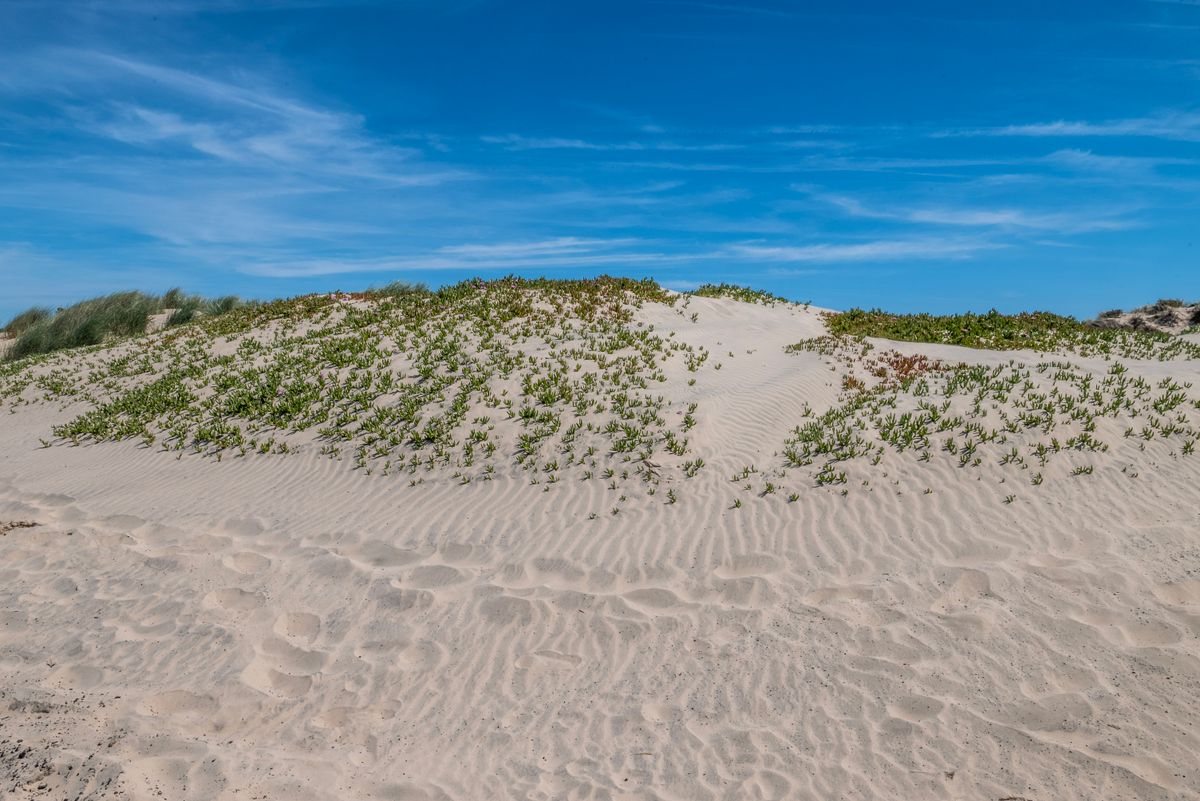
Dead pine and cypress limbs are light, dry and burn well, so they are often worth stacking for firewood. The brash and the small material is chipped. On dune ground the chips are worth leaving as a surface mat rather than carting off, and this is exactly the material that breaks down into the sandy soil best — see chipping and debris haul-away.
How Often
On a mature pine in full coastal exposure, a deadwood pass every two to three years keeps the tree's own mortality off the roof. On a tree that has been under drought or beetle pressure, more often, because the amount of newly dead material is the signal — a tree that is suddenly making more deadwood than last year is a tree to look at properly rather than just tidy.
Pairing the pass with a risk assessment on the trees over the house is the way most owners here choose to run it.
Send photographs of the limb you are worried about, with something in the frame for scale. Call (805) 927-4414 or use the contact page, and start at our Los Osos page.
Questions, quotes, or just exploring — we’re here to help.