


Mulching in Harmony, CA
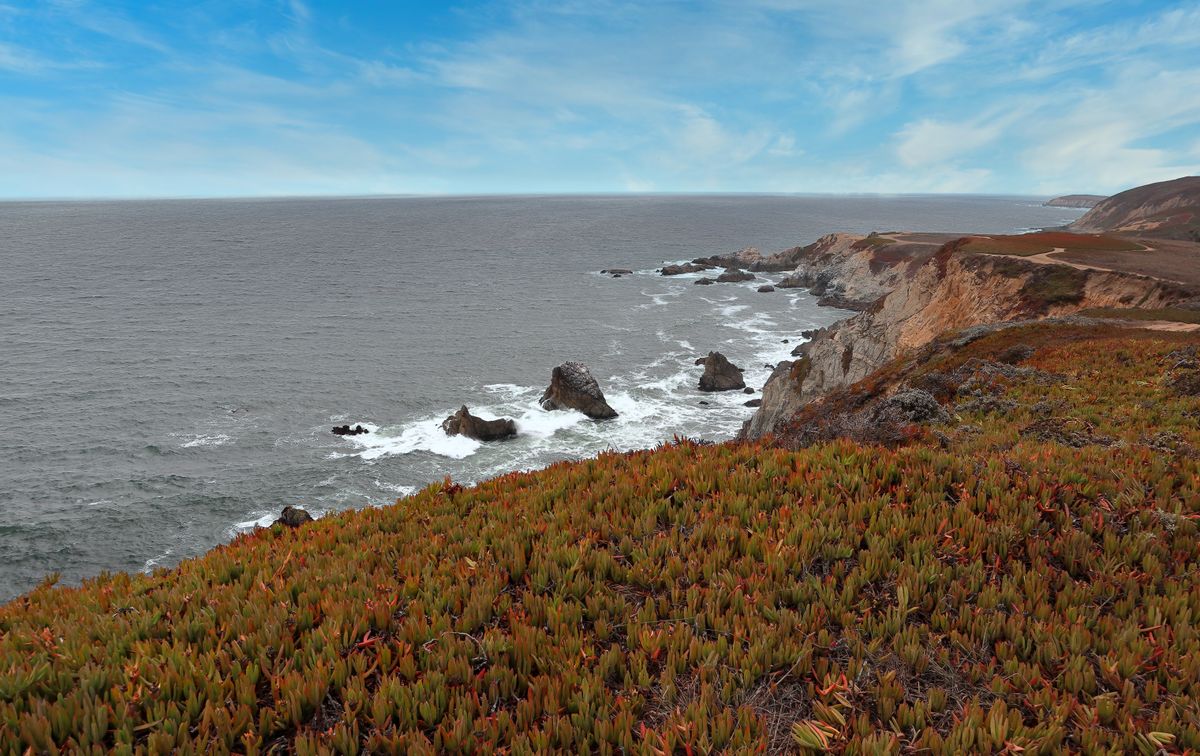
Harmony — this is the coast these pages are about.
Quick answer: Mulching in Harmony, CA — Mulch is the cheapest thing that happens to a tree: a flat layer over the root zone holds moisture through the dry season, keeps the soil temperature steady and feeds the soil life the tree depends on. Almost every mulch problem is a depth problem or a contact problem — too thick, or piled against the trunk where the bark has to stay dry.
- Typical depth: Two to four inches, flat, from the drip line inward — never a cone against the trunk.
- Typical timing: After planting or after a clean-up; refreshed in autumn so winter rain carries it down.
- What it involves: Keeping the root flare visible, keeping mulch off the bark, and choosing material that breaks down rather than mats.
- The standard: ISA and university extension guidance on arboricultural mulching and the root flare.
- Our own record: 503 pages and 291 stories published on this site. Counted from our own archive, not a stock table.
Field note. What we see most on this coast is not too little mulch but too much, in the wrong place: the volcano against the trunk that keeps the bark wet through the fog season and invites rot where the tree cannot show it until the canopy thins.
On the other hand, a thin ring of the wrong material is worse than none at all — matted, water-repellent mulch sheds the rain it was meant to store.
On the terrace, the wind does the drying and the fog does the wetting, and between them the surface of the soil is in a constant cycle of drying out and dampening down. Mulch ends that cycle at the level a tree actually cares about.
It is also, on a farm or a large rural parcel, the cheapest improvement available, because the material comes from your own trees: every pruning job and every removal on a property like this produces a stack of chips that is worth more spread around trunks than it is hauled away.
The ring, at farm scale
The rule is the same as anywhere — a wide, shallow ring that reaches out to the dripline, with a hand's width of clear soil at the trunk — but the practical version on a big lot is a ring you can maintain. Around the buildings and the working trees, a well-defined bed with an edge keeps the mower away from the trunk, which is where a surprising amount of long-term tree damage actually comes from.
Out in the windbreaks and the field trees, a broad sweep of chip under each tree is enough if it is repeated every couple of years, and it costs nothing but the effort, because the material is already on site from the last job.
Depth, and the mistakes that cost a tree
Five to ten centimetres is the working range. Less than that and the surface still bakes; more and the fine absorbing roots end up above the wet layer, where they dry out while the mulch below them stays damp. The one thing never to do is pile the chips against the trunk.
On old cypress and eucalyptus, a permanently wet base is a rot risk on the part of the tree that carries the whole load, and it hides the root flare, which is the only place you can see whether the ground beneath the tree is moving. Keep the donut, not the volcano.
Which chips to use and which to leave
Arborist chips — branch wood, bark and leaves, all mixed as they come off the chipper — are the best mulch for these soils, because they break down slowly and feed the fungal life a tree's roots actually depend on. Fresh material is fine as a surface dressing; it will borrow a little nitrogen from the top centimetre of soil for a season, which matters to a seedling and not to an established tree.
Two things to avoid: chips from a tree removed for a vascular or root disease that can persist in wood, and chips that end up being the only thing standing between a young tree and a mower.
What mulch cannot do
It will not fix a grade change over a root flare, replace topsoil that has been scraped off a bank, or rescue a tree whose roots were cut when a lane was widened. Those are soil and drainage problems, and on a terrace lot they usually show up in the same conversation as the creek or the cut bank.
What mulch does do — cheaply, annually, with material you already own — is give a tree a root zone where water and air arrive in usable amounts. On land where the wind is constant and the rain arrives all at once, that is not a small thing.
Field note — Sofia Underwood thinks in decades and in silhouettes: the ring you build around a young tree is still there, in some form, when the tree is the tallest thing on the lot.
Questions, quotes, or just exploring — we’re here to help.