



Fire Clearance & Defensible Space in Harmony, CA
Harmony — this is the coast these pages are about.
Quick answer: Fire Clearance in Harmony, CA — Defensible space is the work that decides what a fire has to burn between the wildland and the house: dead material out, ladder fuels separated, and the tree you keep limbed up rather than removed. It is measured in zones from the structure, and the first few feet are the ones that matter most.
- Typical timing: Best done in the cool months so the debris is gone before the dry season; clearance rules apply year-round.
- What it involves: Removing dead and dying material, separating shrubs from low limbs, limbing trees near structures, and keeping the roof and gutters clear.
- The standard: Cal Fire's defensible-space guidance for the first 100 feet, applied to the trees a property actually has.
- Where we work: The wooded parts of Cambria, San Simeon, Harmony and the surrounding ranch country.
- Our own record: 503 pages and 291 stories published on this site. Counted from our own archive, not a stock table.
Field note. What we see on this coast that surprises people is how much of the fuel load is low: the limb at four feet and the brush beneath it carries fire into a canopy that would otherwise survive, so the work is often lifting rather than felling.
On the other hand, over-clearing has its own cost — bare ground erodes, and the wind that comes with the fog belt is harder on a thinned stand than the fire risk it removes.
Harmony sits on grass. It is a strip of coastal terrace where the dominant vegetation for eight months of the year is a cured, wind-driven crop of annual grass, with century-old windrows standing over it.
That combination — fine fuel, continuous fuel, and a reliable afternoon wind — is the thing fire clearance here is actually about, and it is a different problem from the brush clearance that occupies a hillside property. The structures are few, the fuel is abundant, and the distance between them is often a fence line.
What the flames actually travel on
In grass country the sequence is fast. A fire starts in the fine fuel, spreads at a rate the wind decides rather than the slope, and its intensity doubles when it reaches something with more mass — a shrub, a stack of pruned material, the dead lower limbs of a tree.
That is why defensible space here is mostly three jobs. Manage the grass: cut and keep it short around the buildings and along the access lane through the dry season, in bands with gaps rather than one continuous mown strip. Break the ladder: lift the lower limbs on retained trees and keep the dead material out of the shrubs so a ground fire cannot climb into a canopy. Remove the staged fuel: the pile of cut branches behind the barn, the windfall wood under the windrow, the green waste against the fence.
On this kind of ground, a slash pile is not a tidy-up, it is a bonfire that has not been lit yet.
What we do not do
We do not scrape or burn the ground bare. Beyond the soil damage and the erosion that follows on terrace ground above a creek, there is a practical reason: bare earth grows a crop of weeds the following season, and you are back to mowing a fuel bed with no structure to hold it.
Managed grass, mulch and a maintained arrangement of vegetation is what defensible space actually is — and it is a repeating job, not a project. A property cleared three years ago and left alone is, functionally, an uncleared property with taller fuel.
Timing, permits and the record
The window runs from the end of the wet season to the start of the dry, and on a working property that also has to fit around harvest and grazing, which is why the sensible arrangement is a scheduled pass each spring and a short check before the autumn winds. Cutting in the heat means spark risk, so work happens early in the day or waits, and equipment is used with a fire watch and water on hand.
On the paperwork side we photograph before and after, record what was cut and hauled, and put the work in writing for an insurer, an owner or a clearance notice.
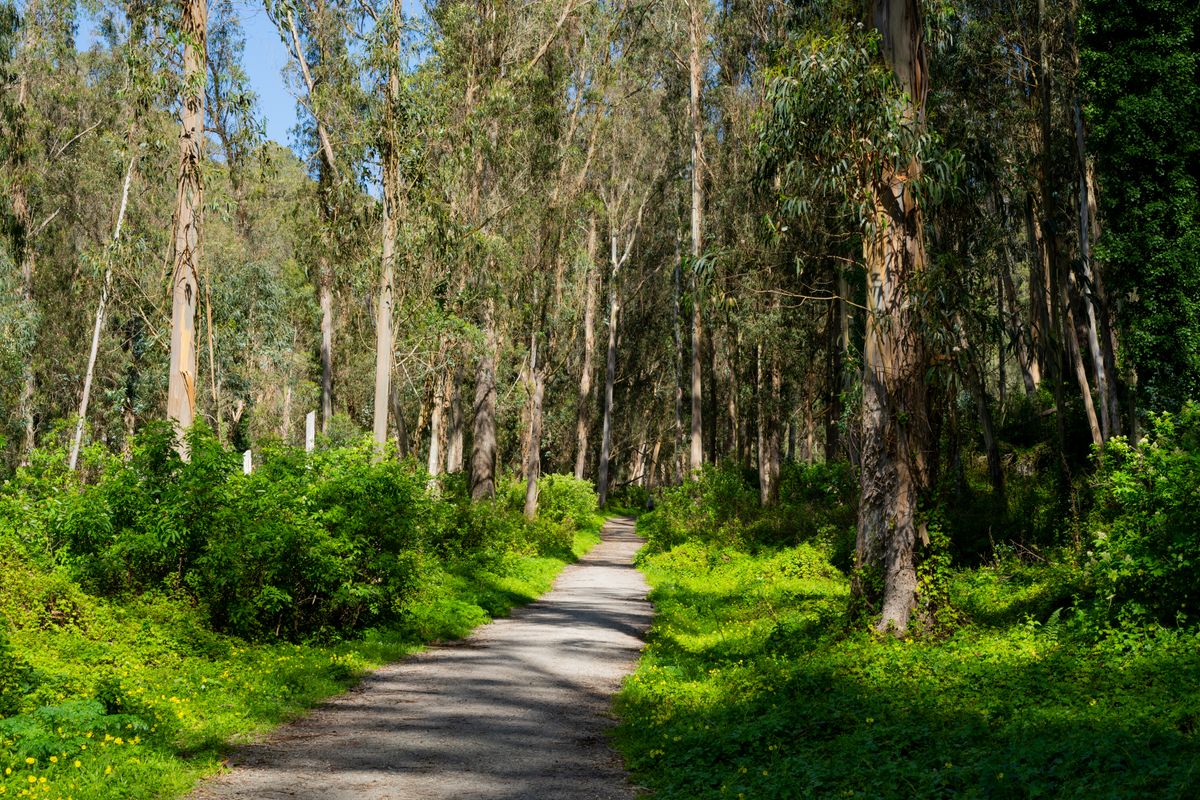
One honest note about trees in fire country: eucalyptus has a reputation, and the reputation is partly earned — the oil and the litter are genuinely flammable — but the real driver of house loss is what is under and around the trees, not the species.
Lifting the limbs, keeping the litter off the roof and the gutters, and keeping the grass down within the first band around the building does more than removing the windrow would, and it keeps the shade and the windbreak that make the property work.
Field note — Olivia Whitmore quotes the rule, then reads the ground: what is actually going to burn, what it is going to burn toward, and which change buys the most time for the least disruption.
Questions, quotes, or just exploring — we’re here to help.