


The Wood That Fails on a Calm Day
Deadwooding in Harmony, CA
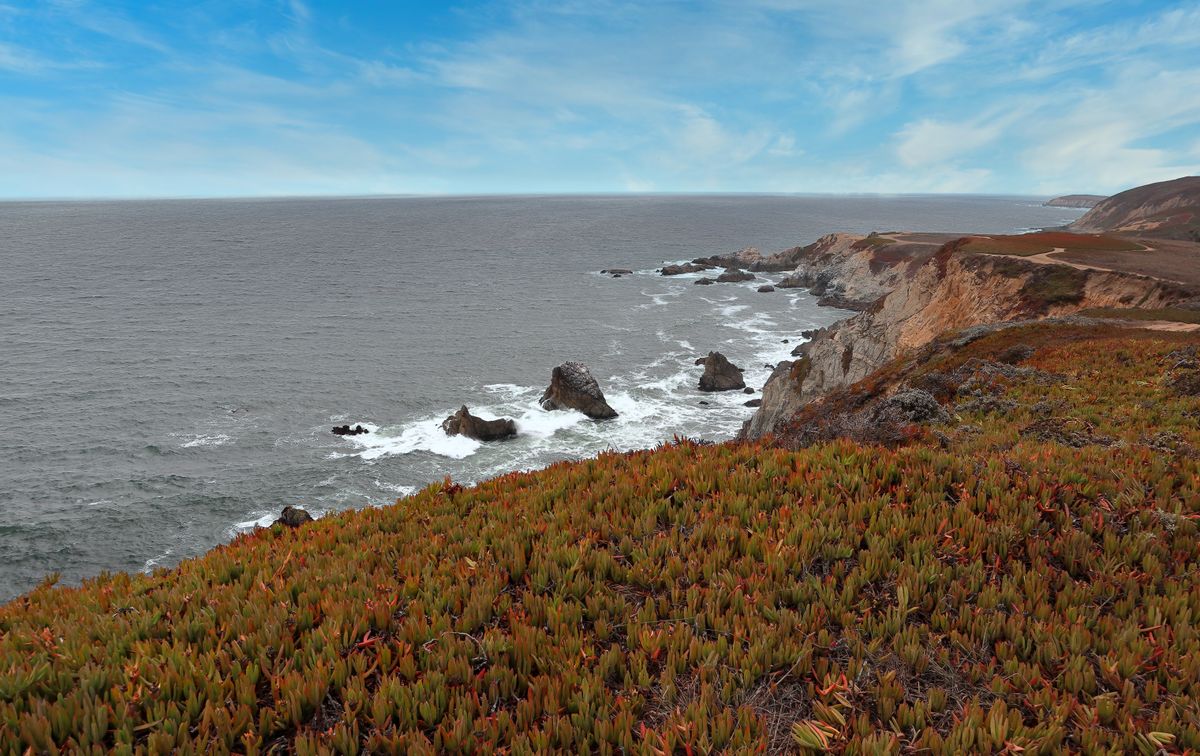
Harmony — this is the coast these pages are about.
Quick answer: Deadwooding in Harmony, CA — Pruning is a plan before it is a cut: deadwood and broken limbs first, then clearance from roofs, wires and paths, then the structure the tree will carry for the next decade. The right cut heals and the wrong one invites decay, which is why the order matters more than the number of cuts.
- Typical timing: Structural work in the dormant months, light clearance and deadwood any time the tree is not under stress.
- What it involves: Removing dead and crossing limbs, thinning to let light through, lifting low limbs for clearance, and never topping a tree.
- The standard: The ANSI A300 pruning standard as applied by ISA-certified arborists — including the three-cut method on every limb worth saving.
- Where we work: Cambria, San Simeon, Cayucos, Morro Bay, Los Osos and the towns between.
- Our own record: 503 pages and 291 stories published on this site. Counted from our own archive, not a stock table.
Field note. What we see on this coast is a pruning calendar that does not match the inland one: salt air, fog and wind mean a cut that would be minor in the valley can be the one that opens a crown to decay here, so we look at the species and the exposure before the season.
On the other hand, not every tree wants to be pruned: leaving a healthy canopy alone is a decision that pays, and a tree with plenty of space is often better served by doing nothing.
Deadwooding is the cheapest real risk reduction available on a mature tree, and in Harmony the trees that need it most are the ones that have been standing longest. A century of coastal gales leaves a eucalyptus or a cypress carrying a permanent population of dead and broken limbs high in the crown — wood that is still attached, still up there, and going to come down on a schedule nobody controls.
Removing it before the wind does is a few hours of work that changes what the parcel does in the next storm.
Telling dead wood from live wood
Dead limbs are not always obvious from underneath. A dead branch loses its bark and shows bare pale wood; a dying one still holds bark and may carry a thin tuft of leaves that will not return next spring. Species matter here — eucalyptus sheds bark in strips and hides the difference, and a cypress that has died back in the top may still hold brown needles for a year.
The reliable tests are a leaf scratch and, on a big limb, sounding the wood. A small cut is definitive and is worth making on anything that will be removed anyway.
Why dead wood fails unpredictably
Live wood bends and warns. Dead wood is brittle, so it does not bend, and the failure point is wherever the decay happens to have reached rather than where the load is greatest. That is why a dead limb detaches on a still day as well as a windy one, and why the risk is not only about the gale.
Brohms — the dead stub left by a branch that broke short — are the worst of it, because the wood behind the break is often already decayed into the stem.
What the cut looks like
Dead wood is removed back to sound wood, and the cut is made at the branch collar rather than flush with the stem. On a dead limb the collar is often hard to find, which is exactly where careless work damages the tree. Where the dead limb is large, removing it can be a rigged operation rather than a hand cut — a forty-foot dead eucalyptus limb is a lift, not a snip.
How it pairs with a risk assessment
Deadwooding removes the obvious hazard; a risk assessment tells you whether the tree itself is the problem. On a lot with a barn, a lane or a fence line inside the drop zone, we look at the two together: the wood that comes out now, and the structural defects — a hollow butt, a lifting root plate, a split fork — that no amount of deadwooding will fix.
Sometimes the honest answer is that the tree should come down, and deadwooding it first would be money spent on a decision already made.
The schedule
On this coast a mature eucalyptus or cypress wants deadwooding every three to five years, and after any significant storm it is worth a look regardless. It is also the cheapest item in the defensible-space list, because dead material inside the crown is fuel hanging over the very ground the fire rules are trying to protect.
If your trees are holding dead limbs over a building or a lane, call (805) 927-4414 or use the contact page. Our services page covers the rest of the pruning work.
Field note — Margot Thackeray takes the brohms first. A dead stub high in the crown is the piece that fails on a calm afternoon, not in the storm everyone was watching.
Questions, quotes, or just exploring — we’re here to help.