


Getting Under the Tree Again
Crown Raising & Lifting in Harmony, CA
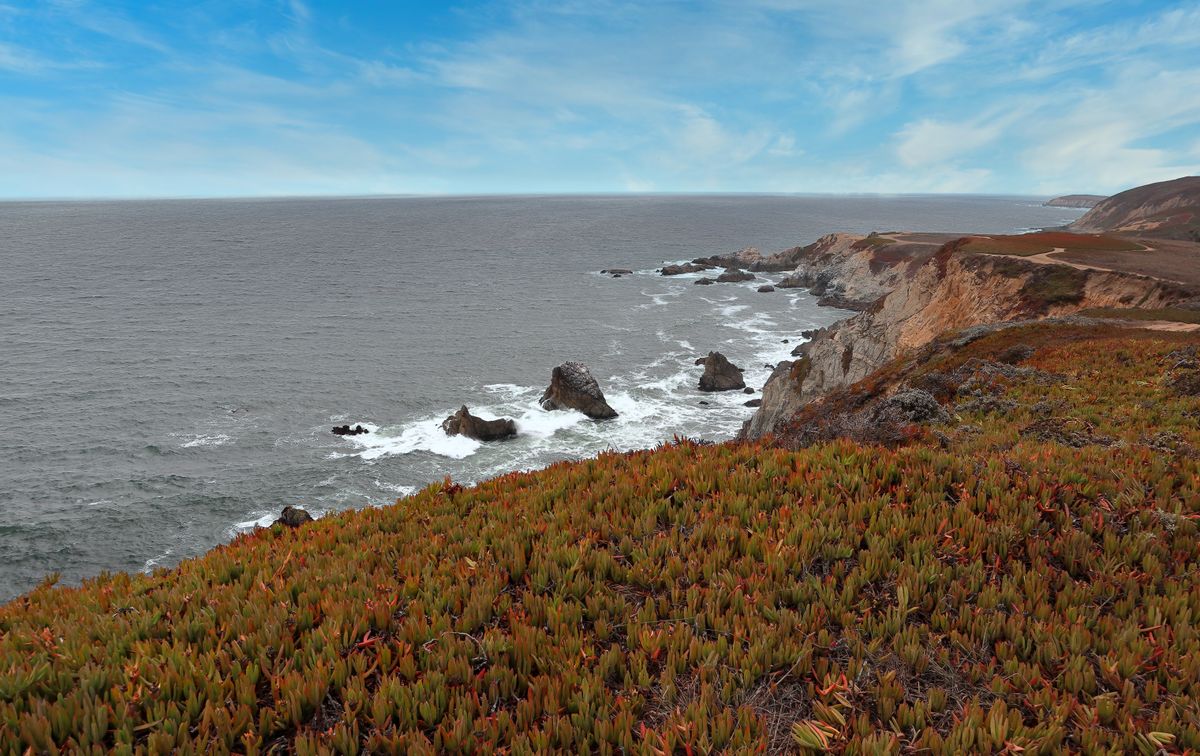
Harmony — this is the coast these pages are about.
Quick answer: Crown Raising & Lifting in Harmony, CA — Pruning is a plan before it is a cut: deadwood and broken limbs first, then clearance from roofs, wires and paths, then the structure the tree will carry for the next decade. The right cut heals and the wrong one invites decay, which is why the order matters more than the number of cuts.
- Typical timing: Structural work in the dormant months, light clearance and deadwood any time the tree is not under stress.
- What it involves: Removing dead and crossing limbs, thinning to let light through, lifting low limbs for clearance, and never topping a tree.
- The standard: The ANSI A300 pruning standard as applied by ISA-certified arborists — including the three-cut method on every limb worth saving.
- Where we work: Cambria, San Simeon, Cayucos, Morro Bay, Los Osos and the towns between.
- Our own record: 503 pages and 291 stories published on this site. Counted from our own archive, not a stock table.
Field note. What we see on this coast is a pruning calendar that does not match the inland one: salt air, fog and wind mean a cut that would be minor in the valley can be the one that opens a crown to decay here, so we look at the species and the exposure before the season.
On the other hand, not every tree wants to be pruned: leaving a healthy canopy alone is a decision that pays, and a tree with plenty of space is often better served by doing nothing.
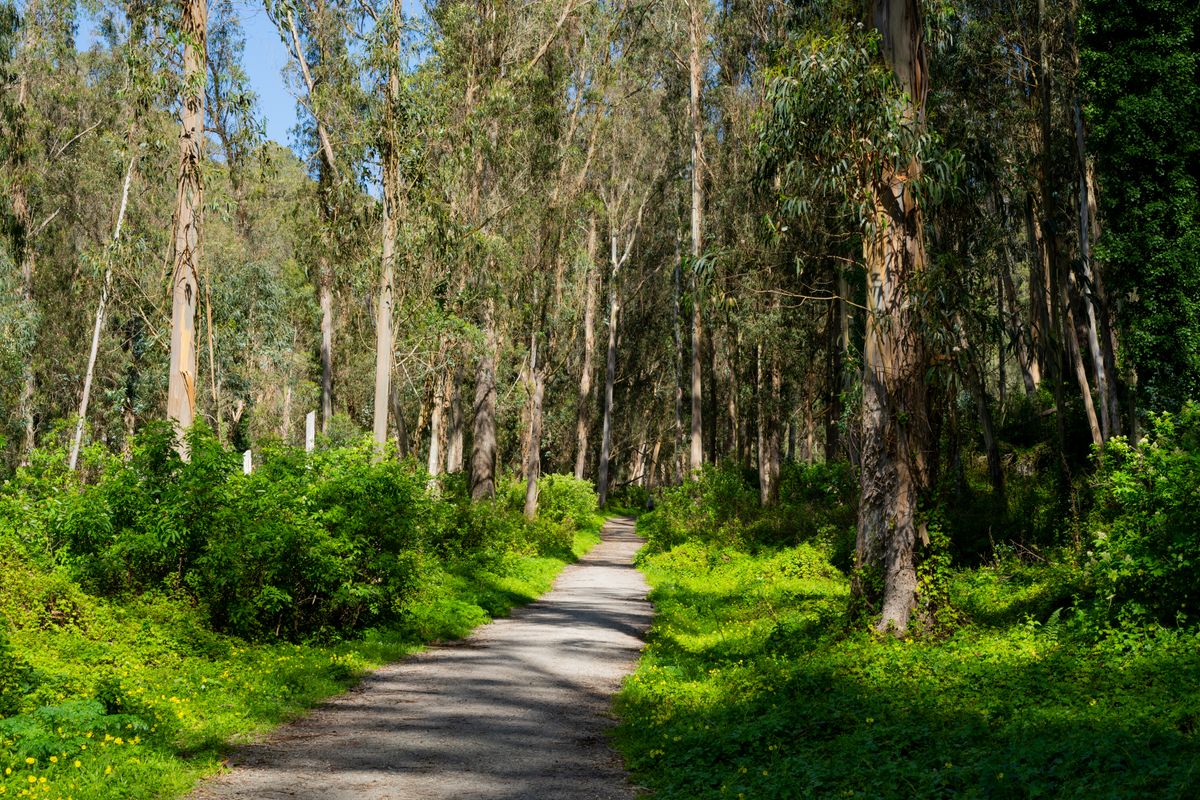
Most of the canopy lifting we do in Harmony is about getting underneath the tree again. A cypress planted to shade a lane and an eucalyptus row planted as a windbreak have both spent a century dropping their lowest limbs towards the ground, and on an old farm lot that means the low branches are now level with a tractor, a truck roof or the tanker that still comes through the gate.
Raising the crown takes those limbs off and gives the clearance back.
What raising removes
Raising removes the lowest branches on the tree, one by one, leaving the trunk clear to a chosen height. It does not touch the top and it does not open the crown's interior — a raised tree is the same tree with its skirt taken up. That makes it the least invasive pruning we do, and often the cheapest way to solve a problem that looks structural and is not.
The limit, in plain terms
A tree feeds itself through its leaves, and the practical rule is that you should never take off more than roughly a third of the live crown to do it. On a mature tree the removal is spread over years rather than done in one visit — raise it a third of the way this winter, finish in three or four years.
Lift a cypress too far in one go and it loses the lower foliage permanently, which on a cypress means the tree is bare to a height it will never refill.
The clearances that actually matter here
Roofs and barn eaves; the winery's roof line and any chimney or flue; the lane and the gate the stock truck uses; and the sightline where the private drive meets the highway frontage. On a farm lot the clearance question is usually seasonal — a lane that is fine in summer has a canopy that hangs into a loaded trailer in winter. Dry, dead and broken limbs go in the same visit rather than as a second job.
Raising is not the same as fire clearance
It is easy to confuse the two, and on a Harmony parcel in Cal Fire's State Responsibility Area both are usually wanted. Raising a crown is about clearance for people and vehicles. Limbing up for defensible space is about breaking the vertical fuel ladder — the low limbs that would carry a grass fire into the canopy.
The cuts look similar and the purposes are different, and on a lot in the SRA we plan them together so the tree is not worked twice.
What we look at first
Whether the lower branches are live and load-bearing, whether removing them exposes a stem with decay behind the branch collar, and whether the tree has a codominant fork below the height you want to raise to. If it does, raising to that height is a bad idea and the fork is the real conversation.
If a tree has grown down over a lane, a roof or a gate, call (805) 927-4414 or use the contact page. Our services page has the wider picture of what we do on this coast.
Field note — Margot Thackeray raises a little at a time. A tree that gains three feet of clearance every few winters never notices; one that loses a third of its crown in an afternoon never recovers the look.
Questions, quotes, or just exploring — we’re here to help.