


What Actually Threatens the Trees Here
Tree Pest & Disease Management
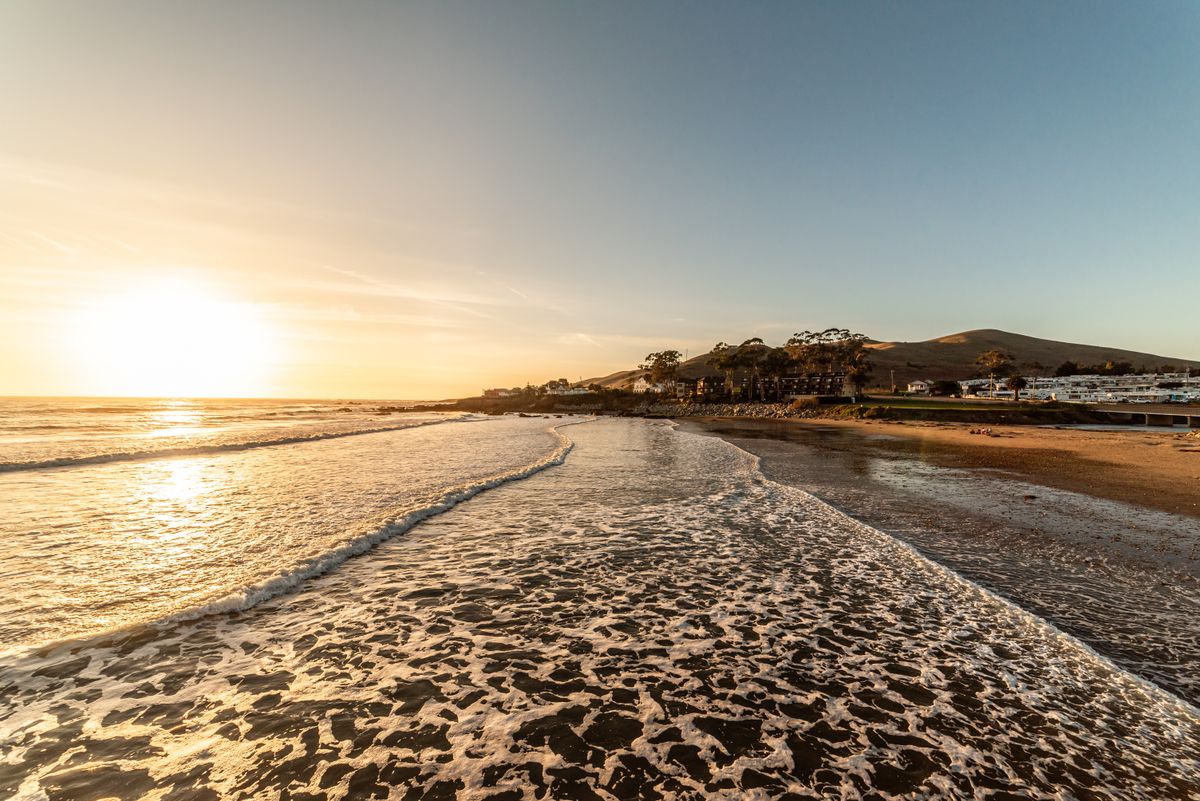
Cayucos — this is the coast these pages are about.
Quick answer: Tree Pest & Disease Management — Most tree trouble on the Central Coast is identified before it is treated: a borer, a canker and a drought-stressed root system can look the same from the ground, and each has a different answer. Diagnosis is the first cut — host, sign and season — and the least-toxic control that fits comes after it.
- Typical timing: Monitoring from bud break; fungal problems follow the wet spring, borers the dry summer and the stressed tree.
- What it involves: Identifying the host and the organism, judging whether the tree can compartmentalise the damage, and removing what cannot be saved.
- The standard: UC IPM pest notes and the ISA standard for hazard assessment.
- Where we work: Cambria and the coastal oak, pine and cypress stands around it.
- Our own record: 503 pages and 291 stories published on this site. Counted from our own archive, not a stock table.
Field note. What we see on this coast is that the tree under fog is often the healthier one and the tree on a hot exposed edge is the one that gets hit — stress is the invitation, and the coast hides it well.
On the other hand, treatment is not always the kindest answer: for a hazard tree with internal decay, careful removal protects the neighbours, and replanting does more for the site than a season of injections.
Tree pest and disease management in Cayucos is mostly a matter of knowing which handful of organisms genuinely matter on this stretch of coast and which ones are interesting but harmless. A lot of money is spent on treatments for things that would have resolved on their own, and a lot of trees are lost to problems that were visible a year earlier and nobody recognised.
The honest framing is that the biggest threat to the trees on these lots is not an organism at all. It is drought stress, and what follows it.
The Short List
- Bark beetles, inland and after drought. The losses visible from the coast road now are beetle kill following a run of dry winters. By the time the crown is going red the beetles are already gone and the tree is already dead — which means the useful action is on the trees that still carry green crown, not the red ones.
- Pitch canker on the pines. A fungal problem that shows as resin-soaked dead sections on branches and stems, spreading in wet weather and worse on trees already stressed. Pruning out affected limbs, in the right season, is the main practical control.
- Sudden oak death. The Phytophthora that has reshaped oak country in this county, spread on wet weather and on movement of soil and plant material. It is the reason oak care here is mostly about not doing things — not moving dirt between properties, not watering an oak in summer.
- Oak root fungus. A soil organism that kills roots and eventually the tree, and one where the symptoms are easy to mistake for the opposite problem, because the tree looks like it is dry.
- Cypress canker. The reason so many of the cypress windbreaks on the older beach blocks are thinning from the inside out. It moves through a stand in wet weather and there is no reliable cure, only sanitation and hygiene between trees.
- Scale and sooty mould. Cosmetic in most cases, though a heavy scale load on a stressed tree is worth addressing.
Cultural Before Chemical
The order of treatment follows a principle that is not controversial but is routinely ignored: get the site right before reaching for a product. That means water that reaches the actual root zone rather than the trunk, soil that drains, a root zone that is not compacted by foot traffic or fill, and mulch that keeps the soil biology alive.
A tree on a good site withstands most of what is on the list above. A tree on a bad site will keep getting treated for the same thing.
On this coast, the single most consequential cultural rule is the oak one: do not add summer water to a native oak, and do not move soil from one property to another. Both are how the pathogens spread.
When Chemistry Is Right, and When It Is Not
There are genuine cases for treatment — a tree worth keeping with a diagnosed pathogen and a treatment window that exists, or a stand where a sanitation programme will slow something that cannot be stopped. Where we recommend treatment, we recommend it as part of a plan with a date to re-inspect, because a treatment without a follow-up is a purchase rather than a decision.
Where a product's label does not support the use, or the organism has no effective control, saying so is more useful than selling it.
And When Removal Is the Responsible Answer
Sometimes it is. A beetle-killed pine over a parking pad, a cypress with advanced canker in a windbreak whose whole value was the windbreak, a tree with root disease next to a healthy stand worth protecting. Removal is not a failure of pest management; it is one of its outcomes, and on a dying stand the useful thing is to take the dead material out before it becomes a falling hazard — which is the dead tree removal job.
Getting to that recommendation requires knowing what is wrong, which is the diagnosis step rather than this one.
Have the Stand Looked At
If several trees on the property have thinned in the same year, that is a pattern worth a visit rather than a treatment guessed from a photograph. Call (805) 927-4414 or use our contact page, and see our services for the rest of what we do here.
Questions, quotes, or just exploring — we’re here to help.