

Making Water Go Where It Should
Drainage & Grading in Cayucos, CA
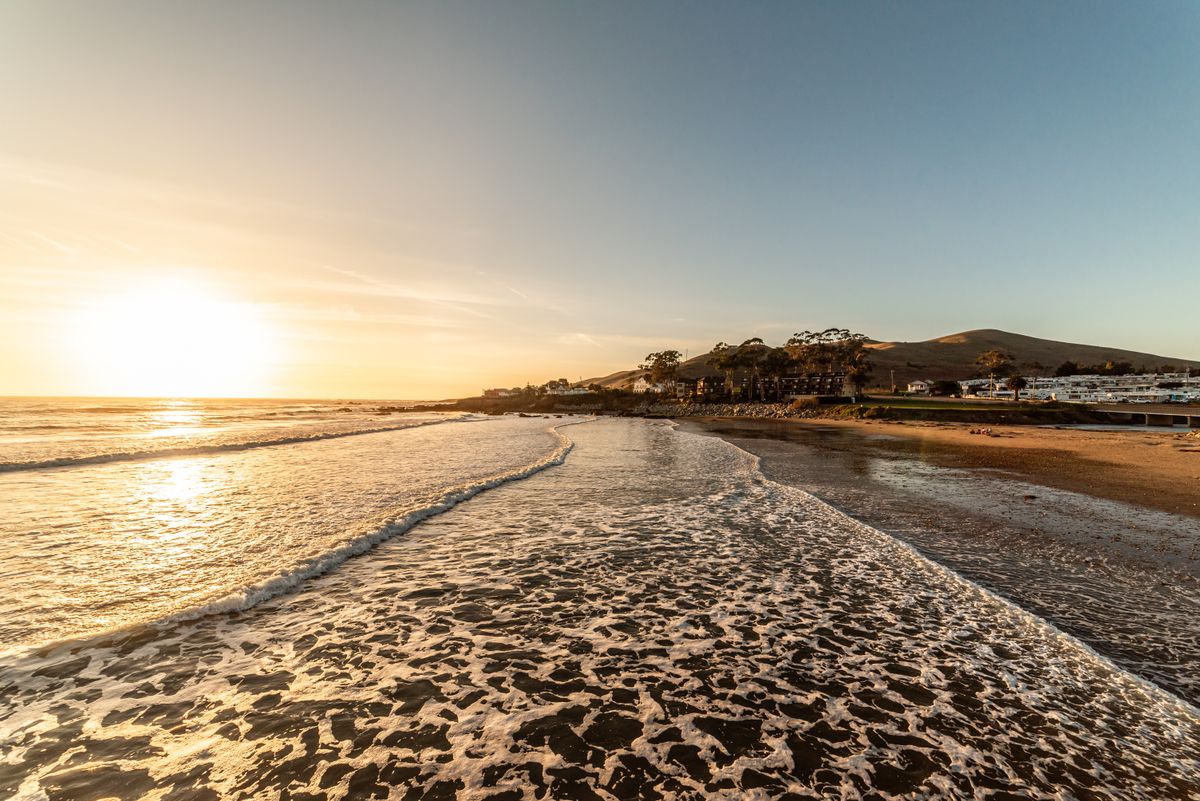
Cayucos — this is the coast these pages are about.
Quick answer: Drainage & Grading in Cayucos, CA — Trees are watered at the root zone, deeply and infrequently — a long soak that reaches down, then a dry spell that lets roots look for water, rather than a daily sprinkle that keeps everything in the top inch of soil. On the fog belt the question is rarely whether there is moisture in the air but how much got down to the roots.
- Typical timing: Deep watering through the dry season, spaced further apart as the tree establishes; young trees need it far more often than mature ones.
- What it involves: Watering at the drip line rather than the trunk, checking the soil six to eight inches down, and mulching so the water stays where it landed.
- The standard: University extension guidance on landscape tree irrigation and drought response.
- Where we work: The coastal terrace from Cambria to Morro Bay, sandy soil and clay both.
- Our own record: 503 pages and 291 stories published on this site. Counted from our own archive, not a stock table.
Field note. What we see here is that salt air and wind dry a canopy faster than the thermometer suggests, so a tree can be water-stressed on a grey week when nothing looks hot to the person holding the hose.
On the other hand, more water is not a cure-all: on clay, a daily soak drowns roots more often than drought does, and the symptoms look almost identical from above.
Gravity Already Has a Plan
Every drainage problem in Cayucos eventually arrives at somebody's lot, because the town is a narrow strip between a hill and the ocean and the water has nowhere to pause. Drainage and grading is the work of deciding where it will go on purpose, before it decides for you and takes your neighbour's fence with it.
On the beach blocks this is a matter of a few inches of fall; on the hillside streets it is the difference between a driveway that lasts and one that slides.
Where the Water Actually Goes
The first visit is a walk in the rain if we can arrange it, because a dry lot hides almost everything. We look for the low line across the property, the point where the uphill neighbour's runoff crosses the boundary, whether the soil is sand or clay, and what happens at the worst hour of the worst storm.
Most of the fixes follow from that one picture, and most of the damage on this coast started with roof water discharged at the wrong corner of a house.
Surface Swales and the Fall They Need
A graded swale, sometimes called a dry creek, needs a continuous fall of around two percent to move water without silting up or scouring. That means the outlet has to be lower than the inlet — which is why a swale that ends in a sump or a neighbour's grade solves nothing and moves the problem downhill.
Lined with coarse rock and planted along the banks, it also reads as a garden feature rather than a trench, which matters when the lot is small.
Subsurface Drains and Dry Wells
Where water arrives from uphill underground, a curtain drain intercepts it and carries it away; where a low spot collects it, a French drain or a dry well in permeable ground can accept it. On the dune-sand blocks a dry well works well because the sand takes water quickly.
On the heavy clays above the creek, a dry well is often a hole that fills and stays full, and the honest answer there is to move the water rather than pretend to store it.
Grading Around a Tree
The one absolute rule is the root flare. Cutting grade away from a tree exposes structural roots and removes the soil the fine roots are in; adding fill buries the flare and suffocates the root zone. Both are common when a yard is re-levelled, and both are usually reversible if they are noticed in the same year — see soil and root-zone remediation. Any regrading within a canopy is planned around the tree, not through it.
Retaining and Terracing
On the hillside lots a low retaining wall often does the work that grading cannot, creating a level pad and a place for water to be collected. Walls over a certain height need an engineer and a county permit, and every wall needs drainage behind it — a wall built without a weep path is a wall that will lean within a decade.
Where It Fits
Drainage is the first tool in slope and bluff stabilization and it is what makes erosion control hold. If a tree is showing the strain of a wet root zone, that shows up as a tree health diagnosis long before it shows up as a dead one.
Arrange a Site Visit
Tell us where the water stands in a storm and send photographs at the worst of it if you have any. Call (805) 927-4414 or use the contact page, and see our services for the rest of the work in Cayucos.
Questions, quotes, or just exploring — we’re here to help.