

Cover for Ground That Has Been Cleared
Revegetation & Native Planting
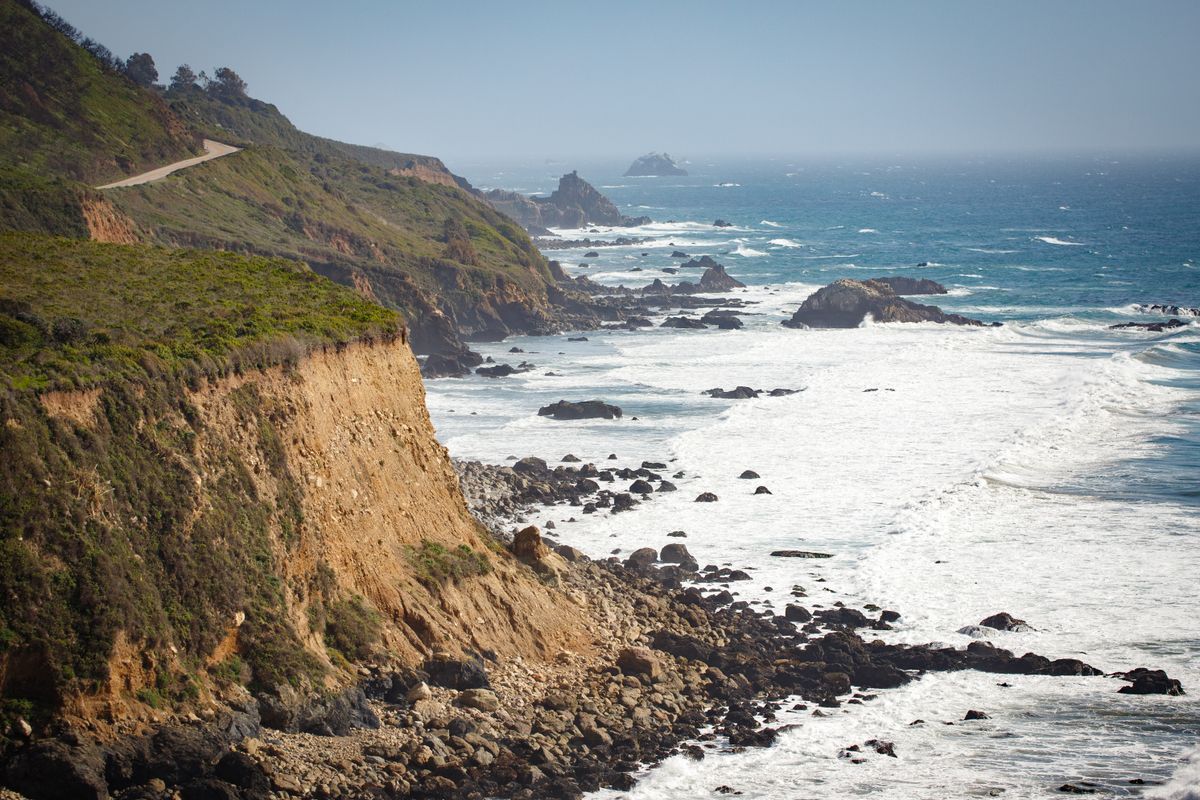
Cambria — this is the coast these pages are about.
Quick answer: Revegetation & Native Planting — The tree that thrives here is the one chosen for this coast: fog, salt, wind and shallow soil are the local constraints, and mature size is the constraint most often ignored. Planting is a matter of putting the right species in a site that can hold it, then keeping the root flare visible and the first summers watered.
- Typical timing: Autumn planting, so winter rain does the establishment work; the first two summers decide the tree.
- What it involves: Matching mature canopy and root spread to the space, planting at the depth the tree grew in, and staking only when it is needed.
- The standard: Cal Poly’s SelecTree species data and university extension planting guidance.
- Where we work: Gardens and acreage from Cambria through Cayucos and Morro Bay.
- Our own record: 503 pages and 291 stories published on this site. Counted from our own archive, not a stock table.
Field note. What we see is that the coast is forgiving to the right species and unforgiving to the wrong one: the same tree that looks comfortable four streets in will burn on the windward side of a Cambria lot.
On the other hand, natives are not automatically the answer at every address — a species that belongs in the watershed can still be the wrong size for the garden it is standing in.
Ground That Has Been Cleared Needs Cover Before the First Rain
Revegetation on a Cambria parcel is usually the last item on a job and the one that decides whether the job holds. Whether the ground was cleared for fire clearance, stripped for a build, or burned, bare soil on this coast is exposed to exactly the conditions it handles worst: intense winter rain on a slope, followed by six months of salt wind and no water at all.
Native planting that is chosen for this specific climate is how the slope stays put and the weeds do not simply move back in.
This is not the same work as mulching, which covers the soil, or as a specimen planting scheme — it is cover with a job.
Species That Belong Here
The plants that succeed on this stretch of coast have already proven themselves on it. That means the coastal scrub and dune community: coyote brush, California sagebrush, buckwheat, lizard tail and the native grasses, with coast live oak and California sycamore where there is room and water for a canopy, and cypress on the exposed western edges. Inland, where Cambria hands off to the hotter Atascadero side, the mix shifts toward oak woodland species that tolerate summer heat.
Using local genetics where it is available matters — nursery stock from a different climate often fails in its first dry season.
Getting It Established
- Plant into the wet season. Late autumn to early winter gives roots months of moisture before the first summer, which is the difference between 90% survival and 40%.
- Container stock over hydroseed on slopes. Hydroseed is fast and cheap on gentle ground; on a Cambria slope, plugs and containers survive where sprayed seed washes off.
- Water the first two summers only. Establishment watering then tapering off, so plants root deeply rather than depending on a hose.
- Mulch between the plants. Coarse arborist chips suppress weeds and hold moisture, and they are what the local mulching work leaves behind.
The Oak Root-Zone Caution
On a property with mature coast live oaks, revegetation has to respect their root zones: no summer irrigation inside them, no grade change, no compaction from a small tractor working the slope. Choose dry-tolerant species near an oak and keep the establishment water well outside the canopy. Planting that improves cover while damaging a heritage oak is a poor trade, and the assessment work at the Cambria hub is how that line gets drawn properly.
Timing and the Permit Question
On lots within the coastal zone, and on ground that has been graded, the species list and the erosion-control method may be reviewed as part of a permit. We plan the planting so it can be submitted as it will be done, which avoids rework. The Cambria services hub covers how this fits with the rest, and our services has the wider picture.
Plan It Before the Ground Dries
Tell us the slope, the aspect and what was there before, and send a photograph of the bare ground. Call (805) 927-4414 or use the contact page, ideally before the planting window closes.
Questions, quotes, or just exploring — we’re here to help.